Afghanistan Embassy announces its permanent closure in New Delhi
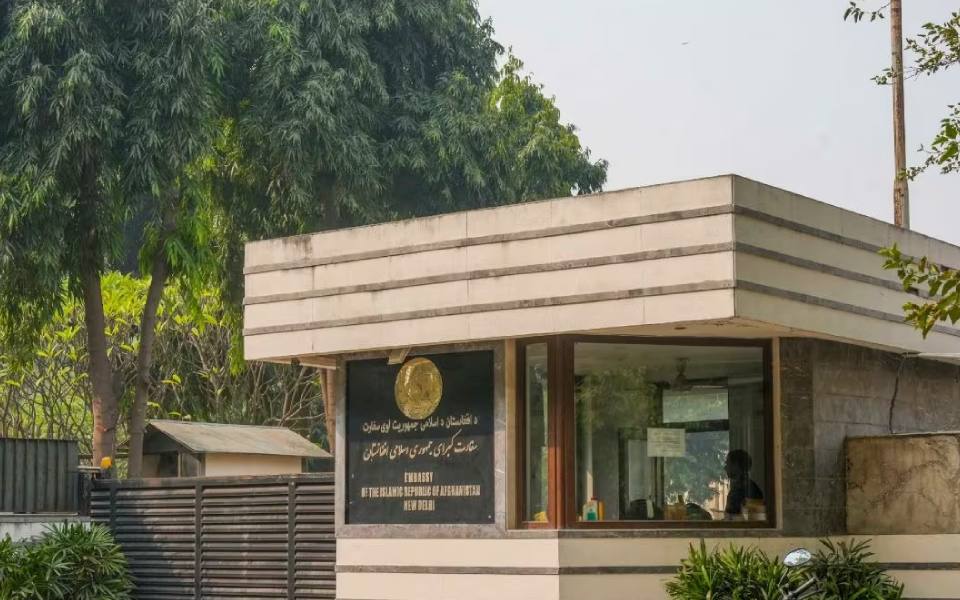
New Delhi, Nov 24: Afghanistan's Embassy in India on Friday announced its permanent closure, citing "persistent challenges from the Indian government".
This comes after the Afghanistan Embassy had announced on September 30 that it is ceasing its operations from October 1. The mission had back then cited a lack of support from the host government, failure to meet expectations in serving Afghanistan's interests and reduction in personnel and resources.
In a statement issued on Friday, the Embassy said it regrets announcing the permanent closure of its diplomatic mission in New Delhi, effective from November 23, "owing to persistent challenges from the Indian government".
"This decision follows the embassy's earlier cessation of operations on 30th September 2023, a move made in the hope that the Indian government's stance would evolve favourably for the normal continuation of the Embassy of the Islamic Republic of Afghanistan in New Delhi," the statement said.
Unfortunately, despite an eight-week wait, the objectives of visa extension for diplomats and a shift in the Indian government's conduct were not realised, the Afghan embassy said.
"Given the constant pressure from both the Taliban and the Indian government to relinquish control, the embassy faced a difficult choice," it said.
As of now, there are no diplomats from the Afghan Republic remaining in India, the mission stressed.
Those who served the Embassy of the Islamic Republic of Afghanistan have safely reached third countries, it said.
The only individuals present in India are diplomats affiliated with the Taliban, visibly attending their regular online meetings, it said.
The diplomats of the Afghan Republic have handed over the mission solely to the Indian government, the mission said.
"It now rests upon the Indian government to decide the fate of the mission, whether to maintain its closure or consider alternatives, including the possibility of handing it over to Taliban 'diplomats'. The responsibility of diplomats appointed by the Islamic Republic of Afghanistan has officially come to an end," it said.
The unfortunate end of the Republic mission marks the conclusion of the Afghan Republic in India, the statement said.
"We have considered the historic events and current circumstances carefully in arriving at this conclusion. We also extend their heartfelt gratitude to the people of India for their support and assistance to Afghanistan over the past 22 years," the statement said.
The Afghan Embassy asserted that India has been a steadfast strategic partner of the erstwhile Afghan Republic since 2001, and "we acknowledge the limitations and concerns that govern the realm of realpolitik and the balancing act required at a difficult time in a geo-politically sensitive region".
"Therefore, we firmly believe that the decision to close the mission in India at this stage and to transfer the custodial authority of the mission to the host country is in the best interest of Afghanistan," the mission said.
Citing the "challenging time for Afghanistan, where millions suffer because of poverty and socio-economic and political exclusion", the Embassy also urged that under the provisions of the Vienna Convention of 1961 (Article 45), the Ministry of External Affairs to fulfil its obligations and responsibilities concerning assuming custodial responsibility of the Afghan diplomatic mission properties, bank accounts, vehicles and all other assets located in New Delhi on urgent basis.
"A detailed list of assets in 110 pages has already been shared with the Ministry of External Affairs, including details of approximately
500,000 in the bank accounts of the mission," the statement said.
The mission also requested the Indian government, in alignment with the wishes of the Afghan people, to grant permission to hoist Afghanistan's tricolour flag over the mission's properties during this period.
"It is an important symbol of honour, pride, sacrifice and self-determination for millions of Afghans around the world," the statement said.
"Lastly, we earnestly implore the Ministry of External Affairs to ensure the safekeeping of the Embassy's property and assets, with the understanding that they will be entrusted to a legitimate accountable government duly elected/chosen by the Afghan people in the future," the mission said.
The embassy also said that while cognisant that some may attempt to characterise this move as an internal conflict, allegedly involving diplomats who switched allegiance to the Taliban, it emphasises that this decision is a result of broader changes in policy and interests.
"To the Afghan citizens in India, we extend our sincere gratitude for their understanding and support throughout our mission's tenure. Despite limitations in resources and power, we have worked tirelessly for their betterment and in the absence of a legitimate government in Kabul," it said.
Unfortunately, efforts have been made to tarnish our image and hinder diplomatic efforts in order to justify the presence and work of Taliban-appointed and affiliated diplomats, it said.
The embassy has been headed by Ambassador Farid Mamundzay. Mamundzay was appointed by the previous Ashraf Ghani government and had been operating as the Afghan envoy even after the Taliban seized power in Afghanistan in August 2021.
In April-May, the embassy was rocked by a power struggle in the wake of reports of the Taliban appointing a charge d'affaires to head the mission, replacing Mamundzay. Following the episode, the embassy came out with a statement that there was no change in its leadership.
India is yet to recognise the Taliban set-up and has been pitching for the formation of a truly inclusive government in Kabul, besides insisting that Afghan soil must not be used for any terrorist activities against any country.
Let the Truth be known. If you read VB and like VB, please be a VB Supporter and Help us deliver the Truth to one and all.
2nd phase of Bengal poll: 39.97 per cent polling till 11 am amid sporadic violence
Kolkata (PTI): Nearly 40 per cent of the 3.21 crore electors voted till 11 am of the second phase of polling in West Bengal amid sporadic violence, while tension gripped the Bhabanipur seat briefly as Chief Minister Mamata Banerjee and Suvendu Adhikari took swipes at one another in the same booth area.
Voters queued up from 7 am outside booths in Kolkata, Howrah, Hooghly, Nadia, North and South 24 Parganas and Purba Bardhaman districts, which form Bengal's electoral and political core.
Of the total electorate eligible to vote in this phase, 1.57 crore are women, and 792 are third-gender.
Till 11 am, West Bengal recorded 39.97 per cent polling with Purba Bardhaman registering the highest turnout at 44.50 per cent, followed by Hooghly at 43.12 per cent and Nadia at 40.34 per cent.
ALSO READ: BJP will form govt in Bengal with thumping majority: Nabin
Howrah recorded 39.45 per cent polling, while North 24 Parganas registered 38.43 per cent. Kolkata North and Kolkata South recorded 38.39 per cent and 36.78 per cent turnout, respectively.
South 24 Parganas, a politically crucial district witnessing several high-profile contests, recorded 37.9 per cent voting.
The first phase of polls in 152 Assembly seats of West Bengal on April 23 also recorded more than 41 per cent polling till 11 am.
"Polling is underway peacefully, barring some minor incidents in certain areas. We have sought reports from the officials concerned," a poll panel official said.
The early-morning convergence of Banerjee and Adhikari at the same booth area in Chakraberia turned Bhabanipur -- the chief minister's electoral bastion -- into the centrepiece of the day, reinforcing the symbolic weight of their prestige battle seen as a rematch of Nandigram, where the BJP leader had defeated her in 2021.
Banerjee was already seated outside the booth after receiving complaints of alleged intimidation of local TMC leaders when Adhikari arrived there amid heavy deployment of central forces.
Stepping out of his car, Adhikari declared, "I will not allow any hooliganism", while Banerjee accused the BJP of trying to "rig" the election using central forces, police observers and election officials.
"BJP wants to rig this election. Polls in Bengal are usually peaceful. Is there goonda raj here?" Banerjee told reporters, alleging CRPF personnel had visited the homes of TMC leaders late Tuesday night and unleashed terror in the area.
She alleged that election observers were acting at the BJP's behest and claimed TMC workers were being selectively targeted across districts.
Adhikari dismissed the charges as signs of "frustration", claiming Banerjee had realised that "not a single vote" was coming her way.
Banerjee, who usually steps out of her Kalighat residence late in the day to cast her vote at Mitra Institution School, broke convention and hit the ground before 8 am, moving through Chetla, Padmapukur and Chakraberia, underlining the stakes attached to Bhabanipur and the wider battle for south Bengal.
Reports of violence, vandalism and tension surfaced from several districts.
In Nadia district's Chapra, a BJP polling agent was allegedly assaulted inside a booth during a mock poll. The BJP accused TMC supporters of attacking its agent, while the ruling party denied the charge. In Shantipur, a BJP camp office was found vandalised.
In South 24 Pargana's Bhangar, the ISF alleged that its polling agents were prevented from entering booths.
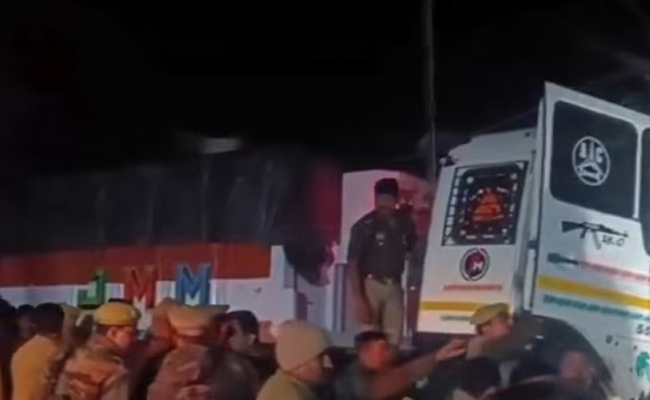
Howrah's Bally constituency saw tension at a booth in Liluah after an EVM malfunction delayed voting, prompting central forces to lathi-charge agitated voters. Two people were arrested in the matter.
Police and RAF personnel were also seen chasing away crowds near a booth in Amdanga following complaints of unlawful gathering by bike-borne supporters.
In Panihati, BJP candidate Ratna Debnath, the mother of the RG Kar victim, faced protests and her car was allegedly stopped by TMC workers, while in Jagaddal, the recovery of a firearm near a polling booth triggered tension before police and central forces restored order.
BJP candidate from Basanti assembly constituency in South 24 Parganas, Bikash Sardar, on Wednesday, alleged that "200-250 TMC goons" attacked his car and assaulted his driver when he was visiting polling booths in the constituency.
The TMC did not immediately respond to the allegations.
Unlike the first phase, where the BJP sought to defend its north Bengal gains, the final round has shifted the battle squarely to the TMC's strongest belt.
In 2021, the ruling party had won 123 of these 142 seats, leaving just 18 for the BJP and one for the ISF. For the BJP, breaching this southern fortress remains critical if it hopes to mount a serious challenge for power in the state.