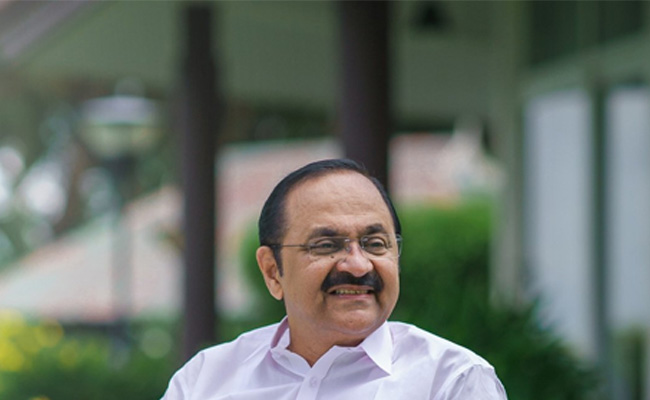
After G-23 meeting, Rahul Gandhi meets Congress veteran Bhupinder Singh Hooda
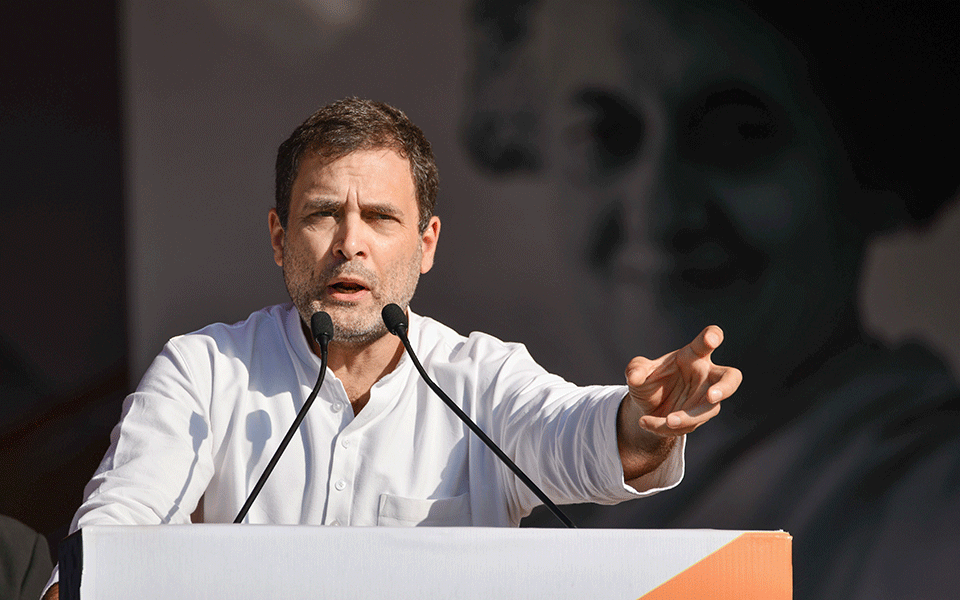
New Delhi(PTI): A day after the crucial meeting of G-23 leaders, former Congress president Rahul Gandhi on Thursday met Bhupinder Singh Hooda and is learnt to have discussed revamping the party and the way forward following its loss in five Assembly elections.
G-23 is a group of dissenting Congress leaders who have demanded organisational overhaul.
After the meeting, Hooda, the former chief minister of Haryana, visited Ghulam Nabi Azad, a part of the G-23, at the latter's residence.
Hooda and Azad were reported to have discussed concrete proposals to strengthen the Congress and ensure collective leadership and decision making as demanded by the grouping which met on Wednesday and signed a joint statement.
Sources said Deputy Leader of the Congress in Rajya Sabha and another G 23 leader Anand Sharma also joined Hooda at Azad's residence in the deliberations.
The grouping had yesterday said the "only way forward for the Congress was to adopt a model of inclusive and collective leadership and decision making at all levels."
The G-23 sources said they want to strengthen the Congress and "not undermine it in any way."
Rahul Gandhi's meeting with Hooda is significant in the context of the G23 statement and the telephonic conversation Azad had with Sonia Gandhi on Wednesday to convey the intentions of the meeting at his residence.
Sources said Azad was likely to meet Sonia Gandhi with proposals soon and discussions were underway on course correction within the party.
Let the Truth be known. If you read VB and like VB, please be a VB Supporter and Help us deliver the Truth to one and all.
Saffron shawls not allowed in schools in K'taka, clarifies CM Siddaramaiah
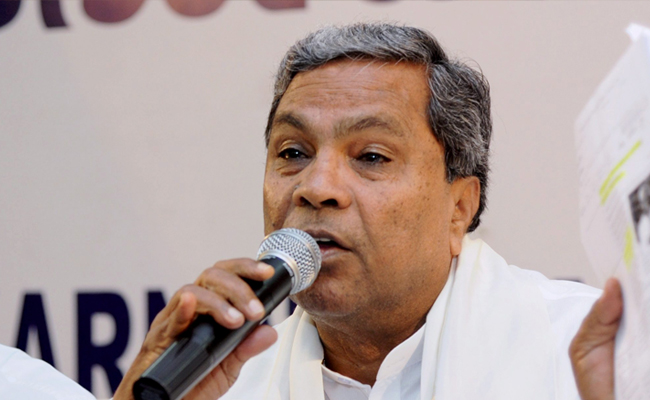
Mysuru (Karnataka) (PTI): Karnataka Chief Minister Siddaramaiah on Thursday clarified that saffron shawls would not be allowed in educational institutions under the state government’s order on religious symbols, while practices already in existence such as hijab, turbans, rudraksha beads and sacred threads (Janeu) would continue to be permitted.
Speaking to reporters in Mysuru, the Chief Minister clarified that those religious attire which are in practice will be allowed.
The Karnataka government on Wednesday passed an order allowing students to wear Hijab, sacred thread, Shivadhara, Rudraksha in schools. The order scrapped the BJP government’s 2022 order, banning Hijab in government schools following the Hijab versus saffron shawl controversy.
The opposition flayed the move and termed it "appeasement politics".
ALSO READ: Chennithala leaves residence after Satheesan named Kerala Chief Minister
A section of Hindu right wing organisations even threatened to wear saffron shawls in the schools.
Now the Chief Minister has clarified that saffron shawls will not be permitted.
“Saffron shawls are not allowed. Those shawls cannot be worn. Turbans, sacred thread, Shiva dhara, rudraksha, and hijab can also be worn,” Siddaramaiah told reporters.
“See, it is not just the hijab. People can also wear sacred threads, Shivadhara rudraksha beads — everyone can wear things according to their beliefs. This is allowed up to Class 12, whether it is high school, college or primary school. It applies to all.”
Asked whether saffron turbans representing saffron identity would be permitted, the Chief Minister said only practices already in existence would be allowed and no new practices could be introduced.
“When we say turbans, we mean practices that already exist. Nothing new can be introduced. Only those practices and beliefs that already exist till now are allowed,” he said.
Responding to questions on Prime Minister Narendra Modi reducing his convoy to conserve diesel, Siddaramaiah said such measures would only have a temporary effect. “What the Prime Minister has said is not the right step. Instead, it would be better to speak with other countries and bring awareness and consciousness among them,” he said.
Replying to questions on the controversy surrounding the NEET examination, Siddaramaiah criticised the conduct of the exam and said students should not suffer because of lapses in the system. “Look, we conducted CET, and they introduced NEET. If they fail to conduct it properly, what will happen to the students who studied hard and wrote the exam? What about their future?” he asked.