Ahead of Bihar polls, Jitan Ram Manjhi's party says it will join NDA
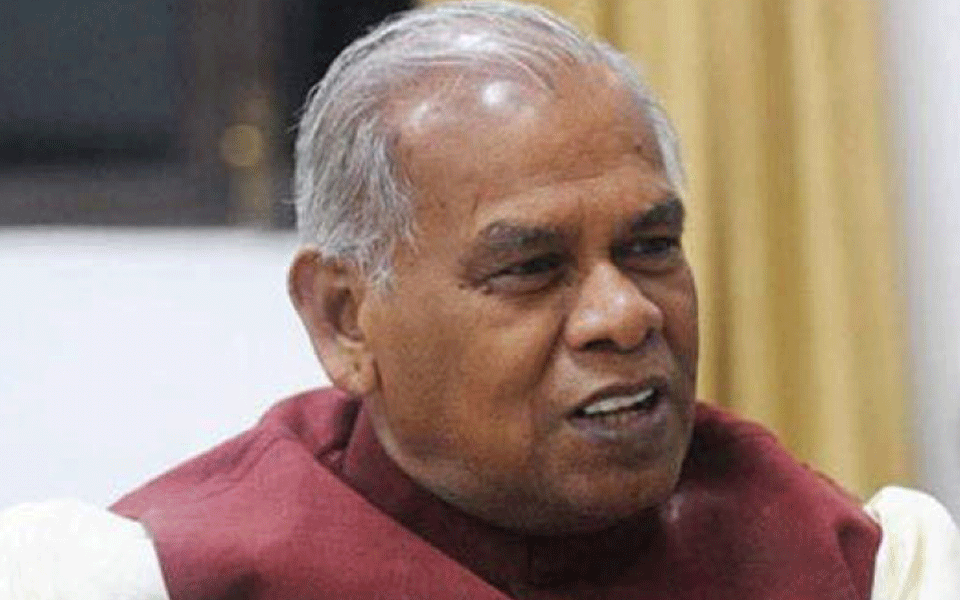
Patna: Former Bihar chief minister Jitan Ram Manjhi-led HAM(S) will join the NDA ahead of the Bihar elections, a party spokesperson said on Wednesday.
The official announcement in this regard will be made by Manjhi on Thursday, said spokesperson Danish Rizwan.
The Hindustani Awam Morcha (Secular) will not merge with any party, rather it will be a part of the NDA in the Bihar elections that is due in October-November, he asserted.
HAM(S) national president Jitan Ram Manjhi will formally announce the party becoming a part of the NDA in Bihar on September 3, Rizwan said.
The number of seats the party will get to contest in the upcoming elections was never an issue for it as the HAM(S) will join the NDA for the states development, he said.
The party is firmly standing with Prime Minister Narendra Modi and Chief Minister Nitish Kumar for their development works, he added.
Manjhi had on August 20 severed ties with the Grand Alliance after spending two-and-a-half years in the opposition coalition, comprising of RJD, Congress, RLSP and Bollywood set designer-turned-politician Mukesh Sahni's Vikasshil Insaan Party (VIP).
The HAM(S) chief had also postponed a meeting scheduled on Wednesday with some non-NDA and non-Grand Alliance parties, including the Jan Adhikar Party of former MP Pappu Yadav, to discuss the strategy for the elections.
Manjhi met the chief minister last Thursday and believed to have held talks on seat sharing.
The HAM(S) wants to contest 15-20 seats, mostly in the Magadh region to which Manjhi belongs. But the JD(U) is willing to leave for it 10-12 seats, according to reports.
Manjhi is the lone member of his party in the assembly. But, his induction would help the NDA's outreach to Dalits, particularly other than Paswans which is the support base of the LJP.
Dalits in Bihar are over 16 per cent of the electorate and about 40 seats in the 243-member house are reserved for them.
Manjhi had quit the JD(U) in 2015 after being forced to step down as the chief minister to make way for the return of Kumar.
Later, he formed the HAM(S) and contested 21 seats in the 2015 Bihar assembly elections as an NDA constituent. With the return of Kumar to the NDA in July 2017, he walked out of it to join hands with the opposition grouping.
Let the Truth be known. If you read VB and like VB, please be a VB Supporter and Help us deliver the Truth to one and all.
Bhojshala complex registered as 'mosque' in old revenue records: Muslim side to MP HC
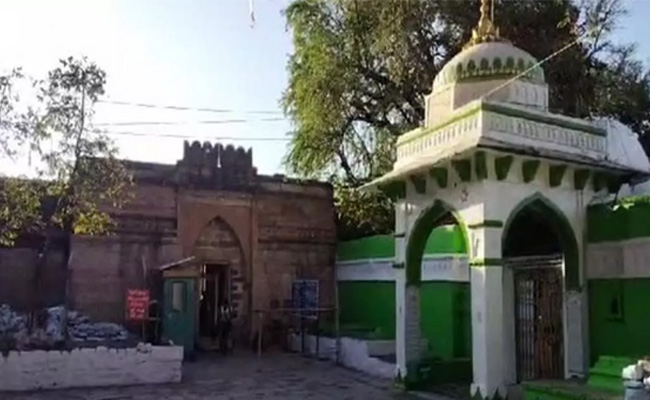
Indore (PTI): The disputed Bhojshala Temple-Kamal Maula Mosque complex has historically been registered as a 'mosque' in revenue records and available sources don't clearly mention any Saraswati temple established by then-king Raja Bhoj, the Muslim side has told the Madhya Pradesh High Court.
The Hindu community considers Bhojshala a temple dedicated to Goddess Saraswati, while the Muslim side calls the 11th-century monument Kamal Maula Mosque. The disputed complex located in Dhar district is protected by the Archaeological Survey of India (ASI).
During the hearing before the HC's Indore bench of Justices Vijay Kumar Shukla and Justice Alok Awasthi on Wednesday, Qazi Moinuddin questioned two PILs filed as intervenors in the Bhojshala case by an organisation named Hindu Front for Justice, one Kuldeep Tiwari and another individual.
Moinuddin claims to be a descendant of Sufi saint Maulana Kamaluddin Chishti and the 'Sajjadanashin' (spiritual head, guru, or successor of a Sufi shrine, khanqah, or religious site).
The PILs state that Bhojshala is actually a Saraswati temple and only Hindus should be granted the right to worship at the disputed complex.
Moinuddin's lawyer, Noor Ahmed Sheikh, claimed in the court that his client's ancestors, who are descendants of Maulana Kamaluddin Chishti, have historically held titles to the complex, and the site was also recorded as a "mosque" in government revenue records.
He contended that those associated with the management of the Kamal Maula Mosque, located within the complex, have been in "continuous and peaceful occupation" of the site for a long time.
Citing Muslim law, Sheikh argued that in the case of religious property, particularly a mosque or its related properties, officials such as the Sajjadanashin and Mutawalli (person entrusted with management, maintenance, and administration of a Waqf), and their descendants, not only have the right to intervene, but also have the right to manage and use such a structure.
Citing provisions of the Ancient Monuments Preservation Act 1904, the Muslim side's lawyer said the term "in-charge of the property" is used in this law, which makes it clear that the person or party who has been in charge of a property for a long time has rights over it.
During the hearing, Touseef Warsi, the lawyer representing the Maulana Kamaluddin Welfare Society of Dhar, claimed that Hindu parties in both PILs had made "misleading representations" regarding historical facts before the high court.
He further claimed that available historical sources do not clearly mention the existence of a Saraswati temple established by Raja Bhoj, the legendary king of the Parmar dynasty who ruled Dhar from 1010 to 1055.
The ASI, a central government agency, has adopted three different positions in the lawsuits filed regarding the Bhojshala dispute, changing its answers from time to time, and this situation raises serious questions about judicial scrutiny of the complex, Warsi submitted.
He raised objections regarding the ASI's process of scientific survey of the Bhojshala complex, carried out on the HC order in 2024, and the method of videography and requested the court to examine these objections.
The hearing in the Bhojshala case will continue on Thursday.
The HC has been regularly hearing four petitions and one writ appeal since April 6, contesting the religious nature of the monument.