AI-driven digitisation errors causing widespread hardship during SIR: Mamata to CEC
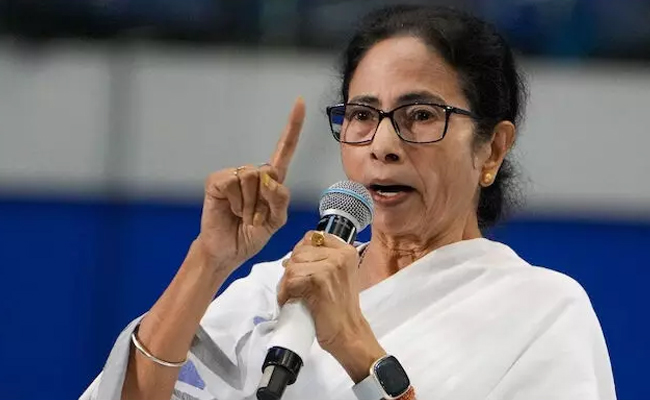
Kolkata (PTI): West Bengal Chief Minister Mamata Banerjee wrote to CEC Gyanesh Kumar again on Monday, claiming that AI-driven digitisation errors in the 2002 electoral rolls were causing widespread hardship to genuine voters during the SIR exercise in the state.
In her fifth letter to the chief election commissioner (CEC) since the beginning of the Special Intensive Revision (SIR) of electoral rolls, Banerjee said serious errors occurred in electors' particulars during the digitisation of the 2002 voters' list using AI tools, leading to large-scale data mismatches and wrongful categorisation of genuine voters as having "logical discrepancies".
Accusing the EC of disregarding its own statutory processes followed over the last two decades, she said electors were being compelled to re-establish identity despite earlier corrections made after "quasi-judicial hearings".
"Such an approach, disowning its own actions and mechanisms spanning more than two decades, is arbitrary, illogical and contrary to the letter and spirit of the Constitution of India," she alleged.
ALSO READ: Cannot interdict show cause notice over fraudulent account: Delhi HC to Anil Ambani's son
Banerjee further claimed that no proper acknowledgement was being issued for documents submitted during SIR, claiming that the procedure was "fundamentally flawed".
She said the SIR hearing process had become "largely mechanical, driven purely by technical data", and was "completely devoid of the application of mind, sensitivity and human touch", claiming that it undermined "the bedrock of our democracy and constitutional framework".
Highlighting the human cost, she wrote that the exercise, which should have been constructive, "has already seen 77 deaths with 4 attempts to suicide and 17 persons falling sick and necessitating hospitalisation," attributing it to "fear, intimidation and disproportionate workload due to unplanned exercise undertaken by ECI."
Mamata also condemned the harassment of eminent citizens, noting that Nobel Laureate Prof Amartya Sen, poet Joy Goswami, actor and MP Deepak Adhikari, international cricketer Mohammed Shami and the Maharaj of Bharat Sevashram Sangha were "subjected to this unplanned, insensitive and inhuman process."
"Does this not amount to sheer audacity on the part of the ECI?" she questioned.
The chief minister further criticised the treatment of female voters, saying, "Women electors who have shifted to their matrimonial homes and changed their surnames after marriage are being questioned and summoned for hearings to prove their identity.
She said, "This not only reflects a complete lack of social sensitivity but also constitutes a grave insult to women and genuine voters. Is this how a constitutional authority treats half of the electorate?"
Banerjee urged the EC to immediately address the issues to "end the harassment and agony of the citizens and the official machinery" and safeguard democratic rights.
Let the Truth be known. If you read VB and like VB, please be a VB Supporter and Help us deliver the Truth to one and all.
4 workers die after being buried under coal slurry in Jharkhand's Dhanbad

Dhanbad (Jharkhand) (PTI): At least four workers died after being buried under coal slurry in Jharkhand's Dhanbad district on Saturday, a police official said.
The incident took place at Moonidih coal washery in the command area of Bharat Coking Coal Limited (BCCL).
"Bodies of all four workers were dug out of debris during a rescue operation," Putki police station in-charge Waqar Hussain told PTI.
The incident took place when coal slurry was being loaded into trucks by workers, during which a large chunk of slurry fell and trapped several workers underneath, officials said.
The deceased have been identified as Manik Bauri, Dinesh Bauri, Deepak Bauri, and Hemlal Gope.
Meanwhile, the family members of the deceased and local villagers placed the bodies in front of the washery gate and began a protest.
They demanded compensation, jobs for dependents and action against those responsible for the incident.
Police and administration officials are trying to pacify the protesters, an official said.