AI finds no issues with locking mechanism of fuel control switch in B787 planes: Official
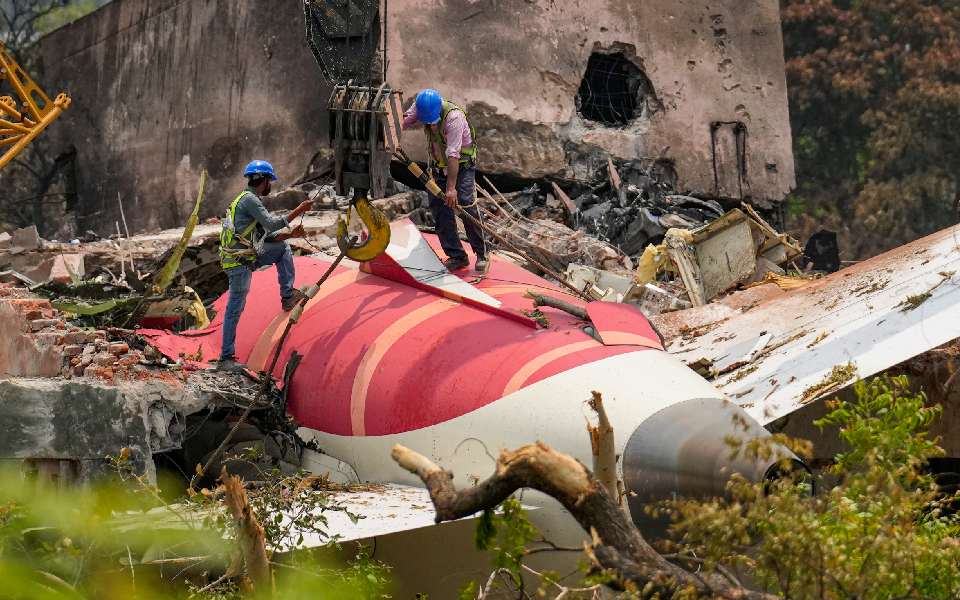
New Delhi, Jul 16 (PTI): Air India on Wednesday completed the inspection of the locking mechanism of fuel control switches in its Boeing 787 planes and did not find any issues, according to an airline official.
On Monday, aviation watchdog DGCA directed airlines to inspect the fuel switch locking system in their Boeing 787 and 737 planes against the backdrop of AAIB's preliminary report stating that fuel switches were cut off before the Air India plane crash that killed 260 people last month.
"Over the weekend, our Engineering team initiated precautionary inspections on the locking mechanism of Fuel Control Switch (FCS) on all our Boeing 787 aircraft. The inspections have been completed and no issues were found," the official said, quoting an internal message sent to Air India pilots.
The official also said that all the Boeing 787-8 aircraft have undergone Throttle Control Module (TCM) replacement as per the Boeing maintenance schedule. FCS is part of this module.
FCS regulate the flow of fuel into the aircraft engines. In its preliminary report on the Boeing 787-8 crash released on Saturday, the Aircraft Accident Investigation Bureau (AAIB) said the fuel supply to both engines of the plane was cut off within a gap of one second, causing confusion in the cockpit soon after take off.
A 15-page preliminary investigation report into the Air India plane crash revealed fuel-control switches of the two engines moved from the "run" to the "cutoff" position, within the space of one second, leading to immediate loss of altitude.
"In the cockpit voice recording, one of the pilots is heard asking the other why did he cut off? The other pilot responded that he did not do so," the report said.
AAIB, which mentioned about FAA's SAIB in the report, did not suggest any recommended action.
The airline has also asked pilots to remain vigilant and report any defect in the technical log, as per the existing reporting process, the official added.
Let the Truth be known. If you read VB and like VB, please be a VB Supporter and Help us deliver the Truth to one and all.
Polling begins for 152 assembly seats in 1st phase of Bengal elections
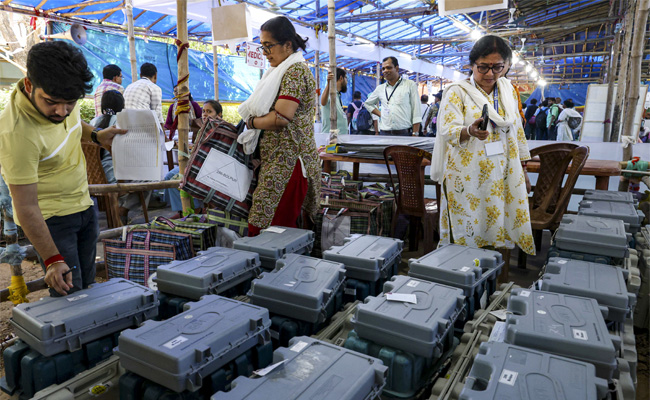
Kolkata (PTI): Voting began on Thursday in 152 constituencies in the first phase of the West Bengal assembly elections, amid unprecedented security arrangements and a high-stakes battle that could shape the direction of the entire contest.
Polling started at 7 am with voters queueing up outside booths in districts ranging from Darjeeling and Jalpaiguri in the north to Murshidabad, Nadia, Birbhum and Hooghly in the south.
The opening round covers more than half of the state's 294 assembly seats and is being seen as the BJP's best opportunity to make an early breakthrough and the ruling Trinamool Congress' most important test in its bid for a fourth consecutive term.
According to the Election Commission, over 3.60 crore electors are eligible to vote in this phase, including around 1.75 crore women and 465 third-gender voters.
A record 2,450 companies of central paramilitary forces, comprising nearly 2.5 lakh personnel, have been deployed across the state for the polls, with over 8,000 polling stations identified as highly sensitive.
The Election Commission has placed districts such as Malda, Murshidabad, Uttar Dinajpur, Cooch Behar, Birbhum and Purba Bardhaman under special surveillance.
More than 2,193 quick response teams, surveillance units and flying squads have also been deployed to prevent violence and ensure free and fair polling.
The first phase assumes political significance because it includes all 54 seats in north Bengal, the region that powered the BJP's rise in the 2019 Lok Sabha elections and helped it emerge as the principal challenger to the TMC in the 2021 assembly polls.
Of the 152 seats, the BJP had won 59 in 2021, while the TMC had secured 93.
For the saffron camp, retaining its dominance in north Bengal is crucial if it is to remain in contention in the statewide battle. For the TMC, led by Chief Minister Mamata Banerjee, preventing a BJP sweep in the north is equally important to establish momentum before the second round.
This phase is also being closely watched because it comes after the Special Intensive Revision of electoral rolls, which resulted in the deletion of around 91 lakh names from the state's voter list.
The controversy has sharply polarised the campaign, with the BJP alleging that the revision weeded out infiltrators and bogus voters, while the TMC has accused the Centre and the Election Commission of disenfranchising genuine electors, especially minorities and migrant workers.
Several high-profile candidates are in the fray in the first phase.
Key candidates in this phase include leader of the opposition Suvendu Adhikari (BJP, Nandigram), former Union minister Nisith Pramanik (BJP, Mathabhanga), state minister Udayan Guha (TMC, Dinhata), Goutam Deb (TMC, Siliguri), and Adhir Ranjan Chowdhury (Congress, Baharampur).
The second phase of polling will be held on April 29. Counting of votes will take place on May 4.