AI-fuelled Islamophobia surges in India; Sexualised depictions of Muslim women dominate hate content
Report

New Delhi: Artificial Intelligence (AI)-generated Islamophobic content has witnessed a sharp spike in India since mid-2024, with the sexualised portrayal of Muslim women emerging as the most prominent and engaging form of hate imagery, according to a recent report by the Washington DC-based Centre for the Study of Organised Hate (CSOH).
The report titled “AI-generated Imagery and the New Frontier of Islamophobia in India,” as cited by The Print on Friday, analysed 1,326 publicly available AI-generated images and videos from 297 public accounts across X (formerly Twitter), Instagram, and Facebook. These posts, uploaded between May 2023 and May 2025, showed a dramatic rise in synthetic hate content starting June 2024, peaking in September 2024—coinciding with the emergence of the "Rail Jihad" conspiracy theory—and again in March 2025, during the rise of Ghibli Art trends.
The study identified four key themes in AI-generated Islamophobic content: sexualisation of Muslim women, dehumanising rhetoric, conspiratorial narratives, and aestheticised violence.
Among these, posts featuring the sexualised depiction of Muslim women attracted the highest engagement—6.7 million interactions. These AI-created images often showed women in burqas surrounded by groups of men, accompanied by captions alluding to incest and moral deviance.
AI tools were also widely used to promote conspiracy theories such as “Love Jihad,” “Population Jihad,” and “Rail Jihad,” portraying Muslims as threats to India’s integrity. Dehumanising content, which constituted nearly a quarter (23.4%) of the analysed posts, frequently used animal imagery to depict Muslims and called for violence or exclusion.
The report also found that posts in the category of aestheticised violence used AI to normalise and legitimise anti-Muslim violence.
Despite violating community guidelines, around 187 reported posts remained online across X, Instagram, and Facebook, underscoring the persistent failure of the platforms to enforce their policies.
These posts received a total engagement of 2,73,00,000 across X, Instagram, and Facebook, as measured by the sum of likes, comments, reposts, and shares.
In terms of reach, X recorded the highest activity, with over 24.1 million views, 5,64,400 likes, 29,200 comments, and 1,79,800 shares. Instagram followed with 15,30,000 likes and 3,13,100 shares, while Facebook saw relatively lower engagement.
The CSOH report also identified several “Hindu nationalist media platforms” as key contributors in promoting and amplifying AI-generated Islamophobic content. “Hindu nationalist media outlets, notably OpIndia, Sudarshan News, and Panchjanya, played a central role in producing and amplifying synthetic hate, embedding Al-generated Islamophobia into mainstream discourse,” the report stated.
Let the Truth be known. If you read VB and like VB, please be a VB Supporter and Help us deliver the Truth to one and all.
Kolkata Port: Decline in number of voters during SIR brings in uncertainty in TMC bastion
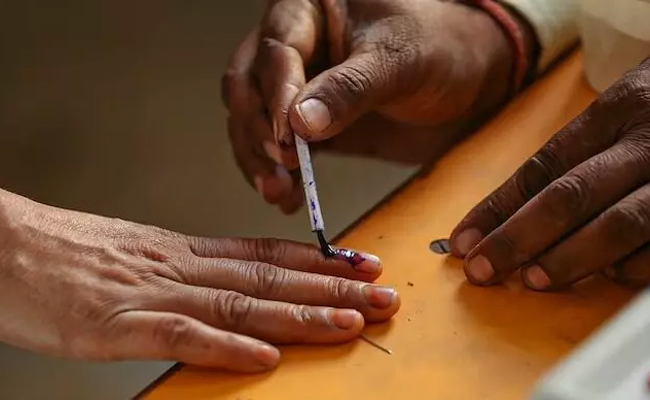
Kolkata (PTI): A sharp decline in the number of voters following the Special Intensive Revision (SIR) of electoral rolls has injected an element of uncertainty into the Kolkata Port Assembly constituency, considered a safe seat for the ruling Trinamool Congress (TMC).
The electorate in the south Kolkata constituency has dropped from 2.36 lakh in the 2021 Assembly polls to around 1.75 lakh, a fall of nearly 26 per cent, prompting political parties to closely assess its potential impact on the April 29 polling.
The TMC re-nominated senior minister and Kolkata Mayor Firhad Hakim, who has held the seat for two consecutive terms, while the BJP fielded Rakesh Singh. The Congress nominated Aquib Gulzar, and the CPI(M) put up Faiyaz Ahmad Khan, making it a four-cornered contest.
Kolkata Port, part of the Kolkata Dakshin parliamentary constituency, comprises dock areas, old business districts and densely populated neighbourhoods. Muslim voters form a significant segment of the electorate, alongside traders, transport workers and working-class Hindu families.
The reduction in voter numbers has prompted party workers across formations to scrutinise the revised rolls booth-wise to identify deletions and assess whether specific localities have been affected.
Singh’s candidature has added a twist to the contest. He had earlier contested against Hakim as a Congress candidate but is now in the fray on a BJP ticket.
Hakim won the seat in 2016 by 26,548 votes, defeating Singh, and increased his margin significantly to 68,554 votes in 2021, polling over one lakh votes.
While the TMC has expressed confidence in retaining the seat, opposition parties have raised concerns over the voter list revision, alleging that names of genuine voters have been removed.
“People here know who has stood by them. Elections are decided by trust,” Hakim told PTI during a campaign event.
Singh claimed several residents had complained about missing names in the rolls, stressing the need for transparency. The CPI(M) nominee also said voters in several areas had raised similar concerns.
The constituency has remained a difficult terrain for the opposition in recent elections.
Civic issues such as sanitation, traffic congestion and declining business activity in traditional markets also feature in the campaign in the constituency, though the revised voter list has emerged as a key talking point.
Polling in the constituency will be held in the second phase on April 29, with counting scheduled for May 4.