AIIMS-Delhi researchers call for relook at ban on e-cigarettes
New Delhi, Aug 10 (PTI): AIIMS-Delhi researchers have called for a relook at the ban on electronic nicotine delivery systems in India, contending that e-cigarettes with nicotine, when compared with no treatment or usual care, have been evidenced to be of benefit, albeit with a risk of bias.
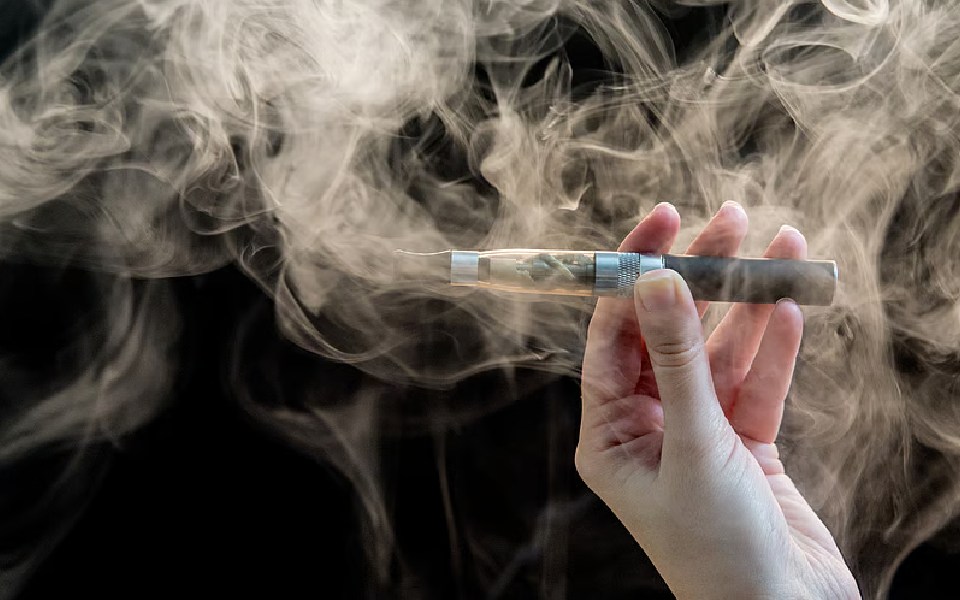
Electronic Nicotine Delivery Systems (ENDS), commonly known as e-cigarettes, are powered by batteries to simulate features of conventional tobacco smoking. In 2019, India banned the sale, storage and manufacture of such devices by bringing in the Prohibition of Electronic Cigarettes Act (PECA).
Examining the effects of this ban in light of current evidence, oncologists Dr Abhishek Shankar and Dr Vaibhav Sahni from AIIMS-Delhi, in a commentary published in the JCO Global Oncology this month, said a complete ban on such products "can (and has) routed demand towards illicit marketing".
They stated that the harms of following the abstinence approach in policy can be observed in the e-cigarette and vaping-associated lung injury outbreak in the United States, which was attributed to harmful ingredients in ENDS obtained from informal sources.
They stated that the United Kingdom, backed by Public Health England, followed a more pragmatic policy based on harm reduction, thereby adopting e-cigarettes as smoking cessation tools based on evidence.
Policy differences may be attributed to regulatory measures such as those on advertising, packaging, labelling, and lowering nicotine levels in e-fluids, the researchers said.
In their 2022 evidence update, the Public Health England found vaping to be associated with a minor fraction of conventional smoking risk in the short to medium term, while acknowledging the fact that vaping is not devoid of risks, especially for "never smokers".
The researchers said that India has seen some catastrophic results with a complete ban on liquor in some states, which has led to illicit commerce and deaths caused by consuming spurious products.
A complete ban on products may cause revenue loss to the administration as well, the doctors said, underlining that despite the ban, ENDS are available for sale at local shops and through online platforms, which may not even verify the purchaser's age before making the sale and even offer home delivery.
E-cigarettes, the AIIMS-Delho doctors stated, have been demonstrated to help people quit smoking, as evidenced by data supporting elevated quit rates. There is also evidence of moderate certainty that e-cigarettes with nicotine have greater quit rates in comparison with those without nicotine.
They also said e-cigarettes with nicotine, when compared with no treatment or usual care, have also been evidenced to be of benefit, albeit with risk of bias.
"There certainly appears to be a need for advocating at least a relook into the complete abstinence policy pertaining to ENDS as is being followed by the Government of India, which is guided by evidence.
"This will ensure that public health practices remain current and well-informed and people in need of appropriate cessation aids receive the help they need within the confines of a proper regulatory framework," the doctors recommended.
Talking to PTI, Dr Shankar, an assistant professor in the Department of Radiation Oncology at AIIMS-Delhi, said that available evidence conveys that the complete ENDS ban policy in India needs a relook.
"ENDS are a form of harm reduction and in a scenario where proven carcinogens such as alcohol and tobacco are not banned and ENDS are being illicitly marketed to never-smoking kids, certainly something like ENDS can be looked at for their cessation benefits with strict legislation and caution," he said.
Dr Vaibhav Sahni, a scientist in the Department of Radiation Oncology at AIIMS-Delhi, explained, "Since the ban was instituted, evidence has accrued to the extent that a relook into the ENDS policy is warranted."
"It is prudent practice to examine evidence in medicine from time to time in order to evaluate whether policy is still on the right TRACK," he told
Let the Truth be known. If you read VB and like VB, please be a VB Supporter and Help us deliver the Truth to one and all.
Car catches fire on Delhi-Mumbai Expressway in Rajasthan, five of family burnt alive

Jaipur (PTI): Five members of a family were burnt alive while the driver was seriously injured after a car caught fire on the Delhi-Mumbai Expressway in Rajasthan's Alwar district, police said on Thursday.
The incident took place near Maujpur on Wednesday night when the victims were returning from a pilgrimage to Vaishno Devi in Jammu and Kashmir.
Additional Superintendent of Police Priyanka Raghuvanshi said fire tenders were rushed to the spot and the blaze was brought under control in 15 minutes, but by then the car was completely gutted.
The deceased have been identified as Santosh, his wife Shashi, mother Parvati and daughters Raghani and Sakshi, all residents of Chainpura in Sheopur district of Madhya Pradesh.
Deputy Superintendent of Police Kailash Jindal said a short circuit is suspected to have triggered the blaze. As it was a CNG vehicle, the fire spread fast, leaving the occupants with no time to escape.
"Only skeletal remains were recovered from the vehicle, which have been preserved separately. DNA tests will be conducted to establish their identity," he said.
The car driver, identified as Vinod Kumar Mehar, managed to jump out of the vehicle but sustained around 80 per cent burn injuries. He was initially taken to a nearby health centre and later referred to Jaipur for advanced treatment, officials said.
Further investigation is underway.