Air India crash: What was the ‘MAYDAY’ call given by the plane before crashing in Ahmedabad?
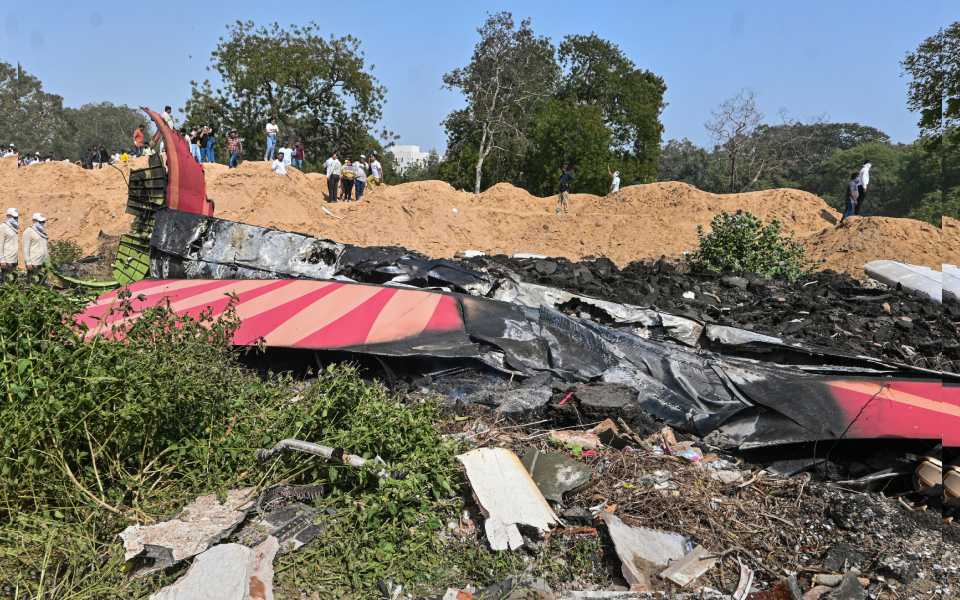
Ahmedabad: A tragic air crash occurred near Ahmedabad shortly after take-off on Thursday, when an Air India flight bound for London crashed into a residential area in Meghani Nagar. The plane, a Boeing 787 Dreamliner, had taken off from Ahmedabad International Airport at 1:38 PM with 242 people on board.
According to the Directorate General of Civil Aviation (DGCA), the pilots made a distress call, known as a “MAYDAY” call, to the Air Traffic Control (ATC) shortly after takeoff. This was the last communication from the aircraft. After the emergency message, the plane went silent and crashed moments later just outside the airport.
The flight was commanded by Captain Sumeet Sabharwal, a seasoned pilot with 8,200 flying hours, and First Officer Clive Kundar, who had 1,100 hours of experience.
What is a MAYDAY Call?
In aviation, “MAYDAY” is the most urgent distress signal that a flight crew can send to air traffic controllers. The term comes from the French phrase "m’aider", meaning "help me." It is repeated three times, “Mayday, Mayday, Mayday,” to avoid confusion with other radio messages.
Pilots issue a MAYDAY call when the aircraft faces a serious emergency such as an engine failure, severe weather, technical malfunction, or a medical crisis. The call alerts ATC and nearby aircraft that immediate help is needed. Once received, all other communications are paused, and the focus shifts to supporting the distressed flight.
In this case, the Air India aircraft gave the MAYDAY signal just after takeoff, but before the pilots could explain the situation or respond to further communication, the aircraft crashed.
169 Indian nationals, 53 British citizens, 7 Portuguese, and 1 Canadian were onboard the Air India flight. Emergency services rushed to the scene, and rescue operations are ongoing.
A full investigation into the cause of the crash is underway.
Let the Truth be known. If you read VB and like VB, please be a VB Supporter and Help us deliver the Truth to one and all.
Tribals, Scheduled Castes preserved India's identity and soul despite foreign invasions: Bhagwat
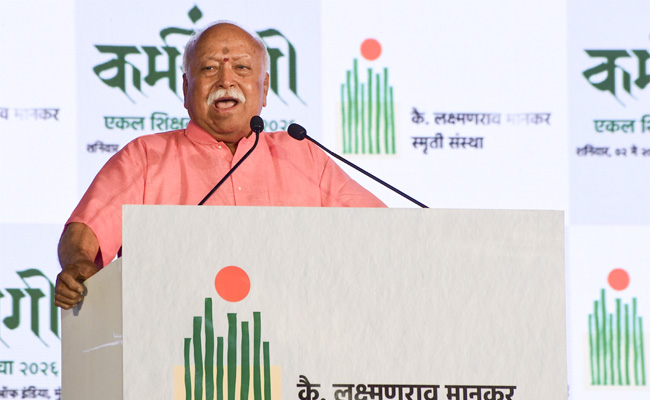
Mumbai (PTI): RSS chief Mohan Bhagwat has said that despite foreign invasions and hardships, tribal communities and Scheduled Castes preserved the country's identity and soul, stressing the need to integrate them into the mainstream development process.
He was speaking on Saturday at the Karmayogi awards ceremony in Mumbai, where Union Road Transport and Highways Minister Nitin Gadkari was also present.
"Human life is defined by giving back to the world, as we are all part of one great family. A person works and spends for the betterment of society, not as a favour, but out of duty. In serving others, we foster our own development. By helping others to thrive, we elevate ourselves and grow as human beings. This principle is the core value of this Indian land, commonly known as a Hindu society," Bhagwat said.
"This is the society's enduring ethos, which has survived for thousands of years. For various reasons, partly because of our indifference and partly because of foreign invasion, those who preserved this ethos paid a heavy price," he said.
The foreign invaders found that this ethos, this value system of the society is its soul and the key to keeping it alive. So they ensured that those who tried to preserve this soul would be uprooted and face extreme hardships, the Rashtriya Swayamsevak Sangh (RSS) chief noted.
But despite foreign invasions and hardships, tribal communities and Scheduled Castes preserved the country's identity and its soul, he said.
"Despite such adversities, the country's core identity remained intact among tribal communities and those belonging to SC and ST groups," he said, emphasising the need to integrate them into the mainstream development process while ensuring they receive equal access to services and facilities.
Referring to global developments, Bhagwat said the present world is "stumbling forward" and struggling to maintain balance, and asserted that India could emerge as a stabilising force.
The country must not only safeguard its own interests but also extend support to the world, he said.
"The world should get to see that the country is not only solving its own misery and sorrow but also helping the world to address similar issues," he said.
The RSS chief stressed that service to society is not a favour but a duty that contributes to one's own development.
Helping others grow also elevates individuals and strengthens the collective fabric of society, he said.
The so-called educated and developed sections have, over time, distanced themselves from these communities, Bhagwat pointed out, and called for the need to bridge this gap.
The identities preserved by these communities represent the true identity of Indian society, he said and underlined that without identity, existence itself is at risk.