Air India plane lands in Bucharest to evacuate Indians stranded in Ukraine

New Delhi(PTI): An Air India plane from Mumbai landed in the Romanian capital Bucharest on Saturday morning to evacuate Indians stranded in Ukraine due to the Russian military offensive.
The aircraft, AI1943, took off from the Mumbai airport around 3.40 AM (Indian Standard Time) and landed at the Bucharest airport around 10.45 AM (Indian Standard Time), senior government officials said.
Indian nationals, who reached the Ukraine-Romania border by road, have been taken to Bucharest by the Indian government officials so that they can be evacuated in the Air India flight, they noted.
AI1943, which is being operated on Boeing 787 aircraft, can carry 256 passengers at a time, they said.
Air India will operate more flights on Saturday to Bucharest and Hungarian capital Budapest to evacuate Indians stranded in Ukraine.
The Ukrainian airspace has been closed for civil aircraft operations since the morning of February 24 and therefore, the evacuation flights are operating out of Bucharest and Budapest.
Around 20,000 Indians, mainly students, are currently stranded in Ukraine, the officials said.
Before the closure of the Ukrainian airspace, Air India had operated a flight to Ukraine's capital Kyiv on February 22 that brought 240 people back to India.
It had planned to operate two more flights on February 24 and February 26 but it could not do so as the Russian offensive began on February 24 and the Ukrainian airspace was consequently shut down.
Air India said on Twitter on Friday night that it will be operating flights on B787 aircraft from Delhi and Mumbai to Bucharest and Budapest on Saturday as special government charter flights to fly back stranded Indian citizens.
The Indian embassy in Ukraine on Friday said it is working to establish evacuation routes from Romania and Hungary.
"At present, teams are getting in place at the following check points: Chop-Zahony Hungarian border near Uzhhorod, Porubne-Siret Romanian border near Chernivtsi," it said.
Indian nationals, especially students, living closest to these border checkpoints are advised to depart in an organised manner in coordination with teams from the Ministry of External Affairs to actualise this option, the embassy said.
Once the above-mentioned routes are operational, the Indian nationals travelling on their own would be advised to proceed to the border checkpoints, it noted.
The embassy advised Indian travellers to carry their passports, cash (preferably in US dollars), other essential items and COVID-19 vaccination certificates to the border checkpoints.
"Print out Indian flag and paste prominently on vehicles and buses while travelling," it said.
The distance between Kyiv and the Romanian border checkpoint is approximately 600 kilometres and it takes anywhere between eight-and-a-half hours to 11 hours to cover it by road.
Bucharest is located approximately 500 kilometres from the Romanian border checkpoint and it takes anywhere between seven to nine hours by road.
The distance between Kyiv and the Hungarian border checkpoint is around 820 kilometres and it takes 12-13 hours to cover it by road.
Let the Truth be known. If you read VB and like VB, please be a VB Supporter and Help us deliver the Truth to one and all.
Congress using hijab issue to pacify minority anger, alleges Karnataka LoP R Ashoka
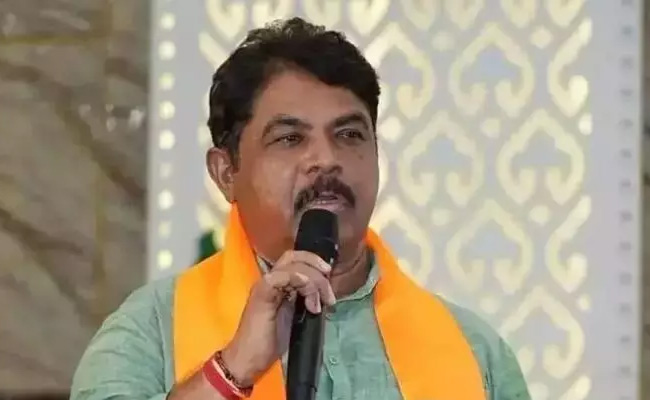
Bengaluru: Leader of Opposition in the Assembly R. Ashoka has accused the Congress government of using the hijab issue to placate what he described as discontent among minority voters after the Davanagere by-election.
In a post on X on Wednesday, Ashoka alleged that the state government, instead of addressing issues such as price rise, corruption, farmers’ distress and law and order, was attempting to retain its minority vote base by reviving the hijab issue.
Referring to the 2022 dress code introduced by the BJP government, which prohibited hijab in schools and colleges, Ashoka said the Karnataka High Court had upheld the policy and emphasised the importance of discipline in educational institutions.
He questioned the Congress government’s move to revisit the issue and asked whether setting aside the court-backed policy to benefit one community could be described as secularism.
Ashoka further alleged that while the government was willing to permit hijab, it continued to prohibit saffron shawls.
He accused the government of dividing students on religious lines rather than treating schools and colleges as spaces of equality.
Drawing a comparison with Mamata Banerjee’s government in West Bengal, Ashoka claimed that excessive appeasement politics had harmed the state and warned that the Congress in Karnataka could face a similar political response.
He said voters in Karnataka would teach the Congress a lesson for what he termed “vote-bank politics” and for compromising constitutional and judicial principles.