Air pollution because of thermal plant emissions, weather conditions: NGT issues notice to Centre
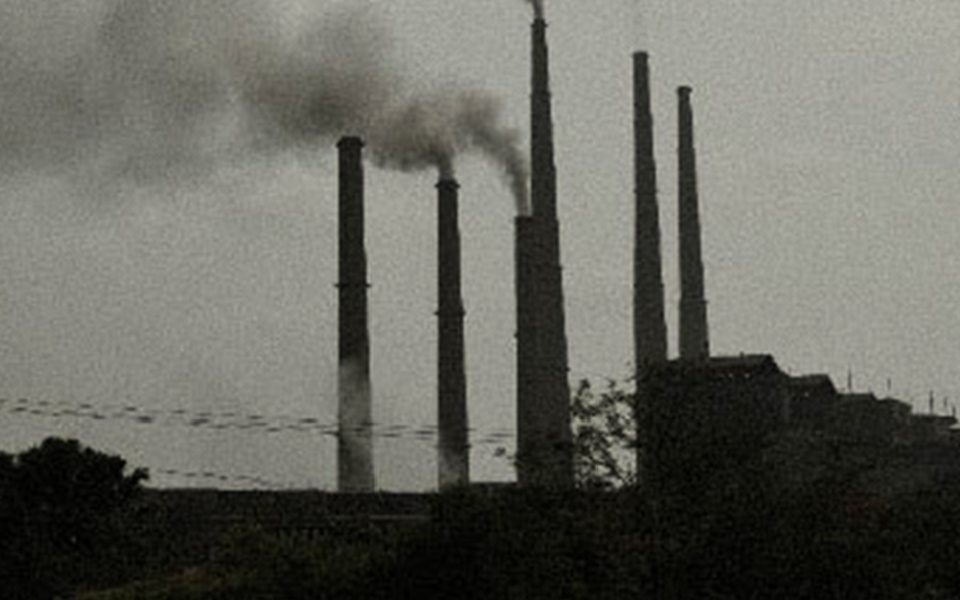
New Delhi, Dec 4: The National Green Tribunal has sought a response from the Centre on the "persistent air pollution crisis" in the national capital.
The NGT was hearing the matter where it had taken suo motu (on its own) cognisance of a media report based on a study about the reasons for air pollution being emissions from thermal plants and the prevailing weather conditions.
In an order passed on November 27, a bench of NGT Chairperson Justice Prakash Shrivastava said, "As per the article, a recent study by the Centre for Research on Energy and Clean Air (CREA) has revealed that thermal power plants in the region are responsible for emitting 16 times more air pollution than the pollution caused by stubble burning."
The bench also comprising judicial member Justice Arun Kumar Tyagi and expert member A Senthil Vel said that at present, Delhi was facing a "persistent air pollution crisis, with the Air Quality Index (AQI) (recently) reaching an alarming 488, falling under the severe plus category."
It noted that the report, which estimated that coal-fired thermal power plants in the NCR released 281 kilotons of sulfur dioxide (SO₂) annually, and that, in comparison, crop burning, often cited as a major source of pollution, emitted 17.8 kilotons of SO₂ from the burning of around 8.9 million tons of stubble.
The green body also said that as per the article, weather conditions in Delhi were exacerbating the pollution crisis and calm winds and dropping temperatures, also known as cold air traps, had hindered the dispersal of pollutants by trapping dust, smoke, and other harmful particles in the air.
"The matter indicates a violation of the Air (Prevention and Control of Pollution) Act and the Environment Protection Act. The news item raises substantial issues relating to compliance with the environmental norms," the tribunal said.
It impleaded as parties or respondents the secretary of the Union Ministry of Environment Forest and Climate Change and the member secretaries of the Central Pollution Control Board, Delhi Pollution Control Committee and the state pollution control boards of Haryana, Rajasthan, Uttar Pradesh and Punjab.
The director of the Commission for Air Quality Management in the National Capital Region (CAQM) was also included as a respondent.
"Issue notice to the respondents for filing their response/reply by way of affidavit at least one week before the next date of hearing (on March 19)," the tribunal said.
Let the Truth be known. If you read VB and like VB, please be a VB Supporter and Help us deliver the Truth to one and all.
Trump says EU has until July 4 to approve last year's trade deal or it will face higher tariffs
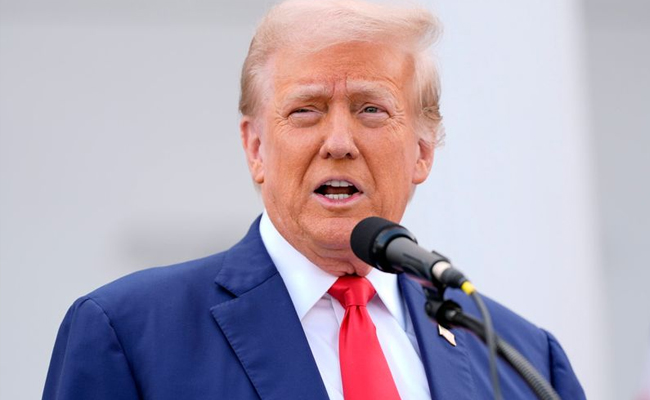
Washington (AP): President Donald Trump has said in a social media post that goods from the European Union would face higher tariff rates if the 27-member bloc fails to approve last year's trade framework by July 4.
The announcement on Thursday appeared to be a deadline extension after the president said last Friday that EU autos would face a higher 25 per cent tariff starting this week. Trump made the updated announcement after what he described as a "great call" with European Commission President Ursula von der Leyen.
Still, the US president was displeased that the European Parliament had yet to finalize the trade arrangement reached last year, which was further complicated in February by the US Supreme Court ruling that Trump lacked the legal authority to declare an economic emergency to impose the initial tariffs used to pressure the EU into talks.
"A promise was made that the EU would deliver their side of the Deal and, as per Agreement, cut their Tariffs to ZERO!" Trump posted. "I agreed to give her until our Country's 250th Birthday or, unfortunately, their Tariffs would immediately jump to much higher levels."
It was unclear from the post whether Trump was implying that the tariff rates would jump on all EU goods or the increase would only apply to autos.
His latest statement indicates he might be backing away from his earlier threat on EU autos by giving the European Parliament several more weeks to approve the agreement.
Under the original terms of the framework, the US would charge a 15 per cent tax on most goods imported from the EU.
But since the Supreme Court ruling, the administration has levied a 10 per cent tariff while investigating trade imbalances and national security issues, aiming to put in new tariffs to make up for lost revenues.