Air pollution: Indians breath toxic air eight times more dangerous compared to WHO standard
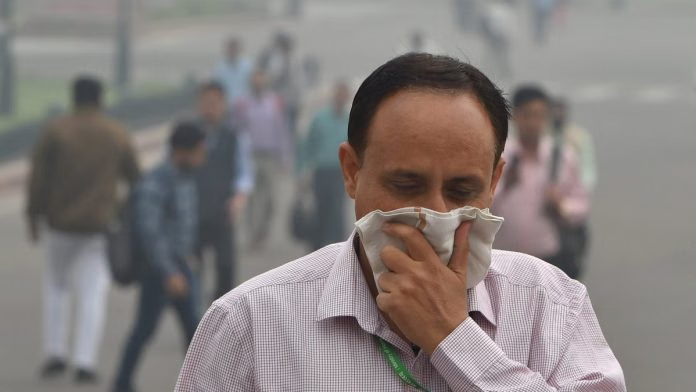
New Delhi: Every person in India is breathing air that contains eight times more toxic particles than the World Health Organization’s (WHO) safe air quality standards, according to a study by the Energy Policy Institute at the University of Chicago (EPIC).
The study, cited by Deccan Herald on Friday, warns that exposure to dangerously high levels of poisonous particles in air slashes the average life expectancy of Indians by 3.5 years. In Delhi, one of the most polluted city in the country, the impact is even more alarming: residents are expected to lose 8.2 years of life due to toxic air.
“Air pollution remains a top reason why people are living shorter lives throughout the world.” AQLI director Tanushree Ganguly said in a statement.
The report reveals that all of India’s 1.4 billion people live in areas where PM2.5 levels exceed the WHO’s guideline of 5 micrograms per cubic metre. PM-2.5 is the most dangerous toxic particle that penetrates the lungs and goes to the bloodstream. It is one of the two air quality indicators (along with PM-10) of dust that are monitored, added the report.
While the northern plains remain the most polluted, southern India also falls short of safe air standards. If pollution levels were brought down to WHO-recommended levels, life expectancy could increase by 1.6 years of life to everyone in Karnataka, 2.1 years in Andhra Pradesh, 2.4 years in Telangana, 1.7 years in Tamil Nadu, and 1.3 years in Kerala, as per the Air Quality Life Index created by a global team led by the University of Chicago.
Outside of Delhi and the northern plains, states like Rajasthan, Madhya Pradesh, and Maharashtra are among the worst affected by particulate pollution. According to the study, if air quality in these states were improved to meet the WHO’s safe standards, the average life expectancy could increase by 3.3 years in Rajasthan, 3.1 years in Madhya Pradesh, and 2.8 years in Maharashtra.
India's own air quality standard for PM2.5 is 40 micrograms per cubic metre, which is eight times the WHO limit. Yet 46% of the population still lives in areas exceeding even this threshold. Reducing particulate concentrations in these regions even to the Indian standard could add 1.5 years to the life expectancy of people living there.
Let the Truth be known. If you read VB and like VB, please be a VB Supporter and Help us deliver the Truth to one and all.
People are voting fearlessly in West Bengal this time: PM Modi
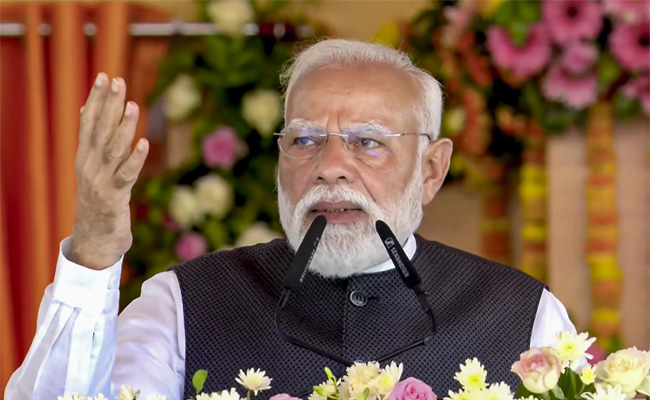
Hardoi (UP) (PTI): Prime Minister Narendra Modi on Wednesday said voters
are casting their vote in West Bengal this time in a "fearless atmosphere", which was unimaginable in the past six or seven decades.
He also asserted that the assembly poll results on May 4 will further strengthen the resolve of a developed India.
Voting is underway in 142 constituencies of West Bengal in the second and final phase of polling.
Addressing a gathering after the inauguration of the Ganga Expressway here, Modi said today marks an important day in the festival of democracy.
"Voting for the second phase is underway in Bengal, and reports indicate a massive turnout, with people stepping out in large numbers just like in the first phase. Images of long queues at polling stations are flooding social media, reflecting the enthusiasm of the people to exercise their democratic right," he said.
"What we are witnessing in Bengal today is unprecedented which was difficult to imagine in the past six to seven decades, a fearless environment where people are voting without fear," he said.
The prime minister said this is a powerful symbol of the country's Constitution and the strengthening of democracy.
"I express my gratitude to the great people of Bengal for being so aware of their rights and participating in large numbers," he said.
With several hours of voting still left, the prime minister urged the people of Bengal to continue participating in this democratic festival with the same enthusiasm.
Modi said in the recent Bihar Assembly elections, the BJP and NDA achieved a historic and decisive victory.
"Just yesterday, results of local body elections in Gujarat showed that the BJP secured victories in nearly 80 to 85 percent of municipalities and panchayats.
"The results on May 4 will further strengthen the resolve of a developed India and will infuse new energy into the pace of development of the country."
The first phase of polling for 152 seats -- out of the 294-member West Bengal assembly -- was held on April 23.
The counting of votes for assembly polls in Kerala, West Bengal, Puducherry, Assam and Tamil Nadu will take place on May 4.