Air pollution may hinder India's fight against COVID-19, say scientists
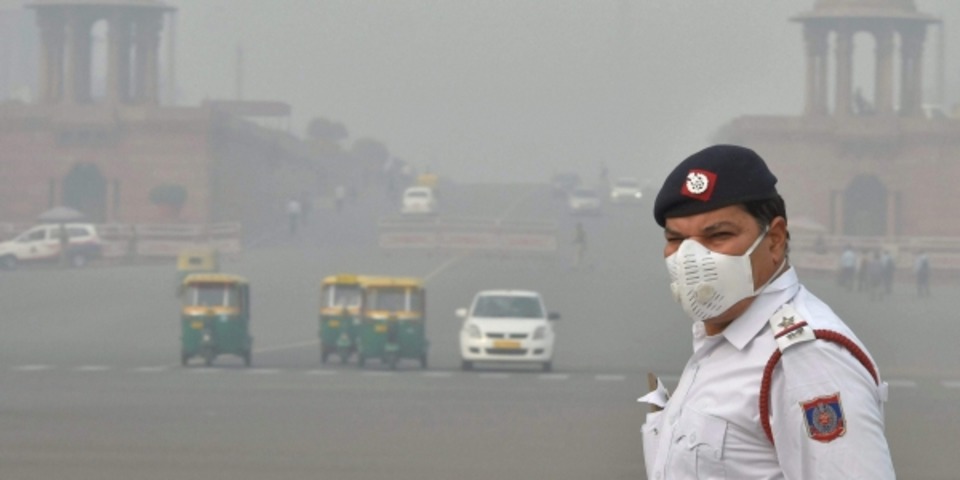
New Delhi: The causal link between air pollution and COVID-19 cases is yet to be established conclusively but long-term exposure will certainly make people more vulnerable to lung infections, warn scientists as the skies over large parts of north India, including Delhi, turn smoky and the air quality deteriorates rapidly.
Their concerns come amid several global studies pointing to the possible connection between higher air pollution levels and increased COVID-19 cases and deaths.
A study by researchers at Harvard University in the US in September showed that an increase of only one microgram per cubic metre in PM 2.5 is associated with an 8 per cent increase in the COVID-19 death rate.
Given the currently limited literature, the surge of PM2.5 level in Delhi may be associated with increased COVID-19 cases... Although the literature is relatively sparse at this stage, Xiao Wu, the corresponding author of the Harvard study, told PTI.
He said the relationship between long-term air pollution and COVID-19 has been documented in many studies, which indicate that adverse health impacts of air pollution can make people prone to the infection or exacerbate the severity of COVID-19 symptoms once infected.
This is interesting, especially considering COVID-19 causes viral pneumonia and acute respiratory distress syndrome, and severe inflammation to the heart and circulatory system, the scientist said.
Another study by the University of Cambridge in April found an association between living in an area of England with high levels of air pollution and the severity of COVID-19, caused by the SARS-CoV-2 virus.
Based on our findings, I would expect to see an association between higher levels of air pollution in India and COVID-19 in the winter, similar with what we found in England, said Marco Travaglio, the corresponding author of the Cambridge study.
If the levels of air pollution have been consistently above the legal limits for several months or years before this coming winter, I would expect to see a relationship between those levels and COVID-19 burden across different parts of India in November and thereafter, Travaglio told PTI.
He noted that a key component of PM2.5 toxicity is its composition which may vary considerably between countries.
Nonetheless, the WHO legal limits for PM2.5 are currently set at 10 g/m (microgrammes per cubic metre) annual mean. Levels beyond 500 g/m are extremely high and may have a considerable impact on people's health in relation to COVID-19 but also beyond it, said Travalgo.
The level of small particulate matter (PM2.5) levels in Delhi have averaged around 180-340 g/m in the past few weeks while that of bigger pollution particles (PM10) has hovered between 120 and 450 during the time.
Long-term exposure to chronically high PM2.5 levels weakens the ability of the lungs to fend off infections, therefore making people more susceptible to COVID-19, the scientists said.
In addition, studies from Italy have shown that traces of SARS-CoV-2 RNA, the genetic material of the virus, can be found on pollution particles, meaning that increased air pollution may act as a vehicle to increase COVID-19 transmission in highly polluted places.
The air quality in north India is expected to deteriorate further from November to February due to several factors such as stubble burning, festive fireworks and low wind speed conditions which lead to an uptick in vehicular and industrial pollution being trapped in the lower atmosphere.
"In view of this evidence, high levels of PM2.5 in Delhi may lead to a higher number of COVID-19 cases, Travalgo added.
Studies in humans have shown that toxic air particles can penetrate airways and cause widespread infiltration of lung cells.
This chronic state of inflammation may induce or aggravate health conditions such as asthma, chronic obstructive pulmonary disease, cardiovascular diseases and diabetes, experts said.
Because these conditions have been widely found to be associated with increased risk of contracting COVID-19 or incurring into critical illness, it is likely that air pollution acts as a risk factor to increase the susceptibility to COVID-19.
India has the world's second-highest caseload of over 7.9 million and the third-highest death toll with more than 115,000 from the novel coronavirus.
The National Centre for Disease Control (NCDC) has warned that Delhi is likely to report around 15,000 COVID-19 cases daily in winter because of the prevalence of respiratory illnesses during this season that worsens the symptoms of the disease. On Sunday, the national capital recorded 4,136 fresh COVID-19 cases, the highest single-day spike in 38 days.
D J Christopher, head of pulmonary medicine at the Christian Medical College in Tamil Nadu, noted that the increased severe form of COVID-19 among patients would lead to increased ICU hospitalisation, thereby increasing the burden of the healthcare system.
The lung is the gateway to the body and takes the first impact from inhaled pollutants. It causes an inflammatory response which damages the lung and makes it more susceptible to infections, Christopher.
'Let us hope the numbers are not so high. There is a chance of hospital beds getting filled and a shortage of ICU beds, he added.
Prof Rajneesh Bhardwaj concurred, saying there is growing scientific evidence that airborne respiratory droplets carrying the virus travel and contaminate the air after an infected person coughs. He added that pollution may help this airborne droplet to remain suspended for a longer time and may increase the spread of COVID-19.
PM2.5 are finer particles which remain suspended in the air for a long time and hence droplet or viral particles can cling on to these particles to increase the risk. They may increase the number of cases as pollution increases especially with large PM2.5 levels," says Bhardwaj, associate professor at the Indian Institute of Technology-Bombay.
He said the government should make contingency plans to deal with an expected large number of cases and warned that any healthcare system can be overwhelmed by a larger number of cases.
According to pulmonologist Anurag Agarwal, however, the relation between air pollution and COVID-19 cases is very complex. While in general high air pollution increases the risk of respiratory infections, it is difficult to say much more, he said.
Studies finding more infections and deaths in areas with high pollution have tried to statistically adjust for higher population density in polluted cities. Such adjusted correlations are interesting but do not represent the proof, Agarwal, director of the CSIR Institute of Genomics and Integrative Biology, told PTI.
"Nevertheless, it is clear that air pollution is bad for health and COVID-19 is more dangerous in unhealthy people. So the message is clear - we must take steps to reduce air pollution for many reasons, he added.
Let the Truth be known. If you read VB and like VB, please be a VB Supporter and Help us deliver the Truth to one and all.
US warns shipping firms they could face sanctions over paying Iranian tolls in Strait of Hormuz
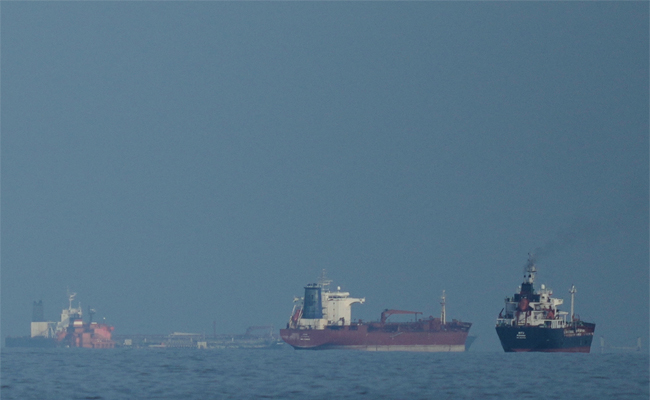
Dubai (AP): The United States is warning shipping companies that they could face sanctions for making payments to Iran to safely pass through the Strait of Hormuz.
The alert posted Friday by the US Office of Foreign Assets Control adds another layer of pressure in the standoff between the US and Iran over control of the Strait of Hormuz.
About a fifth of the world's trade in oil and natural gas typically passes through the strait at the mouth of the Persian Gulf in peacetime.
Iran effectively closed the strait to normal traffic by attacking and threatening to attack ships after the US and Israel launched a war on Feb. 28. It later began offering some ships safe passage by detouring them through alternate routes closer to its shoreline, charging fees at times for the service.
That "tollbooth” effort is the focus of the US sanctions warning.
The payment demands could include transfers not only in cash but also “digital assets, offsets, informal swaps, or other in-kind payments,” including chartibale donations and payments at Iranian embassies, OFAC said.
“OFAC is issuing this alert to warn US and non-US persons about the sanctions risks of making these payments to, or soliciting guarantees from, the Iranian regime for safe passage. These risks exist regardless of payment method,” it said.
ALSO READ: Student preparing for NEET dies after falling from hostel's fourth floor in Kota
The US responded to Iran's closure of the strait with a naval blockade of its own on April 13, preventing any Iranian tankers from leaving and depriving Iran of oil revenue it needs to shore up its ailing economy.
The US Central Command said 45 commercial ships have been told to turn around since the blockade began.
Trump rejects Iranian proposal
--------------------------------------
The warning came as US President Donald Trump swiftly rejected Iran's latest proposal to end the war between the countries.
“They want to make a deal, I'm not satisfied with it, so we'll see what happens,” Trump said Friday at the White House. He didn't elaborate on what he saw as its shortcomings but expressed frustration with the Iranian leadership.
“It's a very disjointed leadership,” Trump said. “They all want to make a deal, but they're all messed up.”
Iran's state-run IRNA news agency reported Iran handed over its plan to mediators in Pakistan on Thursday night.
The shaky three-week ceasefire between the US and Iran appears to be holding, though both countries have traded accusations of violations. The standoff is increasingly putting pressure on the global economy, driving up prices and leading to shortages of fuel and other products tied to the oil industry.
Negotiations continued by phone after Trump called off his envoys' trip to Pakistan last week, the president said. Trump this week floated a new plan to reopen the critical passageway used by America's Gulf allies to export their oil and gas.
Iranian Foreign Minister Abbas Araghchi has briefed many of his regional counterparts on the country's initiatives to end the ear, according to his social media. He also held talks Friday with European Union foreign policy chief Kaja Kallas, who is in contact with the EU's Gulf partners.
China's UN envoy urges Iran to lift restrictions
------------------------------------------------------
Fu Cong, the Chinese ambassdor to the United Nations, said Friday that maintaining the ceasefire is “the most urgent issue" as well as bringing together the sides to resume good faith negotiations “to make sure that the ground is laid for reopening of Hormuz.”
Foreign Minister Wang Yi “has been on the phone almost constantly” with representatives from all sides, Fu said, adding that China supports Pakistan's efforts to mediate between the parties.
Fu stressed the root cause of the tremendous suffering in Iran and neighboring countries and the growing turmoil in the global economy, especially in developing countries, “is the illegitimate war by the US and Israel.