Air pollution: SC asks NHAI, MCD to consider shifting or closing 9 toll plazas at Delhi borders
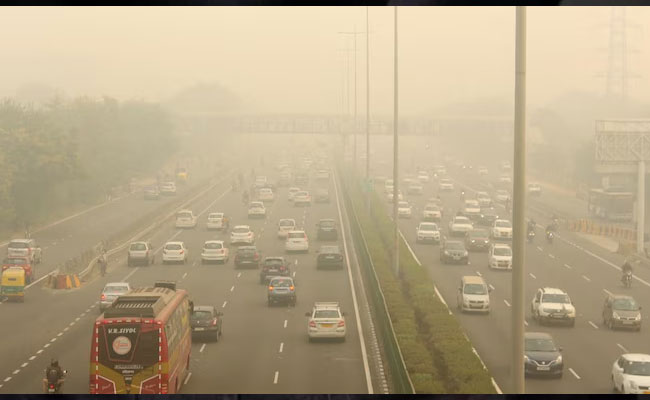
New Delhi (PTI): Taking a serious note of the severe air pollution levels in Delhi-NCR, the Supreme Court on Wednesday issued a slew of directions and asked the NHAI and the MCD to consider either temporary closing or relocating the nine toll plazas at borders of the national capital to ease usual massive traffic congestion.
The top court described the pollution crisis as an "annual feature" and called for pragmatic and practical solutions to tackle the menace.
It, however, refused to interfere with the Delhi government's decision to close schools for students from nursery to Class 5, holding that no further tinkering was required as the winter break was already approaching.
In an effort to ease vehicular congestion at Delhi's borders, a bench headed by Chief Justice Surya Kant asked the National Highways Authority of India (NHAI) and the Municipal Corporation of Delhi (MCD) to consider shifting or temporarily closing nine toll plazas located at entry points to the capital.
ALSO READ: 'Homebound' makes it to Oscar shortlist for best international feature
The MCD was specifically directed to take a decision within one week on whether these toll plazas could be shut temporarily to facilitate smoother traffic flow and reduce vehicular emissions.
The bench underscored the need for effective implementation of existing measures rather than merely framing protocols that remain not complied with.
"Let us think of pragmatic and practical solutions of the menace," the Chief Justice remarked, noting that while preventive mechanisms exist, their enforcement has been consistently weak.
Taking note of the impact of pollution-related restrictions on livelihood, the bench directed the Delhi government to urgently verify construction workers rendered idle due to curbs and ensure that financial assistance is directly transferred to their bank accounts.
Additional Solicitor General Aishwarya Bhati, appearing for the Delhi government, informed the bench that around 7,000 workers have so far been verified out of nearly 2.5 lakh registered construction workers, and assured that money would be transferred to their accounts directly.
However, the bench cautioned against any leakages in the process, observing that "it should not be that money transferred to workers’ accounts disappears or travels to another account".
ALSO READ: Woman threatens to end life as police official refuses to accept love proposal, FIR registered
It also asked the Delhi government to consider providing alternative work to construction workers who are unable to earn due to restrictions imposed to curb pollution.
Observing that air pollution has become a recurring phenomenon every winter, the bench directed the Commission for Air Quality Management (CAQM) to revisit and strengthen its long-term strategies.
It also asked CAQM and NCR governments to examine critical issues such as urban mobility, traffic management, and incentivising farmers to prevent stubble burning, stressing that piecemeal approaches would not resolve the crisis.
The bench has now listed the PIL filed by environmentalist M C Mehta for further direction on January 6 and reiterated that this plea has to be heard at least twice in a month around the year.
Let the Truth be known. If you read VB and like VB, please be a VB Supporter and Help us deliver the Truth to one and all.
Maharashtra sets up state vaccination task force to strengthen immunisation programme

Mumbai (PTI): The Maharashtra government has set up a State Vaccination Task Force to strengthen the regular immunisation programme and review the progress of related campaigns, a health department official said on Monday.
The State Vaccination Task Force will comprise at least 29 members and will be headed by the administrative head of the health department, he informed.
The government has also constituted separate district-level and municipal vaccination task forces to improve implementation and address challenges at the grassroots level, he said.
Municipal task forces, chaired by respective civic commissioners, have been constituted in view of the vast urban population in Maharashtra and the role of civic bodies in implementing different health programmes.
The district-level task forces will function under the chairmanship of collectors.
"Complete immunisation of children at the appropriate age is an extremely simple, cost-effective and highly effective measure to reduce child mortality and the prevalence of diseases among kids. Immunisation is a powerful tool for reducing illness in children," maintained the official.
To ensure full vaccination of all children, the state government implements various campaigns from time to time as per the central government guidelines, he pointed out.
"Active participation and cooperation of other relevant government departments are essential (in making these campaigns successful)," according to the official.
The state-level body will review the regular immunisation programme, associated campaigns and vaccine-preventable diseases in detail. It will also conduct focused assessments of high-risk districts and municipal corporations, including vacancies at district, municipal and sub-district levels, availability of cold chain equipment, resource gaps and training requirements, he noted.
The state task force will review allocation and utilisation of funds for immunisation and ensure timely action by officers concerned based on reports from district and municipal task forces and state-level monitoring mechanisms, the official said.
It will also ensure active coordination and participation of other government departments in immunisation drives, while district and municipal task forces will carry out similar functions at their respective levels, the official added.