Air quality dips to 'very poor' in Delhi on Diwali
New Delhi: A layer of haze blanketed the national capital and its air quality dipped to "very poor" category with revellers continuing to defy with impunity the Supreme Court-enforced two-hour limit for bursting crackers on Diwali on Sunday.
Ear-deafening booms, toxic smoke and ash from firecrackers filled the air as the overall air quality index crossed the "severe" mark at many places.
People reported violation of the two-hour window in Malviya Nagar, Lajpat Nagar, Kailash Hills, Burari, Jangpura, Shahdara, Laxmi Nagar, Mayur Vihar, Sarita Vihar, Hari Ngar, New Friends Colony, Dwarka among others places.
Residents in Noida, Gurgaon and Ghaziabad also reported extensive fireworks much beyond the timeframe. The people could also be seen bursting crackers before 8 PM, however, the intensity remained low. At 11 pm, Delhi's overall air quality index stood at 327, according to government agencies. On Saturday, AQI stood at 302.
The government's air quality monitor, SAFAR, predicted that the overall air quality index may plunge to "severe" category tonight due to firecracker emissions, unfavourable weather and a significant spike in stubble burning.
The levels of PM10 -- tiny particulate matter of diameter 10 or less than 10 microns that can enter deep into the lungs -- reached as high as 515 micrograms per cubic metre in Anand Vihar during the day.
In Wazirpur and Bawana, PM 2.5 levels crossed the 400 mark.
An AQI between 0-50 is considered "good", 51-100 "satisfactory", 101-200 "moderate", 201-300 "poor", 301-400 "very poor", and 401-500 "severe". Above 500 is "severe-plus emergency" category.
Twenty-five of the 37 air quality monitoring stations in the capital recorded their AQI in "very poor" category or beyond. The AQI in the satellite towns of Faridabad, Ghaziabad, Greater Noida and Noida was 320, 382, 312 and 344, respectively, at 11 pm.
After last year's Diwali, Delhi's AQI had crossed the 600-mark, which is 12 times the safe limit. In 2017, the AQI post-Diwali was 367.
With Delhi's air quality plummeting to dangerous levels around Diwali every year, the Supreme Court in 2018 banned polluting firecrackers and ordered that only green firecrackers, which is said to cause 30 per cent less pollution, can be manufactured and sold.
But the green pyrotechnics have failed to draw good response both from sellers and buyers, primarily due to lack of variety, limited stock and high prices.
Last year also, people continued to buy the conventional firecrackers and use them.
According to the System of Air Quality and Weather Forecasting and Research (SAFAR), the highest impact of firecracker emissions is expected early on Monday from 1-6 am.
"If 50 per cent of the total load of firecrackers (average of Diwali 2017 and 2018) is added, the AQI may plunge to the severe category for a short period," it said, adding the situation would be not as bad as last year.
The period between October 15 and November 15 is considered critical for Delhi-NCR's air quality due to stubble burning in neighbouring states, firecracker emissions on Diwali and weather patterns across the region trapping pollutants in the atmosphere.
The weather department said, primarily, the westerly winds, which carry smoke from stubble burning in Haryana and Punjab to Delhi-NCR, were blowing in the region.
SAFAR said stubble-burning incidents in Haryana and Punjab are increasing gradually and following almost the same pattern as last October.
The share of stubble burning in Haryana and Punjab in Delhi's PM2.5 concentration could increase to 19 percent on Sunday, it said.
On Saturday, the Delhi government launched a four-day mega laser show in an effort to discourage residents from bursting firecrackers and celebrating Diwali with lights and music. During the show, laser lights were beamed in sync with patriotic songs and Ramayana narration.
The prevailing air pollution in the national capital region has also become a cause for concern ahead of the T20 International between India and Bangladesh at the Feroz Shah Kotla on November 3.
Back in December 2017, the Sri Lankan cricket team was left gasping for breath during a Test match at the Kotla, forcing most of their players to wear protective masks even as some fell ill.
BCCI and DDCA officials are now hoping that the city's poor air quality doesn't become an issue during the night encounter.
Apprehending a dip in air quality, the Supreme Court-mandated Environment Pollution (Prevention and Control) Authority on Friday banned construction activities at night in Delhi-NCR from Saturday to Wednesday.
It also directed closure of coal-based industries, barring power plants, in Faridabad, Gurgaon, Ghaziabad, Noida, Greater Noida, Sonepat and Bahadurgarh during the period.
On EPCA's direction, the Delhi Pollution Control Committee (DPCC) have also ordered the closure of industries, which have not yet shifted to piped natural gas, from Saturday-Wednesday.
A PMO-led panel has directed implementing agencies and the NCR states to intensify anti-pollution measures up to mid-November so that there is immediate impact on air quality.
The Centre has also asked Haryana and Punjab to stop stubble burning completely for the next "critical" days.
Let the Truth be known. If you read VB and like VB, please be a VB Supporter and Help us deliver the Truth to one and all.
SC to hear on May 4 PIL seeking stringent guidelines for issuing Aadhaar to adolescents, adults
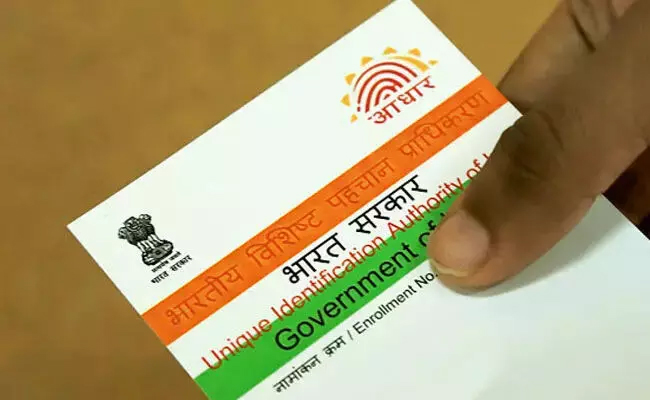
New Delhi (PTI): The Supreme Court is scheduled to hear on Monday a plea seeking a direction to the Unique Identification Authority of India to issue new Aadhaar cards only to citizens up to the age of six years, and frame stringent guidelines for its issuance to adolescents and adults to stop infiltrators from masquerading as Indian citizens.
As per the apex court's causelist of May 4, the plea would come up for hearing before a bench of Chief Justice Surya Kant and Justice Joymalya Bagchi.
The Public Interest Litigation (PIL) filed by lawyer Ashwini Upadhyay has also sought a direction to the authorities to install display boards at common service centres stating that the 12-digit unique identification number is only a "proof of identity" and not a proof of citizenship, address or date of birth.
Besides all the states and Union Territories, the plea has made the UIDAI -- which is the authority that issues Aadhaar -- and the Union ministries of home, law and justice, and electronics and information technology as parties.
The plea, filed through advocate Ashwani Dubey, said Aadhaar, originally intended as a proof of identity, has increasingly become a "foundational document" enabling individuals to obtain other identification documents, such as ration cards, domicile certificates and voter identity cards.
"The UIDAI has issued 144 crore Aadhaar and 99 percent Indians have been enrolled. Therefore, the petitioner is filing this writ petition as a PIL under Article 32, seeking a direction to UIDAI to issue new Aadhaar to children only and frame new stringent guidelines for adolescents and adults, so as to stop infiltrators from getting it and masquerading as Indian citizens," the plea said.
It said the need to file the plea arose when the petitioner came to know the manner in which infiltrators are able to procure Aadhaar through a verification process that is weak and can be easily manipulated.
"Foreigners apply for Aadhaar under the 'foreign' category. But infiltrators apply for Aadhaar under the 'Indian citizen' category and get it easily made. Thereafter, they obtain a ration card, birth and domicile certificate, driving licence, et cetera, essentially becoming indistinguishable from Indian citizens…," it said.
Besides seeking other directions, the plea has raised legal questions, including whether the Aadhaar Act 2016 has become "temporally unreasonable" for failing to keep up with the legislative intent of distinguishing foreigners from Indian citizens.
It said the alleged misuse of Aadhaar undermines targeted welfare delivery and leads to diversion of public resources.