Akasa Air moves Delhi HC for action against pilots not serving notice period following resignation
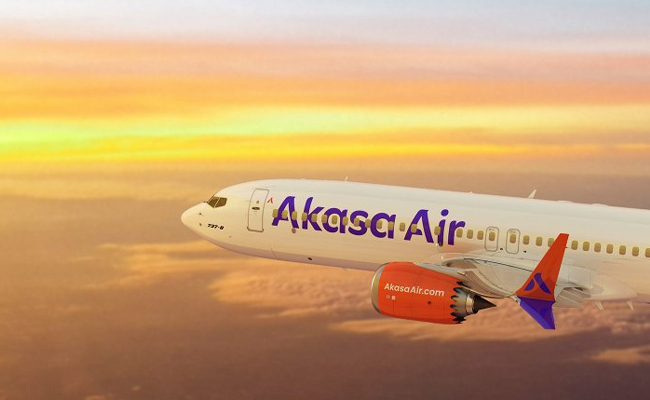
New Delhi (PTI): The fledgling Akasa Air has approached the Delhi High Court seeking a direction to the DGCA to take action against pilots who left the airline without serving the mandatory notice period.
The airline, which operated its first commercial flight between Mumbai and Ahmedabad on August 7, 2022, has hit turbulence following the resignation of several pilots. It told the court it will have to cancel a large number of flights in September due to the resignations.
The airline told Justice Manmeet Pritam Singh Arora the company was in a "state of crisis" because of these resignations and had to cancel multiple flights every day this month.
The court has asked the parties to file their written synopsis in the matter and listed it for further hearing on September 22.
The court also sought to know from the Directorate General of Civil Aviation (DGCA), represented by advocate Anjana Gosain, as to what action it takes in case flights have to be cancelled due to pilots' resignation.
The airline has also sought hefty compensation from the pilots for loss of revenue owing to cancellation of flights.
SNV Aviation Private Limited, which flies under the brand name Akasa Air, has sought a direction to the DGCA to "take coercive action against pilots who fail to comply with the mandatory notice period requirements, in terms of the Civil Aviation Requirement "
"We have sought legal remedy only against a small set of pilots who abandoned their duties and left without serving their mandatory contractual notice period," an Akasa Air spokesperson had earlier said in a statement.
While first officers have to mandatorily serve a notice period of six months, the requirement for captains is one year.
The airline said the act was not only in violation of their contract but also the country's civil aviation regulation.
"Not only is this illegal in law but also an unethical and selfish act that disrupted flights in August forcing last minute cancellations that stranded thousands of customers causing significant inconvenience to the travelling public," it said.
Let the Truth be known. If you read VB and like VB, please be a VB Supporter and Help us deliver the Truth to one and all.
Karnataka launches India’s first digital grievance system for gig workers
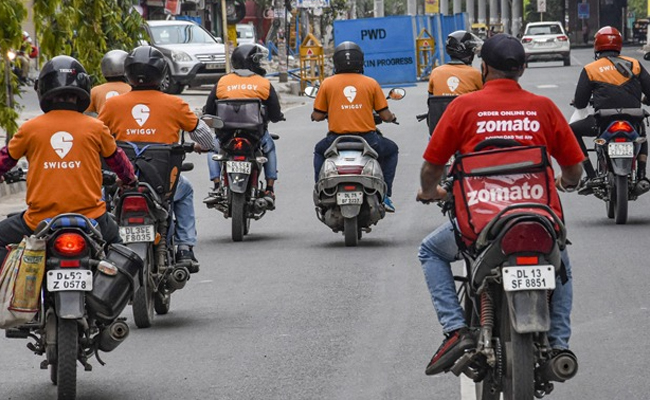
Bengaluru: In a first-of-its-kind initiative in India, the Karnataka government has launched a digital grievance redressal system for gig workers to provide structured support and protection to platform-based workers.
According to The Hindu, the system, developed by the Karnataka Platform-based Gig Workers’ Board in collaboration with the Department of e-Governance, allows workers to file complaints through the Integrated Public Grievance Redressal System (IPGRS).
Gig workers can raise issues related to pay, working conditions, and platform-specific disputes. Complaints will be routed to the Internal Dispute Resolution Committees (IDRCs) of respective platforms and are expected to be resolved within a defined timeframe. This is expected to bring transparency and legal recourse for a workforce that has so far operated without a formal dispute resolution framework.
Under The Karnataka Platform-Based Gig Workers (Social Security and Welfare) Act and Rules, every aggregator platform must constitute an Internal Dispute Resolution Committee (IDRC). Platforms such as Namma Yatri and Yulu have already integrated their IDRC contact details with the government portal.
Around 12 lakh gig workers have been identified in the state, and a unique identification system is being developed to remove duplicate entries. Officials said welfare schemes are also being designed based on type of work, working hours, and contribution.
Labour Minister Santosh Lad said that Karnataka, technology capital of the country, is leveraging this potential for worker welfare as well. “By launching this system, we are ensuring that the gig economy is no longer an informal space, but a structured one where every worker’s voice is heard,” he said.
“The schemes will vary based on the type of platforms. For example, cab rides are mostly undertaken by men whereas urban domestic activity is undertaken mostly by women. It may also be based on the contribution made, and the quantum of gig work done by a gig worker. Some gig workers work for more than eight hours while some may work on a few gigs. So, work load, nature of work, and time period of work could vary,” TH quoted G. Manjunath, Additional Labour Commissioner and CEO of the Board as saying.
“It has to be scientifically structured based on their effort and labour. We are working with experts, including academicians from Briston University, King’s College, and IISc, and other stake holders, including board members,” he said.
Officials added that aggregator platforms will be required to contribute 1 per cent towards worker welfare, with implementation beginning July 5.