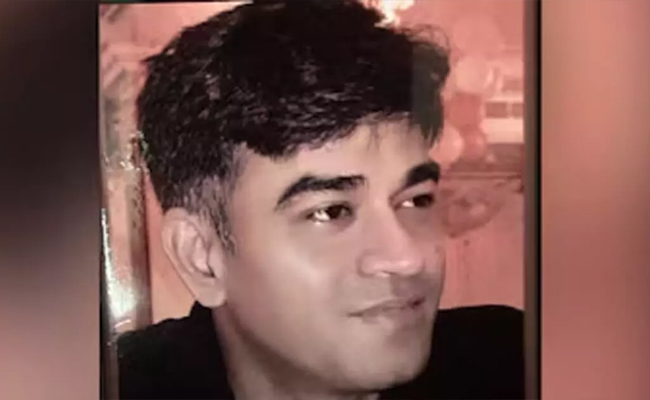
Akhil Gogoi treated for emotional imbalance, mental disease: Assam CM Himanta Biswa Sarma
Opposition terms Assam CM remark on Gogoi's health condition inappropriate, insulting
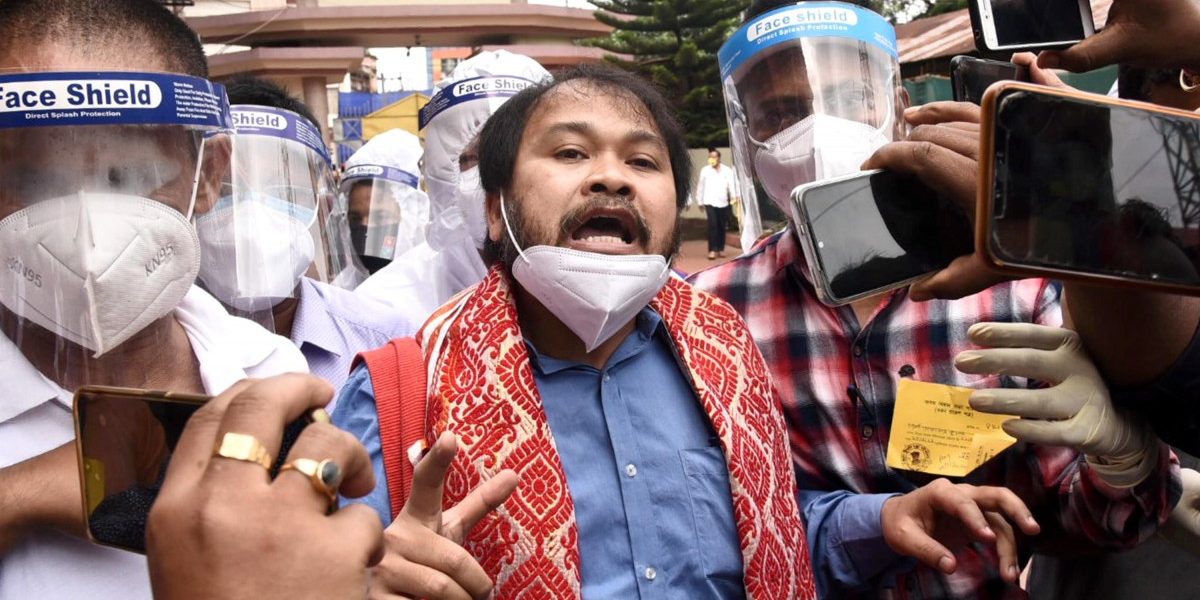
Guwahati, May 25: Jailed anti-CAA activist and MLA Akhil Gogoi is suffering from "psychological issues" and getting treatment for "emotional imbalance and mental disease", Assam Chief Minister Himanta Biswa Sarma said in the assembly on Monday.
Replying to a discussion on the Motion of Thanks on the Governor's address, Sarma dismissed the request of the opposition Congress to allow Gogoi to attend the Assembly session but said that the government has not kept any negative view against anyone.
"He (Gogoi) was informed that he is not in a sound mental state. He is getting treatment on psychological issues.
He is getting treatment for emotional imbalance and mental disease," the chief minister said.
On May 21, the first day of the three-day session, the RTI activist-turned-politician came to the assembly to take oath as an MLA after obtaining permission from a Special NIA court. He is currently in judicial custody.
Sarma said, "He (Gogoi) came to the assembly that day.
Forgetting Covid protocol, he just went to every member inside the House. This is a pre-warning of a disease. The doctors of the GMCH told me that this is his disease.
"I asked the doctors that he looks healthy, so why have you kept him in the hospital? Is it to help him anyway? They said no sir, this is his disease."
Immediately after taking oath on Friday, Gogoi went to the seats of every minister, all ruling and opposition MLAs, and greeted each of them by either shaking hands or with folded hands. Every member reciprocated the gesture.
The chief minister questioned Congress MLA Bharat Narah how the assembly can allow a sick person to attend the House.
Narah had on that day requested the Speaker to allow Gogoi to attend the other two days of the session.
The NIA had arrested Gogoi in December 2019 for his alleged role in violent anti-Citizenship (Amendment) Act protests across the state. He was last year admitted to Gauhati Medical College and Hospital (GMCH) for treating COVID-19 and he remains there for other ailments.
Sarma said, "The government has not kept any negative view against anyone. Questions were asked why Akhil Gogoi was brought in a bus? It's Covid time and if five security personnel come in a car, will Covid not spread? It's the government responsibility to bring him in a spacious bus so that Covid protocols can be maintained."
The chief minister said that if Gogoi says he is healthy, then he will have to go to jail as per the law and if he is unwell, then he has to be at the paying cabin of the GMCH without attending the Assembly.
"Now, who will take the decision? He asked the Speaker to write (to the authorities concerned for allowing him to attend the remaining two days of the session).
"Why will a Speaker write for an ill person? This is our government's view. From a law and order issue, he can come. But a sick person cannot be exposed. That is why he is at GMCH," he added.
The Congress had also supported Gogois request and Narah urged the Speaker to write to the administration to do the needful.
Following this, the Assembly Secretariat wrote to the Home and Political Department, which replied that Gogoi may be advised to approach the NIA Court as his case is sub-judice.
If Gogoi is allowed to attend the Assembly, the court will ask every member of the medical board how he is roaming around despite being in a hospital, the chief minister said.
"So, I think we will get enough media to score political points. He came to me also, I asked him why he came to me. He did not leave a single table, everywhere he went.
For a moment, I thought he came to spread Covid here. Later (Gogoi) said that there is no Covid where he is kept," Sarma said.
Gogoi had reached the assembly on May 21 in a heavily escorted bus from the GMCH, and he was allegedly manhandled by security personnel twice in the compound.
Speaker Biswajit Daimary had said on that day that he will raise the issue of alleged manhandling with the authorities concerned.
Gogoi, the chief of the newly formed Raijor Dal who defeated the BJP's Surabhi Rajkonwari from the Sibsagar constituency, is the first Assamese to win an election from behind the bars without any physical campaigning.
The Congress and the Raijor Dal of Akhil Gogoi on Tuesday separately described the statement of Assam Chief Minister Himanta Biswa Sarma in the assembly that the jailed anti-CAA activist and MLA is a patient of mental disease as "highly inappropriate" and "insulting".
The state Congress said that the chief minister's comment is extremely unfortunate as society is still fighting against the stigma on mental health issues.
"Such a statement on the mental health condition of an opposition leader who is not even present in the august house is highly insensitive, undignified and unbecoming of a person who is occupying the highest position in the state," the Congress said in a release.
Accusing Sarma of violating a patient's right to privacy by divulging his ailments publicly, the Raijor Dal formed by Gogoi ahead of the assembly election said that the matter will be taken up with the appropriate authority.
"He (Gogoi) was informed that he is not in a sound mental state. He is getting treatment for psychological issues. He is getting treatment on emotional imbalance and mental disease," the chief minister said in the assembly on Monday, the last of a three-day session.
On May 21, the first day of the session, the RTI activist-turned-politician came to the assembly to take oath as an MLA after obtaining permission from a Special NIA Court.
He is currently in judicial custody.
The NIA had arrested Gogoi in December 2019 for his alleged role in violent anti-Citizenship (Amendment) Act protests across the state. He was last year admitted to Gauhati Medical College and Hospital (GMCH) for treating COVID-19 and he remains there for other ailments.
On May 21, he requested Speaker Biswajit Daimary to write to the authorities concerned for allowing him to attend the remaining two days of the session.
The next day, a letter from the Home and Political Department headed by the chief minister advised Gogoi to approach the NIA court as his case is sub-judice, Raijor Dal working president Bhasco de Saikia said in a video message to the media.
He accused Sarma of misleading the Assembly by informing it that there is no law and order issue in Akhil Gogoi attending the House but the Independent MLA was not allowed as he is undergoing treatment at a hospital.
"Now who are we to believe the Home Department or the government? The Home Department must have issued the letter after consulting its head who is the chief minister," he said.
On the chief minister's "attempt to prove" Gogoi's mental illness by saying that the Raijor Dal leader violated COVID-19 protocols as he went to each members seat to greet them, Saikia asked, "Should one assume that Sarma is also mentally ill as he met people at various places in violation of COVID protocols?"
"Whether Gogoi should be in jail or in hospital or whether he is fit enough to be present in Assembly is to be decided by the court as the matter is sub-judice," the Congress said in the release.
Assam Congress president Ripun Bora termed the chief ministers statement as unparliamentary and inappropriate, the release said.
Gogoi, who defeated the BJP's Surabhi Rajkonwari from the Sibsagar constituency, is the first Assamese to win an election from behind the bars without any physical campaigning.
Let the Truth be known. If you read VB and like VB, please be a VB Supporter and Help us deliver the Truth to one and all.
Sujit Nair raises concerns over speculation of DMK-AIADMK understanding to block TVK
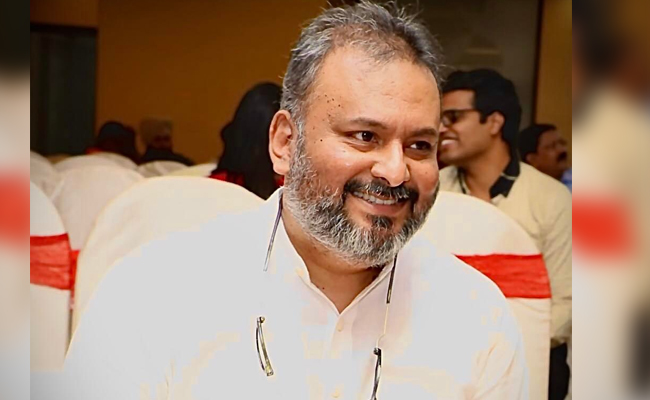
Chennai: Journalist and political commentator Sujit Nair has expressed concern over speculation that the Dravida Munnetra Kazhagam and the All India Anna Dravida Munnetra Kazhagam could explore a post-poll understanding to prevent Vijay-led Tamilaga Vettri Kazhagam from forming the government in Tamil Nadu.
In a social media post, Sujit Nair said the election verdict in Tamil Nadu reflected a clear public demand for political change and argued that the mandate should be respected irrespective of political preferences.
Referring to reports and political discussions surrounding a possible understanding between the DMK and AIADMK, he said he hoped such developments remained only speculative conversations and did not turn into reality.
Nair stated that if such an alliance were to take shape, it would raise serious questions about ideological politics in the country. He said TVK had emerged through a democratic electoral process and that the legitimacy to govern in a parliamentary democracy comes from the people’s verdict.
According to him, attempts to prevent an electoral winner from forming the government through unexpected political arrangements may be constitutionally valid, but many people could view them as politically opportunistic.
He further said that such a move could particularly affect the political image of the DMK, which has historically projected itself around ideology, social justice and opposition politics. Nair said that in ideological terms, the DMK appeared closer to TVK than to the AIADMK, and joining hands with its long-time political rival only to remain in power could weaken its broader political narrative.
He added that the same questions would apply to the AIADMK as well, as the party had spent decades positioning itself against the DMK and such an arrangement could create discomfort among its cadre and supporters.
Drawing a comparison with Maharashtra politics in 2019, Nair said he had expressed similar views when the Shiv Sena formed an alliance with the Indian National Congress and the Nationalist Congress Party after the Assembly elections.
He said post-poll alliances between long-standing political rivals often create a public perception that ideology and electoral mandates become secondary when political power equations come into play.
Nair also said such developments increase public cynicism towards politics and reinforce the belief among voters that ideology is often sidelined after elections.
He maintained that the Tamil Nadu verdict was emphatic and said respecting both the spirit and substance of the mandate was important for the credibility of democratic politics.