Alarming pollution levels found in Arkavati river: Study
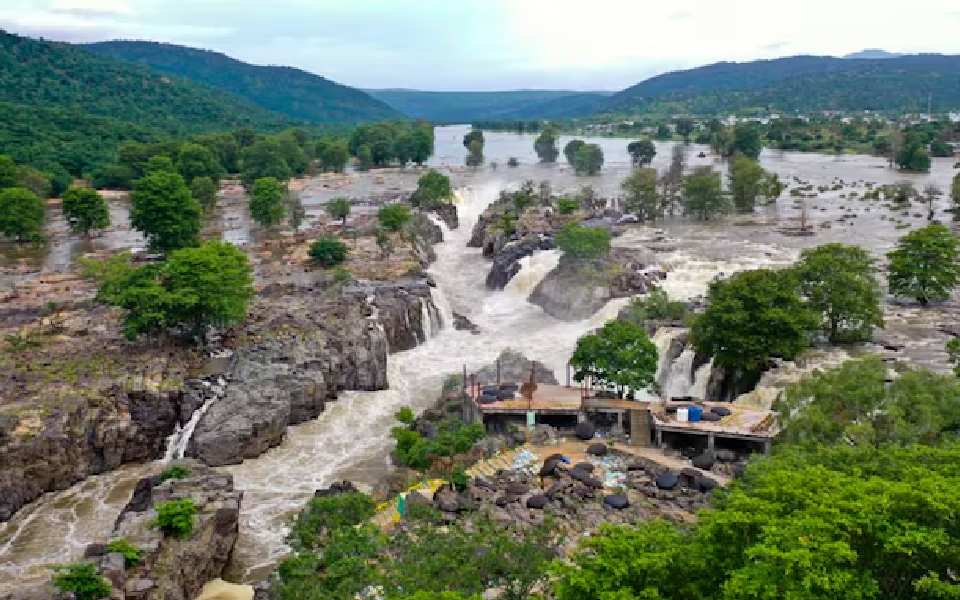
Bengaluru: A recent report by Paani.Earth has revealed alarming levels of pollution in the Arkavati river and its tributary, the Vrishabhavati, including physicochemical pollutants, pesticides, heavy metals, and hazardous organic compounds that exceed Indian and international standards.
The study, titled 'Uncovering the Hidden Pollution in the Arkavathi: Emerging Contaminants Impacting Bengaluru and Beyond', tested 65 unique water and 20 sediment pollution parameters. Conducted in February and March 2024 in collaboration with the International Centre for Clean Water, pollution samples were collected from seven sites during the dry season.
The findings revealed extreme levels of harmful substances. Pesticides such as heptachlor and DDT were detected at concentrations up to 25,022 times higher than the guidelines of the United States Environmental Protection Agency (EPA). Mercury in sediment samples was found to be 26 times above Canada’s Sediment Quality Guidelines, while polycyclic aromatic hydrocarbons (PAHs) were detected at levels up to 3,076 times the EPA guidelines. Excessive phosphorus levels were also observed, causing eutrophic conditions across all tested sites.
The report highlighted serious threats to human and aquatic health, including risks of cancer, hormone disruptions, and antimicrobial resistance (AMR). It criticised inadequate monitoring practices, particularly the Karnataka State Pollution Control Board’s reliance on simplified site rankings under the National Water Quality Monitoring Programme (NWMP), which fail to account for emerging contaminants.
Let the Truth be known. If you read VB and like VB, please be a VB Supporter and Help us deliver the Truth to one and all.
No need for guv: DMK leader Kanimozhi
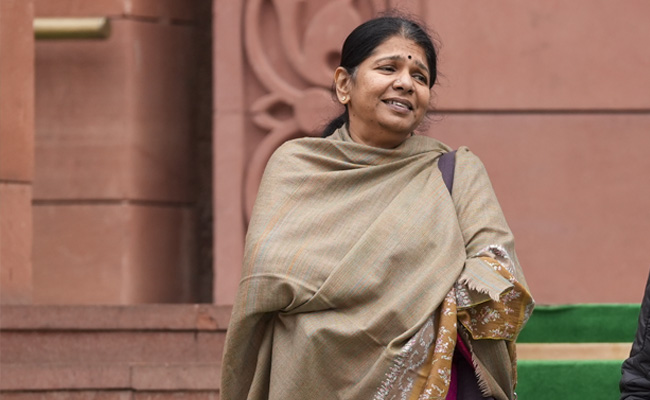
Chennai (PTI): Senior DMK leader Kanimozhi Karunanidhi on Friday reiterated her party’s opposition to the office of the governor amid uncertainty over government formation in Tamil Nadu after a fractured election mandate.
Speaking to PTI Videos, Kanimozhi emphasised that the DMK’s demand for the abolition of the governor’s post remained unchanged, especially as questions arise over constitutional propriety during the current political transition.
"Our position that we do not need a governor at all is something the DMK has never changed at any point in time," she said.
When asked about the governor’s actions following the election results—particularly the delay in inviting the leading party to form the government—Kanimozhi pointed to what she described as the "inherent friction" between the office of the governor and the political interests of the state.
She said the current situation "raises a lot of questions" and requires introspection regarding constitutional procedures.
Kanimozhi described the election results as lacking a "clear mandate", which she identified as the primary reason for the prevailing political uncertainty in the state.
"What the people decide is supreme," she said, adding that while the mandate was not decisive, it must be respected.
The Thoothukudi MP attributed the ongoing delays and "many confusions" to the absence of a decisive majority for any single party.
She firmly dismissed rumours about the DMK potentially supporting the AIADMK from outside to help stabilise the government.
She described such reports as mere "speculation" and "rumours".
"We can’t be responding to every rumour," she said, declining to comment on the AIADMK’s claims regarding its numbers to form the government.
The political situation in Tamil Nadu remains fluid as stakeholders await the governor’s next constitutional step in an Assembly where no party has secured a clear majority.
The DMK and AIADMK—both of which suffered significant losses to the TVK—are reportedly exploring tactical manoeuvres to navigate the hung Assembly.
The TVK, with 108 seats and the support of Congress’s five MLAs, is still short of the majority mark. The DMK and AIADMK secured 59 and 47 seats, respectively.