All high schools to have broadband internet connection in 2-3 years: Pradhan
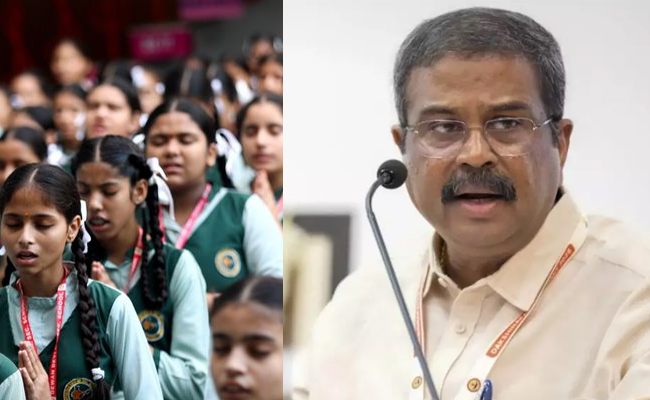
New Delhi (PTI): Union Education Minister Dharmendra Pradhan on Wednesday said all high schools in India will have broadband internet connection within next 2-3 years.
Replying to supplementary queries during Question Hour in the Rajya Sabha, the minister also emphasised that all kinds of education should be embedded with Artificial Intelligence (AI).
He said the Centre and state governments are focusing on capacity building for teachers to impart AI knowledge.
Pradhan said around 60 per cent of high schools in the country are connected with broadband internet connections.
"By next 2-3 years all high schools in the country will be connected with broadband and internet connection," he added.
On the AI, the minister said the country is at the forefront in this technology.
"AI is a horizontal topic. As on today, when we are implementing National Education Policy's new curriculum..., primary knowledge of AI will be from class three," Pradhan said, adding that almost all mother tongues are embedded with AI.
In a written reply, the minister said education is in the concurrent list of the Constitution and majority of the schools come under the purview of states and UT governments.
"The National Education Policy (NEP) 2020 has emphasized the importance of Artificial Intelligence (AI) and its role in school curriculum," Pradhan said.
Under Curricular Integration of Essential Subjects, Skills, and Capacities, the policy mentions that concerted curricular and pedagogical initiatives, including the introduction of contemporary subjects such as AI, Design Thinking etc at relevant stages be undertaken to develop these various important skills in students at all levels.
The ministry has undertaken several initiatives to promote Artificial AI and Computational Thinking (CT) in school education over the years, he said.
"The initiatives aim to enhance the quality of education by integrating technology into teaching and learning processes," Pradhan said.
Elaborating, the minister informed that the existing NCERT textbooks of computer science class XI and informatics practices class XI talk about AI, Internet of Things (IoT) and other emerging technologies.
NCERT has also included a project on animation and games in the vocational education textbook for Grade 6.
AI is being embedded for awareness and foundational competencies among school students (Classes 6–12) and building AI literacy among educators.
The Department of School Education and Literacy has developed a curriculum on Computational Thinking and Artificial Intelligence (CT & AI) to inculcate AI-readiness in school students. This curriculum will be implemented from classes 3rd to 8th, in the session 2026-27.
States/UTs are also working on bringing emerging technologies including AI in their academic framework.
Additionally, CBSE offers a skill module on AI for classes VI–VIII and as an optional skill-based subject in classes IX–XII.
"Digital learning is further supported through national platforms such as DIKSHA, SWAYAM and PM eVidya, along with capacity-building programmes, teacher training and development of digital content and AI awareness modules to enhance innovation and problem-solving skills among students," Pradhan said.
Let the Truth be known. If you read VB and like VB, please be a VB Supporter and Help us deliver the Truth to one and all.
Women’s Reservation Bill: K'taka CM accuses PM Modi of adopting 'double standard'
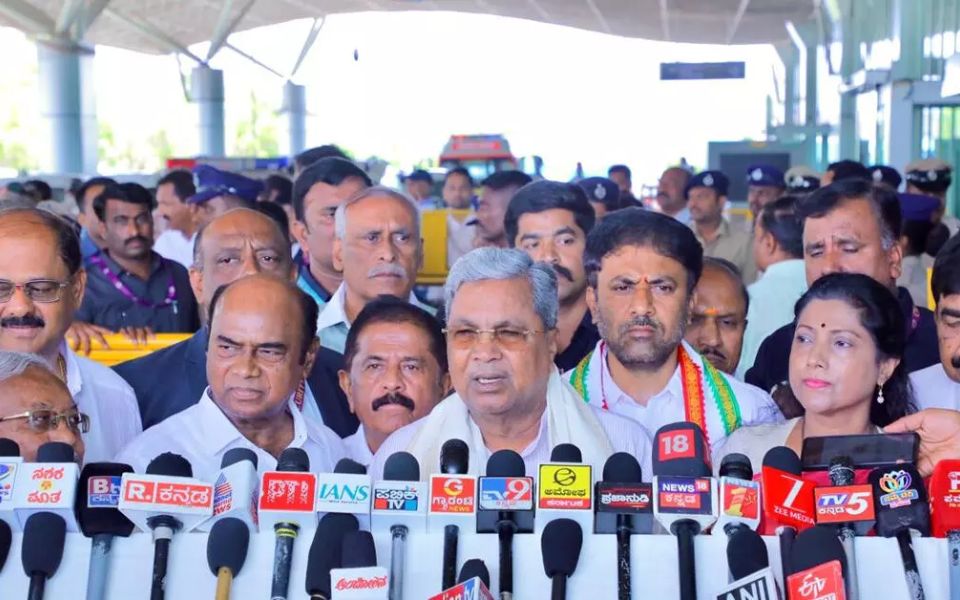
Mysuru (Karnataka) (PTI): Karnataka Chief Minister Siddaramaiah on Monday accused Prime Minister Narendra Modi of adopting a “double standard” on women’s reservation, alleging that the Centre had delayed implementation despite having the opportunity to act earlier.
Addressing reporters here, Siddaramaiah said the BJP and Modi had earlier opposed welfare guarantees and were now replicating them, while also questioning the timing and intent behind the women’s reservation move.
“That’s what I call double standards. Narendra Modi is not for social justice. If he was, this would have been done long ago. How many years has he been in power? It’s been 12 years. Why hasn’t it been done so far?” he asked.
The Chief Minister reiterated that the Congress had consistently supported women’s reservation and accused the Centre of "politicising" the issue.
“We spoke about women’s reservation. The Prime Minister asked me what our stand was. I said we are in favour of women’s reservation,” he said, referring to recent discussions with the PM.
He maintained that delimitation should only be carried out after a fresh Census to ensure equitable representation among states.
“In my view, delimitation should be done after a new census. That is why we opposed it. We have not opposed women’s reservation. We have always supported it,” he said.
Highlighting Congress’ past role, he said, “Who brought the 73rd and 74th amendments? Rajiv Gandhi and the Congress party. Those amendments ensured 50 per cent reservation for women in local bodies. Why would we oppose it?”
Siddaramaiah further questioned the union government’s delay in implementation. “Narendra Modi indulged in politics and got it passed in 2023. Why didn’t he implement it immediately? Then why did he wait so long? He could have implemented it immediately. If he is committed to women’s reservation, he should have implemented it,” he said.
On the linkage between delimitation and reservation, he asked, “Why did the Centre link it with delimitation? Why did it go for a constitutional amendment?” adding that such a move could disadvantage southern states that have successfully controlled population growth.
“Southern states have controlled population well, but northern states haven’t. Naturally, it benefits them and disadvantages us,” he said.
Responding to BJP’s criticism that women would “teach Congress a lesson,” Siddaramaiah said, “They are doing politics. If Modi had brought this earlier, who would have opposed women’s reservation?”
On electoral prospects elsewhere, he said he had no direct information on Tamil Nadu but was optimistic about ruling DMK's victory.
"According to the information I have, DMK and its alliance are likely to win,” while asserting that Kerala would also be won by the opposition.
In a major setback to the BJP-led Central government, a Constitution Amendment Bill to implement 33 per cent reservation for women in legislatures in 2029 and increase the number of Lok Sabha seats to 816 was defeated on Friday, with the ruling dispensation asserting that the struggle to give the rights to women will continue.
While 298 members voted in support of the bill in Lok Sabha, 230 MPs voted against it. Out of 528 members who voted, the bill required 352 votes for a two-third majority.
According to the Constitution (131st Amendment) Bill, Lok Sabha seats were to be increased to 816 from the current 543 to "operationalise" the women's reservation law before the 2029 parliamentary polls, following a delimitation exercise based on the 2011 Census.
Seats were also to be increased in state and Union territory assemblies to accommodate 33 per cent reservation for women.