Allahabad HC dismisses plea on Taj Mahal, pulls up petitioner
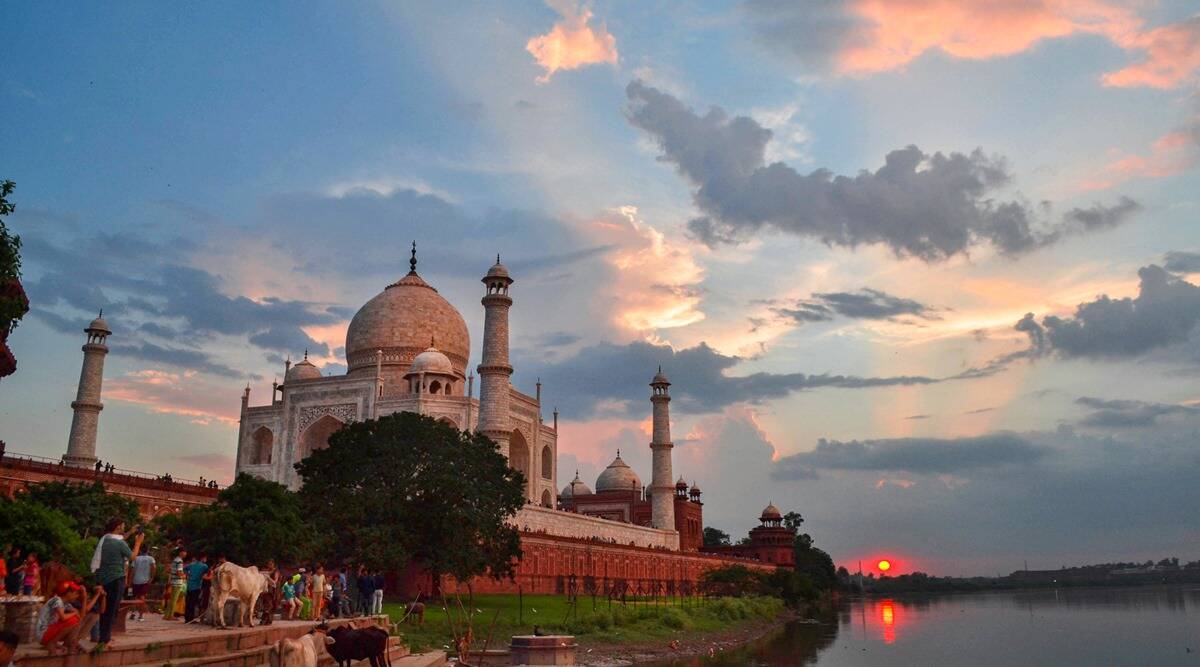
Lucknow May 12: The Allahabad High Court on Thursday dismissed a plea seeking a ''fact-finding inquiry'' into the history of the Taj Mahal and the "opening of 22 rooms'' on the monument's premises, saying the petitioner failed to point out which of his legal or constitutional rights were being infringed.
The Lucknow bench of justices DK Upadhyay and Subhash Vidyarthi pulled up the lawyer of petitioner Rajneesh Singh, who is the media in-charge of the BJP's Ayodhya unit, for filing the PIL in a "casual" manner and said it cannot pass an order under Article 226 of the Constitution in the matter.
The article empowers a high court to issue to any person or authority in the area under its jurisdiction orders or writs to enforce the fundamental rights.
The bench said that the petitioner could not point out as to which of his legal or constitutional rights were being infringed.
The petitioner's lawyer Rudra Vikram Singh urged the court to permit him to withdraw the petition and file a fresh plea, but the bench did not accept his request and dismissed the petition.
The writ petition was filed on Saturday in the registry of the Lucknow bench of the High Court by Rajneesh Singh seeking a fact-finding inquiry into the history of the Taj Mahal.
It also sought opening of the doors of its "22 rooms" to see "the truth, whatever it is".
Several Hindu right-wing outfits have claimed in the past that the Mughal-era mausoleum was a Lord Shiva temple.
The monument is protected by the Archaeological Survey of India (ASI).
The petition also sought the setting aside of certain provisions of The Ancient and Historical Monuments and Archaeological Sites and Remains (Declaration of National Importance) Act 1951, and The Ancient Monuments and Archaeological Sites and Remains Act 1958, under which the Taj Mahal, Fatehpur Sikri, Agra Fort, Itimad-ud-Daulah's tomb were declared historical monuments.
Let the Truth be known. If you read VB and like VB, please be a VB Supporter and Help us deliver the Truth to one and all.
Congress using hijab issue to pacify minority anger, alleges Karnataka LoP R Ashoka
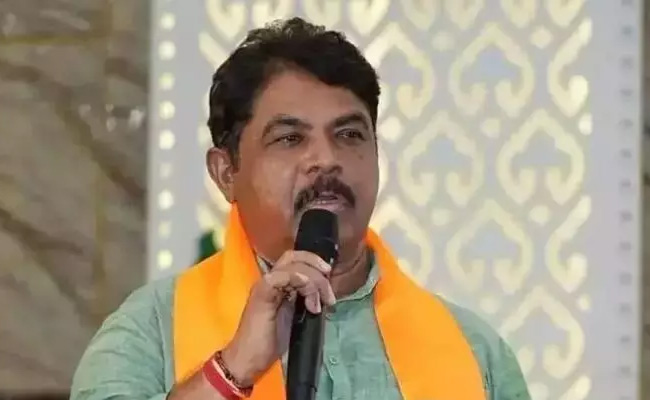
Bengaluru: Leader of Opposition in the Assembly R. Ashoka has accused the Congress government of using the hijab issue to placate what he described as discontent among minority voters after the Davanagere by-election.
In a post on X on Wednesday, Ashoka alleged that the state government, instead of addressing issues such as price rise, corruption, farmers’ distress and law and order, was attempting to retain its minority vote base by reviving the hijab issue.
Referring to the 2022 dress code introduced by the BJP government, which prohibited hijab in schools and colleges, Ashoka said the Karnataka High Court had upheld the policy and emphasised the importance of discipline in educational institutions.
He questioned the Congress government’s move to revisit the issue and asked whether setting aside the court-backed policy to benefit one community could be described as secularism.
Ashoka further alleged that while the government was willing to permit hijab, it continued to prohibit saffron shawls.
He accused the government of dividing students on religious lines rather than treating schools and colleges as spaces of equality.
Drawing a comparison with Mamata Banerjee’s government in West Bengal, Ashoka claimed that excessive appeasement politics had harmed the state and warned that the Congress in Karnataka could face a similar political response.
He said voters in Karnataka would teach the Congress a lesson for what he termed “vote-bank politics” and for compromising constitutional and judicial principles.