Allahabad HC expunges Bareilly Judge's remarks blaming Muslims for riots, lauding Adityanath
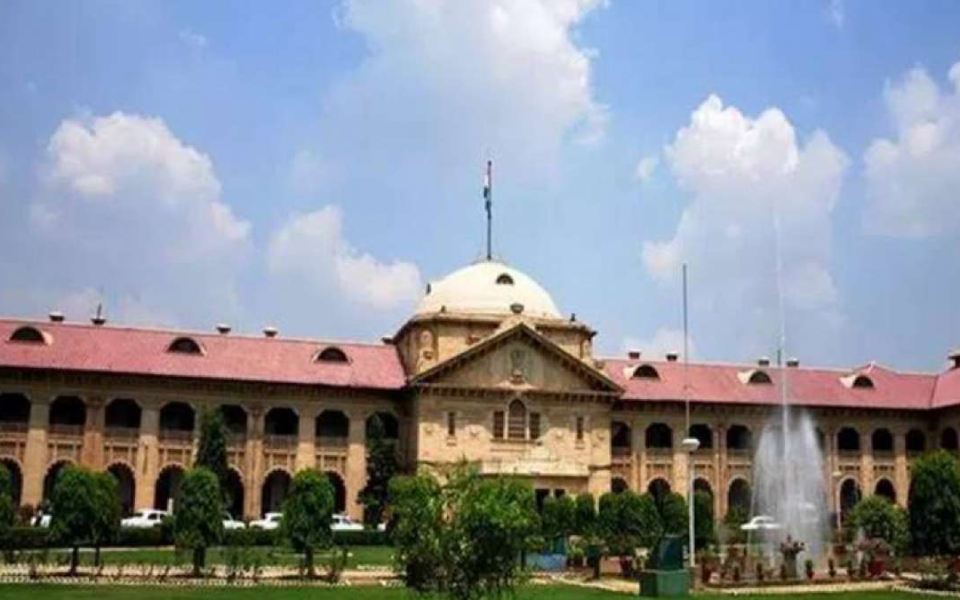
Lucknow: The Allahabad High Court has intervened to expunge controversial remarks made by a judge in Uttar Pradesh's Bareilly, where Chief Minister Yogi Adityanath was lauded as a modern-day 'philosopher king' and Muslims were blamed for communal riots in the country.
Additional District Judge Ravi Kumar Diwakar's comments on March 5th during a hearing related to the Bareilly riots of 2010 sparked widespread criticism and demands for disciplinary action. The judge had made personal observations and expressed political opinions in the case, prompting the High Court to intervene.
In its ruling on March 19, the High Court deemed Diwakar's remarks as "unwarranted expressions containing political overtones and personal views." Justice Ram Manohar Narayan Mishra chastised the judge for including personal experiences in the judicial order, stating that such expressions were unnecessary and prone to misinterpretation by the public.
The contentious portion of Diwakar's order, spanning from the last paragraph of page six to the middle part of page eight, was expunged by the High Court.
During the March 5 hearing, Judge Diwakar had invoked serious charges against Muslim cleric-politician Maulana Tauqeer Raza Khan for his alleged involvement in the 2010 Bareilly riots. Diwakar not only praised Chief Minister Adityanath for his religious background but also blamed political parties' alleged "appeasement" of Muslims for riots in the country.
Moreover, Judge Diwakar's remarks extended to his tenure in Varanasi and his involvement in the Gyanvapi Masjid legal battle, where he claimed to have faced threats from Muslim groups. Diwakar hailed Adityanath as a modern-day example of a 'philosopher king,' a term coined by ancient Greek philosopher Plato.
In the Bareilly riots case, Diwakar added Maulana Khan's name to the chargesheet and summoned him to appear before the court. Khan, a prominent cleric and political figure, was accused of masterminding the riots that erupted over a dispute during a Muslim religious procession in 2010.
Diwakar's past involvement in the Gyanvapi Masjid controversy in Varanasi also came under scrutiny. As a civil judge, he ordered the sealing of a portion of the mosque based on Hindu plaintiffs' claims, further intensifying the communal tensions surrounding the historical site.
Let the Truth be known. If you read VB and like VB, please be a VB Supporter and Help us deliver the Truth to one and all.
ED cracks down on suspected interstate liquor racket, raids 9 sites in Arunachal
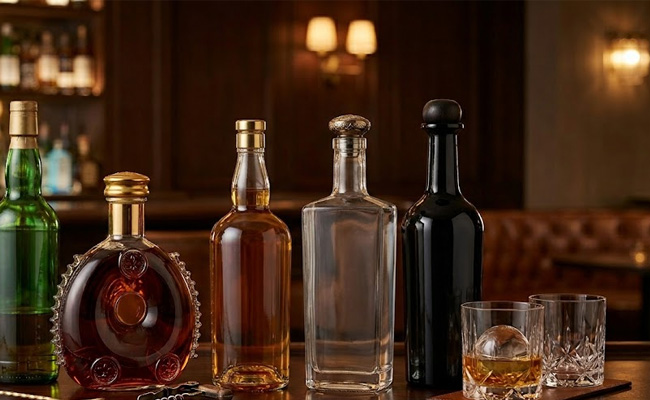
Itanagar (PTI): The Enforcement Directorate has carried out coordinated searches at nine locations across Arunachal Pradesh in connection with a suspected large-scale interstate liquor smuggling and money laundering network, officials said on Monday.
The action, taken under the Prevention of Money Laundering Act (PMLA), is part of an expanding probe that points to a syndicate exploiting tax differentials among states.
Officials said liquor designated for sale within Arunachal Pradesh was allegedly diverted and supplied illegally to markets in Assam and other states.
The searches, conducted earlier this week, spanned multiple towns such as Itanagar, Naharlagun, Seppa, Ziro, Daporijo, Namsai and Roing, targeting wholesale liquor businesses suspected of being linked to the network.
According to officials, the investigation stems from a series of FIRs registered by Assam Police over the illegal transportation of liquor from Arunachal Pradesh into Assam.
Inputs from the Assam Excise Department further strengthened the case. An Enforcement Case Information Report (ECIR) was registered on October 17, 2024, and later widened through an addendum incorporating 173 additional FIRs.
Earlier searches conducted on February 4 last year, at premises linked to three alleged key operators, believed to be major liquor manufacturers, had revealed indications of a well-coordinated operation.
Investigators suspect that the network functioned through a chain of manufacturers, bonded warehouses and wholesalers, while masking real ownership using proxy arrangements such as tribal partnerships and dummy licence holders.
During the latest ED operations, the agency found that several wholesale units were operating under proxy licences issued in the names of local individuals, while actual control remained with the suspected masterminds.
Financial scrutiny revealed that between 51 and 90 per cent of total credits in certain bank accounts comprised unexplained cash deposits.
Investigators also flagged a pattern of invoice splitting, with transactions deliberately kept below Rs 2 lakh to avoid scrutiny. In one instance, more than 200 invoices of identical value of Rs 1,99,554 were generated within a single month at one location.
On-ground staff reportedly confirmed that records, including stock registers and daily cash collections, were being routed to offices associated with the alleged controllers.
The ED said it seized approximately Rs 40 lakh in unaccounted cash during the searches.
In a significant finding, 14 seals, some purportedly belonging to the Excise Department of the Arunachal Pradesh government, were recovered from one of the premises. These are suspected to have been used to create fake transport permits to facilitate the unauthorised movement of liquor.
Further investigation is underway, officials added.