Allahabad HC pulls up UP govt for not filing response in a case related to Bahraich demolition
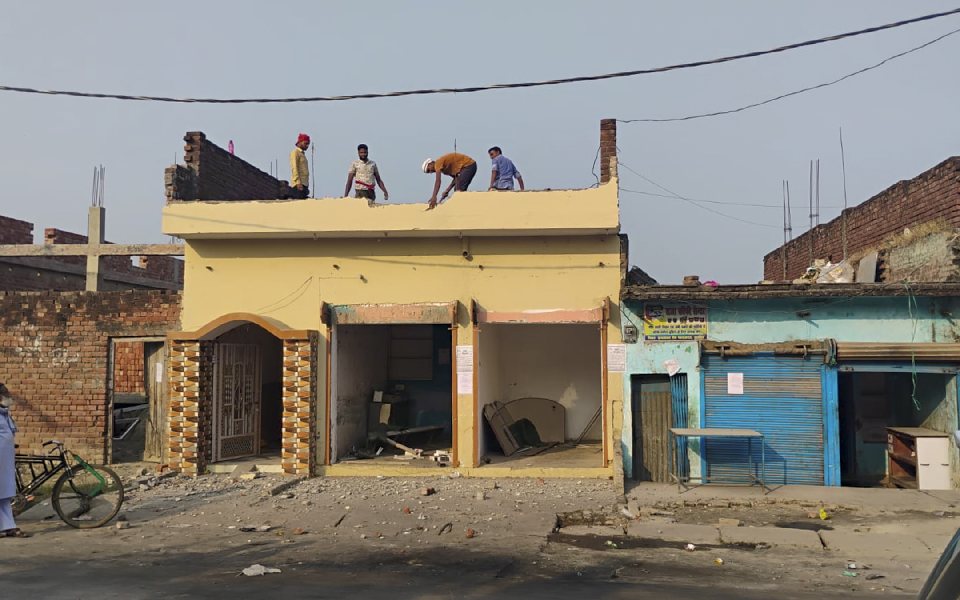
Lucknow, Oct 23: The Allahabad High Court on Wednesday pulled up the Uttar Pradesh government on why it has not filed a detailed response till date despite clear directions in a case of issuing notices of demolition in Bahraich district.
A Lucknow bench expressed annoyance as to whether the spirit of the order could not be understood by the state authorities.
The bench was of the view that it had specifically asked Chief Standing Counsel Shailendra Singh to obtain complete instructions in the matter regarding category and norms applicable about the road in question but the only objection was being raised about maintainability of the PIL yet again.
The bench, however, asked Singh to file the objection on maintainability of the PIL in the registry of the court, deferring the hearing till November 4.
A bench of justices AR Masoodi and Subhash Vidyarthi passed the order on a PIL filed by Association for Protection of Civil Rights.
Hearing the PIL on Sunday after constituting a special bench, the court had extended the time enabling the affected dwellers to file their response to notices within 15 days instead of three days as granted by the PWD.
This had thwarted the preparations of the district authorities for removing the alleged illegal constructions made by the dwellers who had been slapped short notice. In course of hearing on Wednesday, the state counsel sought to file objection against maintainability of the PIL.
At this, the bench reacted strongly as to whether the spirit of the previous order passed on Sunday was not understood by the state authorities.
In the previous order, the bench had asked the chief standing counsel to complete his instructions regarding category and norms applicable on the road in question. The bench had stressed that besides maintainability, it would consider all aspects of the matter.
Hearing the PIL on Sunday, the bench had said that the concerned persons may file their response to the notices within 15 days and also directed the state authorities to consider these replies and pass speaking and reasoned order on the reply.
Filing the PIL, it had been argued that the state has issued the demolition notice in illegal manner and its action to initiate demolition drive is in violation of the Supreme Court's recent directives, banning bulldozer action except in certain cases.
On behalf of the state government, the chief standing counsel had raised the objection about maintainability of the PIL and he yet again pointed out this on Wednesday as well.
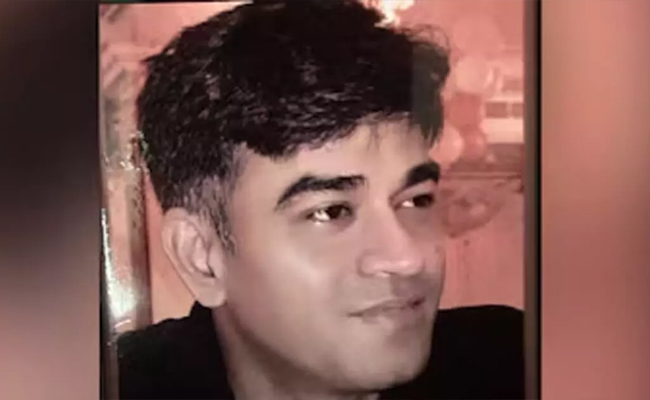
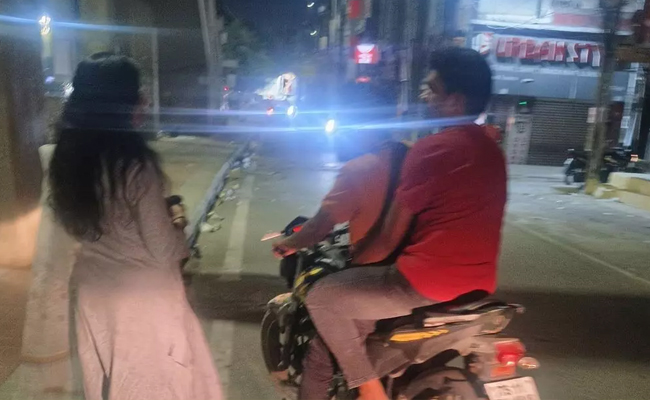
Ram Gopal Mishra (22) of Rehua Mansoor village died of a gunshot wound he suffered on October 13 during a communal face-off in a village in Bahraich district over music being played during a procession.
Notices were served to 23 establishments, including 20 belonging to Muslims, in the area by the public works department (PWD).
The PWD had carried out inspections in the Maharajganj area last Friday and took measurements of 20-25 houses, including that of Abdul Hamid, one of the accused in Mishra's killing.
The notices were served under the Road Control Act, 1964.
Let the Truth be known. If you read VB and like VB, please be a VB Supporter and Help us deliver the Truth to one and all.
Sujit Nair raises concerns over speculation of DMK-AIADMK understanding to block TVK
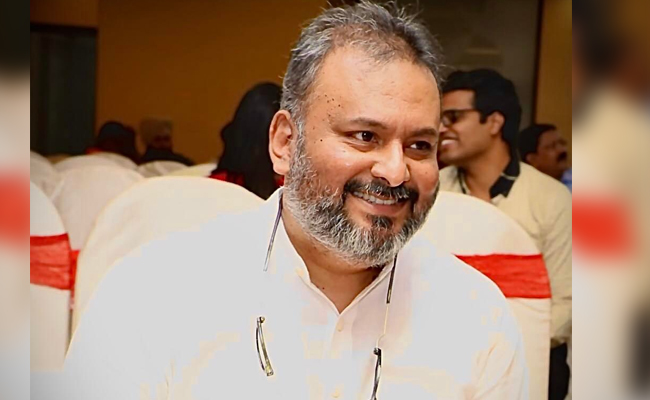
Chennai: Journalist and political commentator Sujit Nair has expressed concern over speculation that the Dravida Munnetra Kazhagam and the All India Anna Dravida Munnetra Kazhagam could explore a post-poll understanding to prevent Vijay-led Tamilaga Vettri Kazhagam from forming the government in Tamil Nadu.
In a social media post, Sujit Nair said the election verdict in Tamil Nadu reflected a clear public demand for political change and argued that the mandate should be respected irrespective of political preferences.
Referring to reports and political discussions surrounding a possible understanding between the DMK and AIADMK, he said he hoped such developments remained only speculative conversations and did not turn into reality.
Nair stated that if such an alliance were to take shape, it would raise serious questions about ideological politics in the country. He said TVK had emerged through a democratic electoral process and that the legitimacy to govern in a parliamentary democracy comes from the people’s verdict.
According to him, attempts to prevent an electoral winner from forming the government through unexpected political arrangements may be constitutionally valid, but many people could view them as politically opportunistic.
He further said that such a move could particularly affect the political image of the DMK, which has historically projected itself around ideology, social justice and opposition politics. Nair said that in ideological terms, the DMK appeared closer to TVK than to the AIADMK, and joining hands with its long-time political rival only to remain in power could weaken its broader political narrative.
He added that the same questions would apply to the AIADMK as well, as the party had spent decades positioning itself against the DMK and such an arrangement could create discomfort among its cadre and supporters.
Drawing a comparison with Maharashtra politics in 2019, Nair said he had expressed similar views when the Shiv Sena formed an alliance with the Indian National Congress and the Nationalist Congress Party after the Assembly elections.
He said post-poll alliances between long-standing political rivals often create a public perception that ideology and electoral mandates become secondary when political power equations come into play.
Nair also said such developments increase public cynicism towards politics and reinforce the belief among voters that ideology is often sidelined after elections.
He maintained that the Tamil Nadu verdict was emphatic and said respecting both the spirit and substance of the mandate was important for the credibility of democratic politics.