Allahabad HC questions UP Police over ‘half encounters’, seeks explanation from DGP, Home Secretary
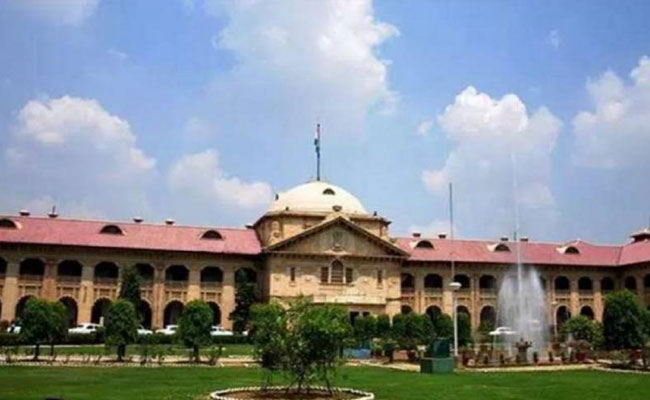
Allahabad: The Allahabad High Court has come down heavily on the Uttar Pradesh Police over the alleged practice of shooting accused persons in the legs and projecting such incidents as armed encounters, observing that the trend, commonly referred to as “half encounters”, has no sanction under the law.
A bench headed by Justice Arun Kumar Deshwal directed Uttar Pradesh Director General of Police Rajiv Krishna and Additional Chief Secretary (Home) Sanjay Prasad to appear via video conferencing and clarify whether any oral or written instructions had been issued to police personnel to carry out such actions and portray them as encounters.
According to a Bar & Bench report, the court remarked that incidents of accused persons being shot in the legs appear to have become routine in the state. Justice Deshwal noted that such acts seem aimed at earning publicity, pleasing senior officers, or delivering what the police perceive as instant punishment. He underlined that such conduct is wholly impermissible, as the authority to punish rests exclusively with the judiciary.
The court said India is governed by the Constitution, which clearly demarcates the roles of the executive, legislature and judiciary, and that the police cannot assume the role of courts. “The power to punish lies with the judiciary, not with the police,” the court reiterated.
The observations were made while hearing bail applications of three accused who had sustained injuries in separate alleged encounters with the police. The court took note of the fact that no police personnel were injured in these incidents, which raised doubts about the necessity and proportionality of the use of firearms.
In one case, the High Court pointed out that although an FIR had been registered, the injured accused’s statement was not recorded before a magistrate or medical officer, which violates the Supreme Court guidelines. The investigation was initially conducted by a sub-inspector and later transferred to an inspector, which the court said amounted to non-compliance with the directions laid down by the Supreme Court in the PUCL versus State of Maharashtra case.
Taking a stringent view, the court laid down six mandatory guidelines to be followed in cases where an accused suffers grievous injuries during a police encounter. It warned that district-level police heads, including superintendents of police, senior superintendents and commissioners, would face personal contempt proceedings if these directions are violated in their jurisdictions, as reported by the Bar & Bench.
The court also expressed concern over reports of police officers exerting pressure on judicial officers, including chief judicial magistrates, to secure favourable orders. Cautioning against the erosion of institutional boundaries, Justice Deshwal said Uttar Pradesh cannot be allowed to function as a police state and stressed the importance of mutual respect between the police and the judiciary.
In response, DGP Rajiv Krishna assured the court that clear instructions would be issued to ensure strict compliance with the law and Supreme Court guidelines. “The majesty of law is supreme,” he told the court.
Let the Truth be known. If you read VB and like VB, please be a VB Supporter and Help us deliver the Truth to one and all.
AIITA welcomes Karnataka’s ban on obscene songs in school events
Bhatkal: The Karnataka unit of the All India Ideal Teachers Association (AIITA) has welcomed the Karnataka government’s decision to strictly ban school children from dancing to obscene songs during educational and cultural programmes in government, aided, and private schools across the state.
AIITA Karnataka State President M. R. Manvi congratulated the government for taking what he termed an important step to preserve the sanctity of education.
“Such decisions to safeguard the dignity of school children and uphold the values of education are the need of the hour. This rule should not be limited to government schools alone but must be strictly implemented in all private educational institutions as well,” he said.
He further urged the government to address other concerns within school programmes.
“The government should not only prohibit obscene dances in the name of school anniversaries, but also ensure that plays and dialogues that incite religious hatred are avoided. Schools should be centres of harmony, not platforms for spreading hatred,” he added.
According to a recent circular issued by the Department of School Education and Literacy, obscene dances are adversely affecting the mental health and moral values of students.
In this regard, schools have been advised to use songs that promote nationalism, positive thinking, the greatness of Kannada culture, and value-based traditions instead of inappropriate content during programmes.
The circular also emphasises that students should be dressed in decent attire.
AIITA also backed the department’s warning that disciplinary action would be taken against head teachers if such guidelines are violated. The association has further demanded that district Deputy Directors of Public Instruction strictly monitor the implementation of these rules.