Allahabad HC rejects PIL challenging impeachment motion moved against Justice Shekhar Yadav

Lucknow, Jan 7: The Lucknow bench of Allahabad High Court on Tuesday dismissed as "not maintainable" a PIL challenging the impeachment motion moved against Justice Shekhar Yadav over his alleged controversial remarks at a VHP event last month.
"We do not see that the cause espoused in the present petition relates to any vulnerable section of people. Thus, on the touch stone of maintainability, the present PIL does not qualify the very test of initiation of proceedings on its threshold," said the bench of Justice AR Masoodi and Justice Subhash Vidyarthi.
The bench passed the order on the public interest litigation moved by Ashok Pandey.
The petitioner had demanded that the HC should issue direction to the Rajya Sabha chairman not to initiate further proceedings on the notice for impeachment motion submitted to the Rajya Sabha secretary general by 55 MPs.
In the notice, the MPs have sought impeachment of Justice Yadav, a sitting judge of the Allahabad High Court, over the speech delivered by him at Prayagraj on December 8 at an event organised by the Vishva Hindu Parishad (VHP).
Dismissing the PIL, the bench held that the cardinal principle within which a PIL is entertained before the constitutional courts is representation of a cause of vulnerable section of people but the present PIL is not filed by such section.
Addressing a provincial convention of the legal cell and high court unit of the VHP at the high court on December 8, among other things, Justice Yadav said the main aim of the uniform civil code was to promote social harmony, gender equality and secularism.
The following day, videos of the judge speaking on provocative issues, including the law working according to the majority, were circulated widely on social media, prompting strong reactions from several quarters, including opposition leaders who questioned his reported statement, labelling it as "hate speech".
Let the Truth be known. If you read VB and like VB, please be a VB Supporter and Help us deliver the Truth to one and all.
Bengaluru jail introduces biometric tracking system for prisoners
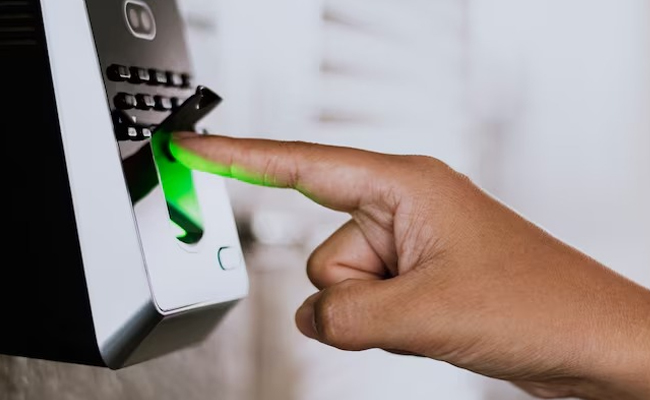
Bengaluru: In a bid to curb misconduct and illegal activities inside Parappana Agrahara Central Prison, prison authorities have introduced a new ‘Prisoners Tracking Movement System’ under which inmates will have to undergo biometric verification while entering every barrack.
According to jail officials, biometric systems have been installed across all major sections of the prison, including barracks, visitor rooms, hospital, canteen, kitchen, library, playground, handicraft units and bakery sections. Staff members have also been deployed at these locations.
Officials said inmates visiting the visitors’ room must now obtain a digital token after biometric verification. Details such as the prisoner’s name, identification number and entry time will be updated in the prison software system. This will help authorities maintain a complete digital record of inmates visiting and returning from meeting rooms.
Similar systems have also been introduced at entry points of the hospital, library and other barracks accessed for work-related purposes. Officials said the system will help identify prisoners involved in suspicious or illegal activities with other inmates and enable authorities to track how much time a prisoner spends at different locations inside the prison.
Authorities stated that AI-powered cameras were already being used inside the prison to monitor inmates as well as prison staff. Along with this, digital tracking of prisoner phone calls and a digital token system for visitor meetings have now been added to strengthen surveillance over inmate movement. Officials said the project has been implemented at a cost of around Rs 2.25 crore.
The prison department has also introduced a canteen usage tracking system to monitor prisoners’ spending patterns. Instead of direct cash payments, inmates can purchase bakery items and snacks using wallets or coupons issued within the prison system.
Officials said the digital system will record details including the buyer’s name, items purchased, quantity, date, time and remaining wallet balance. This will allow prison authorities to maintain complete expenditure records of inmates.