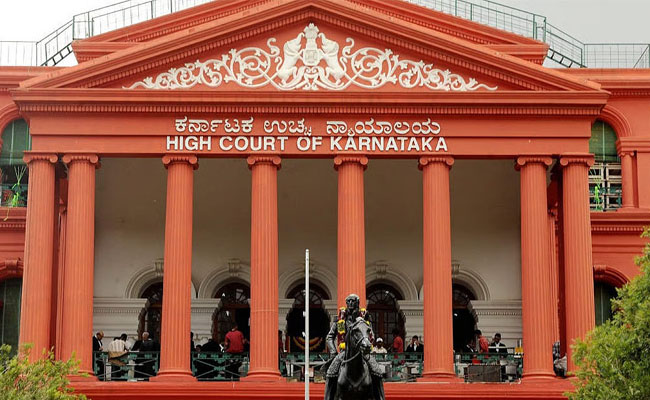
Allahabad HC's 1975 verdict disqualifying then PM Indira Gandhi was judgment of great courage: CJI
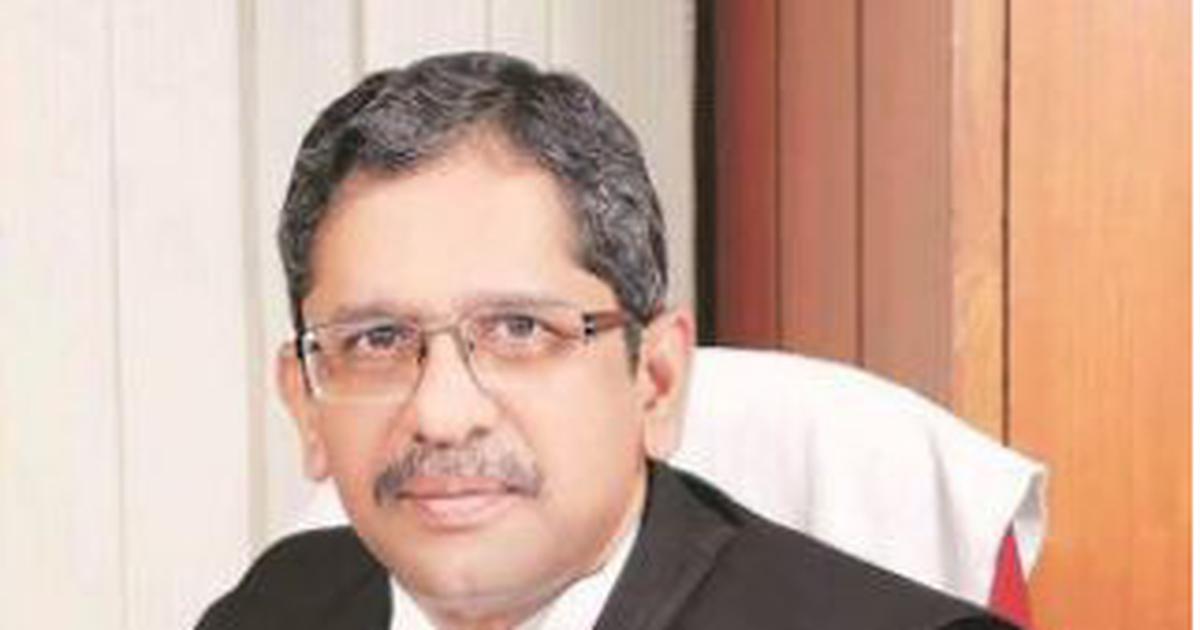
Allahabad, Sep 11: The 1975 verdict of Justice Jagmohanlal Sinha of the Allahabad High Court disqualifying then prime minister Indira Gandhi on charges of electoral malpractices was a judgment of "great courage" that "shook" the nation, leading to imposition of Emergency, CJI N V Ramana said on Saturday.
The Chief Justice of India (CJI), who along with President Ram Nath Kovind, took part in programmes, including the foundation stone-laying ceremony of the Uttar Pradesh National Law University here and a new building complex of the Allahabad High Court, recalled the rich traditions and contributions of one of the oldest high courts in the country.
"In 1975, it was Justice Jagmohanlal Sinha from the Allahabad High Court who passed the judgment that shook the nation, when he disqualified Smt. Indira Gandhi. It was a judgment of great courage, which could be said to have directly resulted in the declaration of Emergency. The consequences of which I do not want to elaborate now, Justice Ramana said.
The CJI said that the Allahabad High Court has a history of more than 150 years and its Bar and Bench have produced some of the greatest legal luminaries in the country.
The June 12, 1975, verdict delivered by Justice Jagmohanlal Sinha of the Allahabad High Court had convicted the then prime minister of electoral malpractices and debarred her from holding any elected post under the Representative of Peoples Act.
The verdict is widely believed to have led to imposition of Emergency on June 25, 1975.
Indira Gandhi had won the 1971 Lok Sabha election from the Rae Bareli seat in Uttar Pradesh by defeating her opponent Raj Narain.
The defeated leader had challenged her election alleging electoral malpractices saying that Gandhi's election agent Yashpal Kapoor was a government servant and that she used government officials for personal election related work.
Let the Truth be known. If you read VB and like VB, please be a VB Supporter and Help us deliver the Truth to one and all.
Allahabad HC orders probe into 'reinstatement' of teacher in UP's Barabanki
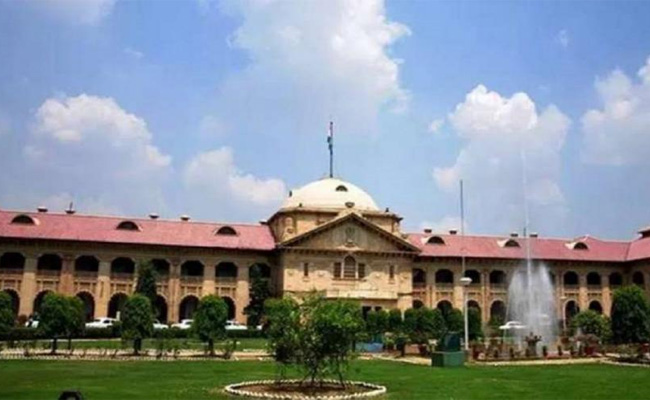
Lucknow (PTI): The Lucknow Bench of the Allahabad High Court on Friday ordered a probe by the special task force (STF) into alleged irregularities in the rejoining of a teacher at City Intermediate College in Barabanki, observing that the reinstatement appeared to be prima facie illegal.
The court also directed the recovery of the salary paid to the teacher during the disputed period.
A bench of Justice Rajeev Singh passed the order on a petition filed by the college management committee. The court expressed doubts over the roles of the District Inspector of Schools (DIOS), Barabanki, the college principal and the teacher concerned and hence, directed a detailed inquiry into the matter.
Taking note of alleged manipulation of records and misleading submissions, the court ordered the immediate transfer of the Barabanki DIOS to ensure a fair probe. It also directed the initiation of disciplinary proceedings against the then joint director of education of the Ayodhya division.
In its order, the court found that the teacher, Abhay Kumar, was initially appointed as an assistant teacher in 2018 but joined an Eklavya Model Residential School in Chhattisgarh as a lecturer in June 2024 without obtaining permission from the management. His subsequent request to retain the lien was rejected.
Despite this, he was allowed to rejoin the Barabanki College in September 2025 on the directions of the joint director of education and the DIOS, and was even paid the salary for October 2025. The court termed the rejoining "wholly illegal" and lacking any legal basis.
The bench also expressed concern over lapses in communication within the education department and directed the Uttar Pradesh chief secretary to ensure that official orders are communicated through email and WhatsApp as well, to prevent disputes.
The matter is next listed for hearing on May 28 when a compliance report is sought.