Amartya Sen raises concerns over SIR, claims it risks 'disenfranchising' poor people
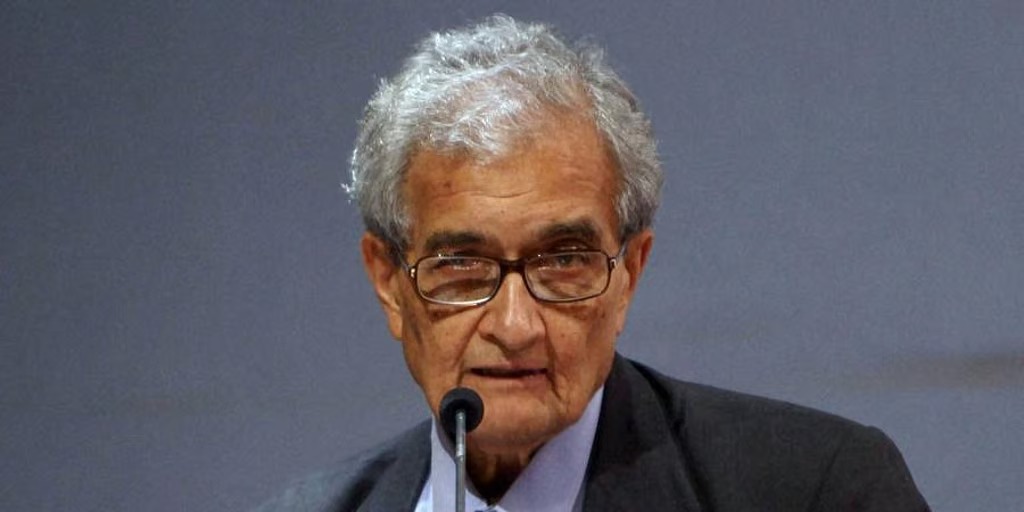
Kolkata (PTI): Nobel laureate economist Amartya Sen expressed concerns over the special intensive revision (SIR) of electoral rolls, warning that the exercise, if not handled sensitively, could end up "disenfranchising" a large number of poor and marginalised people.
Sen also questioned the fairness of a bureaucratic process that demands strict documentation from citizens who may not have access to those things.
He also said that administrative processes and periodic revisions are necessary, but these must not come at the cost of fundamental rights.
"Yes, it's true that from time to time various procedural tasks need to be carried out. However, in doing so, one cannot create a 'better system' by trampling on the rights of the poor," Sen told reporters here on Friday.
He emphasised the importance of a just and inclusive approach, pointing out that many individuals still lack proper documentation and, as a result, are often excluded from the electoral process.
"Many people don't have documents. Many cannot vote...If, in the name of trying to improve things a little, harm is caused to many, then that becomes a serious mistake," Sen said, adding, "You cannot justify seven new mistakes just to correct one".
The special intensive revision of electoral rolls by the Election Commission is aimed at updating and verifying the accuracy of electoral rolls, thereby creating clean and error-free lists.
The process has drawn criticism from political parties and rights activists.
More than 65 lakh enumeration forms were ‘not included’ in the draft electoral rolls prepared as part of the first phase of SIR by the Election Commission (EC) in Bihar, bringing down the total number of around 7.9 crore registered voters to 7.24 crore.
The EC had come out with the names of 65 lakh people who were removed from the draft electoral rolls published as part of the SIR exercise in Bihar.
Sen's comments echo growing concerns that the SIR, without adequate safeguards, could lead to wrongful deletions of eligible voters from the rolls, an outcome that threatens the very foundation of democratic participation.
Globally acclaimed for his work on poverty, welfare, and justice, Sen also reminded that procedural improvements should not come at the cost of people's rights.
"A just system must always protect those who are most vulnerable," he said.
Sen spoke at a public discussion on the theme "India's Youth: Social Opportunities They Should Have", where he interacted with a group of undergraduate and high-school students.
During the interaction, the 91-year-old economist underscored the urgent need for India to move beyond passive tolerance towards active communal cooperation, what he described as "yukta sadhana", or "joint practice".
Citing historical precedents, the professor highlighted the contributions of Dara Shikoh, the eldest son of Mughal emperor Shah Jahan, who translated fifty Upanishads from Sanskrit to Persian.
This pivotal work, he noted, played a crucial role in globalising Hindu philosophy, forming the basis for subsequent translations into languages such as German.
The economist also spoke of his maternal grandfather, Kshitimohan Sen, a renowned scholar and early proponent of "yukta sadhana", whose seminal work "Bharate Hindu Musalmaner Yukta Sadhana" examined the shared cultural, spiritual, and intellectual traditions of Hindus and Muslims in India.
"The relationship between Hindus and Muslims is not just about tolerance. It's about collaboration, something we've seen historically in music, literature, and architecture," he said.
The book, long out of print, was relaunched by the Pratichi Trust on Friday, with a new introduction penned by the economist, reaffirming its contemporary relevance in light of rising social and political polarisation.
Let the Truth be known. If you read VB and like VB, please be a VB Supporter and Help us deliver the Truth to one and all.
Karnataka: College student dies by suicide in Dharwad, 3 policemen suspended
Dharwad (Karnataka) (PTI): A college student allegedly died by suicide here, following which three policemen were suspended over allegations of harassment linked to his death by the victim's family.
Aditya Myageri, a BSc student at a private college here, was among 18 students detained by the Vidyagiri police on April 25 during an anti-drug drive, police said on Wednesday.
He hailed from Belur village in Bagalkot district, but was staying with his friends at a rented accommodation in Girinagar area of Dharwad city, police said.
Among the 18 students tested, Aditya was among the 10 who had tested negative for ganja consumption and was subsequently released.
Some of his roommates, however, tested positive.
According to police, Aditya's family alleged that despite testing negative, he was harassed by police. They also claimed some policemen demanded Rs 2,000 to settle the matter and threatened legal action if he failed to pay.
He had called his mother asking for money, but she could not arrange it immediately, the family claimed.
On Monday night, Aditya allegedly died by suicide by hanging from a ceiling fan at his rented accommodation, with his family alleging police harassment and pressure over demand for money drove him to the extreme step, a senior police officer said.
Police Commissioner N Shashi Kumar told PTI that an unnatural death case has been registered at Vidyagiri police station. Three policemen have been suspended over the allegations, and further investigation is underway.