Ambedkar College professor slapped by ABVP leader on campus; DUTA seeks action
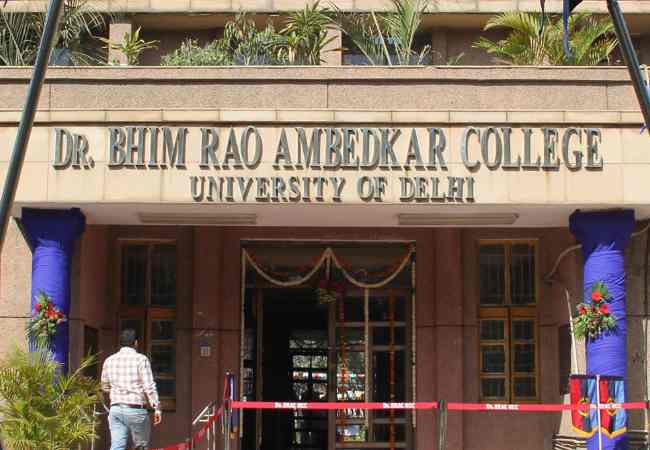
New Delhi (PTI): A DU teacher was allegedly slapped and assaulted by DUSU joint secretary Deepika Jha and other members of the Akhil Bharatiya Vidyarthi Parishad (ABVP) on Thursday, a group of faculty members said.
A video, purported to be of the incident, surfaced online, showing a teacher being assaulted by a group of students inside Dr Bhim Rao Ambedkar College in the presence of the police.
Several Delhi University teachers condemned the incident, calling it an attack on the dignity of educators.
A professor, requesting anonymity, said that a National Students' Union of India candidate who had won a college council election was allegedly thrashed by the members of the RSS-backed ABVP.
According to a statement by the Democratic Teachers' Front (DTF), the teacher, Sujit Kumar, who is the convenor of the college's disciplinary committee, was looking into similar incidents of campus violence involving students from different groups when he was assaulted.
Jha, in a statement, said she was in the college to address complaints of "misbehavior and physical assault" raised by students against Kumar.
She said Kumar "threatened" and used "abusive language" against her in the principal's room. She also accused him of reeking of alcohol.
"His repeated threats, constant staring, and indecent remarks made it quite evident that the said professor, Sujit Kumar, had once again come to the college under the influence of alcohol. In that moment of distress and anger, I reacted impulsively, for which I sincerely express regret," Jha said.
The Delhi University Teachers' Association (DUTA) has written to the university vice-chancellor, demanding an inquiry into the matter.
"We are deeply shocked to learn that a senior teacher at B.R. Ambedkar College has been slapped and assaulted by a group of students inside the college premises while performing his duty. The violence in any form is completely unacceptable in a democratic institution. This is an assault on the dignity of a teacher," the association said in a letter.
It added, "We request you to enquire into the whole incident and take immediate and exemplary action against those involved. Stringent action will send a clear message against indiscipline and lawlessness."
Rudrashish Chakraborty, associate professor at Kirori Mal College, termed what happened at the college "shocking" but "hardly surprising."
"It is part of a series of lumpen acts by ABVP not only in DU but across the country, enabled by the active patronage of the DU administration, which has given ABVP a free hand to run riot across the University," he said.
Let the Truth be known. If you read VB and like VB, please be a VB Supporter and Help us deliver the Truth to one and all.
India achieves major milestone in wind energy; capacity now 56 gigawatts: PM Modi
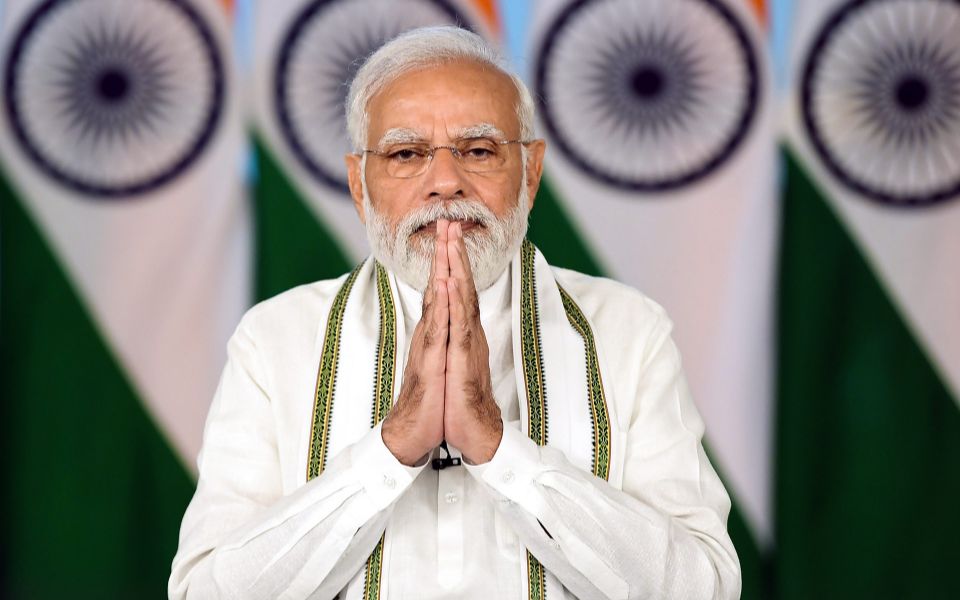
New Delhi (PTI): India has achieved a major milestone in wind energy, with the country's wind energy generation capacity exceeding 56 gigawatts, Prime Minister Narendra Modi said on Sunday.
In his monthly radio address 'Mann Ki Baat', Modi also said the country must save electricity and adopt clean energy.
“India recently achieved a major milestone in wind energy. India's wind energy generation capacity has now exceeded 56 gigawatts. In just the past year, nearly 6 gigawatts of new capacity have been added,” he said.
Underlining that solar and wind energy are essential for India's development, Modi said, “It is not just about the environment; it is about securing our future, and we all have a role to play in it.”
On April 22, Union Minister for New and Renewable Energy, Pralhad Joshi, said that India has recorded its best-ever year in wind energy capacity addition, with a historic 6.1 GW added during 2025-26.
India currently ranks fourth globally in wind energy, with more than 56.1 GW installed capacity and an additional 28 GW under implementation.
Emphasising the vast untapped potential of the sector, Joshi highlighted that India's wind energy potential at 150 metres hub height is estimated at nearly 1,164 GW.
He expressed confidence that with sustained efforts, the country will achieve 100 GW wind capacity by 2030 and 156 GW by 2036, contributing significantly to the net-zero target by 2070.
Joshi also underlined that wind energy plays a critical role in stabilising India's energy system, particularly due to its peak generation during evening and night hours, which aligns with high demand periods.
He noted that nearly 45 per cent of wind power generation occurs during peak demand hours, making it a vital complement to solar energy.