Amid tussle with Centre on Collegium, SC gets 3 CJIs, delivers key verdicts in 2022
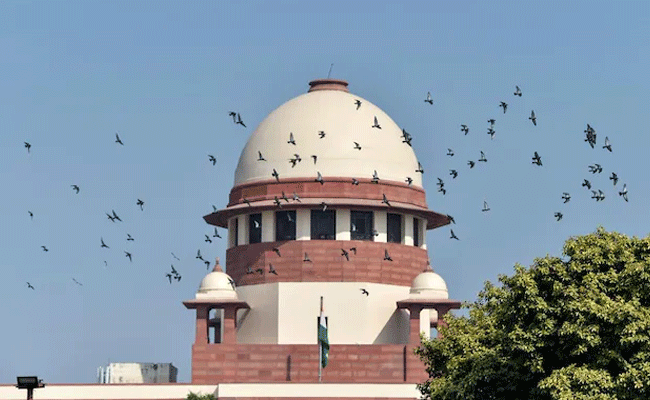
New Delhi (PTI): Amid the feud with the government on the Collegium system, the Supreme Court saw three CJIs in 2022 while it delivered key verdicts upholding the SIT's clean chit to then Gujarat chief minister Narendra Modi in the 2002 riots, the contentious money laundering law and 10 per cent EWS quota in admissions and government jobs.
The no-holds-barred attack on the judiciary by the Centre led by Law Minister Kiren Rijiju on issues ranging from the Collegium system, listing of bail and frivolous PILs to long court vacations elicited sharp response from the top court which not only came down heavily over the delay in clearing names for judgeship to the top couurt but also asserted that if it does not act in the case of violation of personal liberty then "what for" is it existing.
The apex court, in its 72-year-long history, saw three Chief Justices of India (CJI) in a year for the second time after 2002. N V Ramana, who became the 48th CJI in April 2021, retired in August 2022, followed by U U Lalit. Incumbent D Y Chandrachud assumed charge on November 9 as the 50th Chief Justice of India.
The appointment of Justice Chandrachud created a record when he stepped into the shoes of his redoubtable father Y V Chandrachud 44 years after he had become the CJI. Justice Y V Chandrachud held the position from February 22, 1978 to July 11, 1985, the longest by a CJI.
The three CJIs put together recommended eight names for judgeship in 2022 for the Supreme Court. Three of those recommended made the cut while five names are yet to be cleared by the government.
In a bid to bring transparency in its functioning, the apex court took revolutionary steps by starting live-streaming of the proceedings of Constitution benches, devised a new mechanism for listing cases, launched an online RTI portal and an upgraded version of it mobile app besides operationalising Advocate Appearance Portal' for marking presence in cases from the new year.
Several Constitution benches were set up during the year which heard matters related to the Delhi-Centre row on powers, demonetisation, Jallikattu, the Maharashtra political crisis and pleas seeking a Collegium-like system for appointment of the Chief Election Commissioner and Election Commissioners.
The cases pertaining to Prime Minister Narendra Modi also hogged limelight in the top court which upheld SIT's clean chit to him as the Gujarat chief minister and 63 others in the alleged larger conspiracy behind the 2002 post-Godhra riots.
It also set up an inquiry panel headed by a former apex court judge to probe the security lapse during Modi's visit to Punjab early this year which had snowballed into a major political row between the Centre and the state then ruled by the Congress.
In one of the pathbreaking verdicts, a five-judge bench, by a 3:2 majority, upheld the 10 per cent reservation introduced in 2019 for the economically weaker sections (EWS) in admissions and government jobs that excluded the poor among the SC/ST/OBC categories, saying it did not violate the basic structure of the Constitution.
The apex court delivered another significant verdict when it upheld the Enforcement Directorate's powers to arrest, attach property involved in money laundering, search and seize under the Prevention of Money Laundering Act.
The controversy over alleged unauthorised use of Pegasus also came under the scrutiny of the apex court which said its committee found some malware in five mobile phones out of the 29 examined but it could not be concluded whether it was due to the Israeli spyware.
In the year 2022, the top court put on hold the contentious colonial-era penal law on sedition till an "appropriate" government forum re-examines it and directed the Centre and states to not register any fresh FIR invoking the offence.
The apex court, which stressed on upholding the personal liberty of citizens, also dealt with cases involving activists including G N Saibaba, P Varavara Rao, Gautam Navlakha and Anand Teltumbde.
While the top court suspended the Bombay HC order acquitting former DU professor G N Saibaba and others in a Maoist-links case, it granted bail to 82-year-old poet and activist P Varavara Rao, an accused in the Bhima Koregaon case, on medical grounds.
The top court, which dismissed the NIA's plea challenging the bail granted by the Bombay High Court to scholar-activist Anand Teltumbde in the Maoist links case, also allowed Gautam Navlakha, who was lodged in a Navi Mumbai jail in connection with a similar case, to be placed under house arrest owing to his deteriorating health.
The furore over the remission granted to 11 convicts of the sensational case of Bilkis Bano, who was gang-raped and seven members of her family were killed during the 2002 Gujarat riots, reached the top court which decided to examine the issue of remission and consequential release of the convicts.
The Karnataka Hijab ban row saw a split verdict from the apex court, with one of the judges dismissing the appeals challenging the high court verdict which had refused to lift the ban and the other holding that there shall be no restriction. Now, the CJI will have to set up a larger bench to conclusively decide the row.
The pleas concerning hate speeches and forced religious conversions drew stinging remarks from the apex court which said the former "completely poisons" the very fabric of the nation, while the latter may pose a danger to national security and impinge on religious freedom.
In a major verdict, a bench headed by Justice Chandrachud expanded the scope of the Medical Termination of Pregnancy Act and the related rules to include unmarried women for abortion between 20-24 weeks of pregnancy, saying limiting the provision to cover only married women will render it discriminatory.
In the politically sensitive case related to the assassination of former prime minister Rajiv Gandhi, it directed the premature release of six convicts, including Nalini Sriharan, serving life term, noting that the Tamil Nadu government has recommended remission.
The order by the apex court, cracking down on errant builders, led to the one of its kind demolition in the country of Supertech's twin 40-storey towers in its Emerald Court project in Noida which were declared illegal.
Fugitive businessman Vijay Mallya, who is in the United Kingdom since March 2016 and is facing extradition, was at the receiving end of the apex court's anger which sentenced him to four months in jail for committing its contempt besides ordering attachment of his various properties.
The long arms of law caught hold of cricketer-turned-Congress politician Navjot Singh Sidhu when the top court imposed a sentence of one-year rigorous imprisonment on him in a 1988 road rage case.
In another significant verdict, the apex court said the daughters of a male Hindu, dying intestate, will inherit the self-acquired and inherited properties obtained in the partition by the father and get preference over other collateral descendants of the family.
The apex court cancelled the bail granted to Ashish Mishra, son of Union minister Ajay Mishra, in the Lakhimpur Kheri violence case, saying the victims were denied "a fair and effective hearing" in the Allahabad High Court which adopted a "myopic view of the evidence."
After being denied bail by the Allahabad HC, Ashish Mishra recently moved the apex court which has directed the sessions court to specify the tentative time schedule for concluding the trial in the case of mowing down of protesting farmers in October 2021 in Lakhimpur Kheri.
Let the Truth be known. If you read VB and like VB, please be a VB Supporter and Help us deliver the Truth to one and all.
Commercial LPG price hiked by Rs 993 per 19-kg cylinder
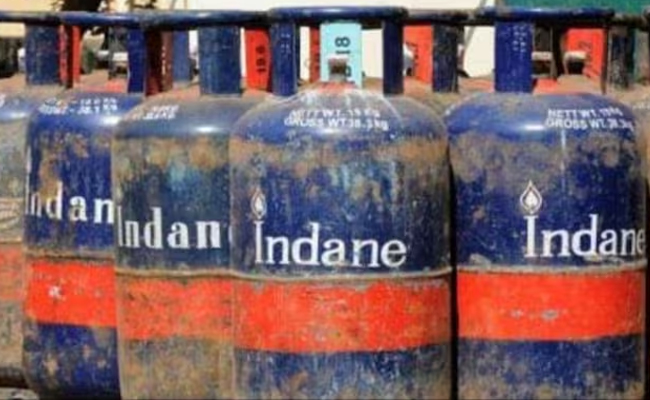
New Delhi (PTI): The price of commercial LPG was hiked by the steepest ever Rs 993 per 19-kg cylinder on Friday, marking the third straight monthly increase due to rising global energy prices linked to the West Asia conflict.
A 19-kg commercial LPG - used by establishments such as hotels and restaurtants - now costs a record Rs 3,071.5 in Delhi as against Rs 2,078.50 previously.
Rates were last increased by 195.50 per cylinder on April 1. Prior to that, prices had gone up by Rs 114.5 per 19-kg cylinder on March 1.
In three increases, commercial LPG rates have gone up by Rs 1,303.
Prices of domestic cooking gas LPG - the one used in household kitchens - remained unchanged. Domestic LPG rates were last hiked by Rs 60 per 14.2-kg cylinder on March 7. It costs Rs 913 per 14.2-kg cylinder in Delhi.
State-owned Indian Oil Corporation, Bharat Petroleum, and Hindustan Petroleum revise ATF and LPG prices on the first day of every month based on international benchmarks and the exchange rate.
Global oil prices have shot up almost 50 per cent after the war in West Asia disrupted energy supply chains.
Petrol and diesel prices continue to remain frozen after a Rs 2 per-litre reduction in March last year; petrol currently costs Rs 94.72 per litre in Delhi and diesel Rs 87.62.