Amit Shah targeted Justice Reddy to hide Centre's incompetence in ending naxalism: CM Stalin
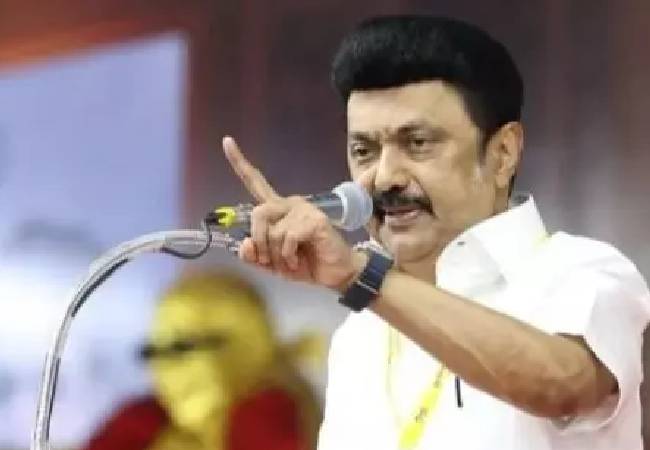
Chennai (PTI): Tamil Nadu Chief Minister M K Stalin on Sunday hit out at Union Home Minister Amit Shah for targeting Opposition vice presidential candidate, Justice B Sudershan Reddy over Naxalism.
The Centre could not end Naxal-based extremism and in order to hide its incompetence, Justice Reddy was labelled a "Naxal" by Shah, the chief minister alleged.
Addressing a meeting of leaders of INDIA bloc, its MPs from Tamil Nadu in Lok Sabha and Rajya Sabha to support justice Reddy, the chief minister said Justice Reddy was fully qualified and deserved to be the vice president and that was why he was nominated by the INDIA bloc as its candidate.
Justice Reddy was in Chennai on Sunday to seek support from DMK and its friendly parties in the state.
Stalin said that not only the INDIA bloc constituents, but all those who had faith in democracy accepted only Reddy as the vice presidential candidate.
Outlining the legal and judicial career of the retired judge, Stalin said Reddy dedicated his life to law and justice and upheld the dignity of the Constitution.
"Why is he needed today? the chief minister asked and he answered that question by saying that he is needed to protect the Constitution when the BJP was trying to "damage" it.
Justice Reddy respected Tamil Nadu's sentiments and his opposition to NEP is a case in point and he stands for pluralism, Constitution, Tamil Nadu and the people and thus, no bigger reason than this is needed to support him.
"However, how does the union home minister criticises the former judge of the Supreme Court? He accuses him as a Naxal. A home minister, forgetting his responsibility, has made an unjust remark against a former judge."
The BJP regime could not end extremism and in order to hide their incompetence, they are trying to blame the ex-judge.
"What is the union government led by the BJP is now doing? It is deploying investigative agencies to target political opponents.
"It is changing independent organisations into subsidary outfits of the BJP. The Constitution itself is in danger. Under the circumstances, today we have got a person who has faith in the principles of secularism, federalism, social justice and unity in diversity. The duty in front of us is to support him."
Further, he said: "However, after doing all that was against Tamil Nadu and its people, the BJP, by using the mask of Tamilian, is now seeking support for CP Radhakrishnan, the NDA nominee, for the office of vice president. This is a very old trick. Rather than individuals, it is the ideologies that guides politics."
Only the ideology that serves the interests of the people and their welfare should be supported.
Hence, Justice Reddy, in order to protect democracy, the Parliamentary conventions and the Constitution should become the vice president, the chief minister extended his wishes to the ex-judge.
On August 23, Sudershan Reddy said it was not a contest between two individuals but two ideologies, asserting that while his opponent is a quintessential RSS man, he is "far, far away" from it.
"I am essentially a liberal constitutional democrat. This is the area, or rather the arena, for the contest where the fight goes on," he told PTI in an interview.
Let the Truth be known. If you read VB and like VB, please be a VB Supporter and Help us deliver the Truth to one and all.
Supreme Court declines fresh curbs on hate speech, says existing laws are enough
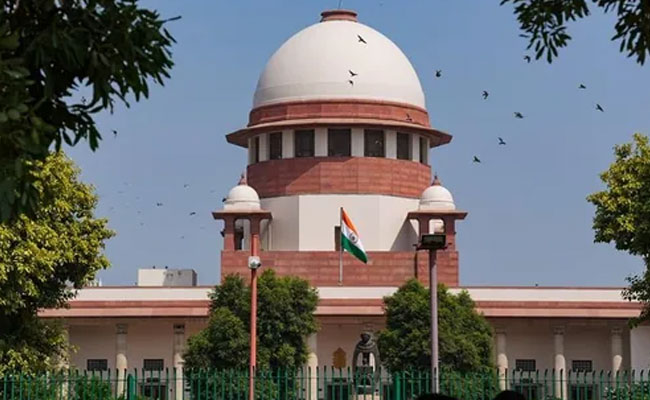
New Delhi: The Supreme Court of India on Wednesday refused to issue additional directions to curb hate speech across the country, holding that the existing legal framework is sufficient and that the real issue lies in implementation rather than absence of law.
A Bench comprising Justice Vikram Nath and Justice Sandeep Mehta said creation of criminal offences falls within the legislative domain and courts cannot legislate or compel Parliament and state legislatures to enact laws.
The Bench observed that constitutional courts can interpret the law and issue directions for enforcement of fundamental rights, but cannot step into the law-making role.
“At the highest, the court may draw attention to the need for reform. The decision whether and in what manner to legislate remains within the exclusive domain of Parliament and the state legislatures,” the court said.
The court held that the field of hate speech is not legally vacant and said concerns arise mainly from poor enforcement of existing provisions.
It also noted that the Bharatiya Nagarik Suraksha Sanhita (BNSS), 2023, provides a comprehensive mechanism to set criminal law in motion, meaning there is no legislative vacuum.
Referring to remedies already available under the earlier Code of Criminal Procedure (CrPC) and the BNSS, the court said police are duty-bound to register an FIR when a cognisable offence is disclosed, as laid down in the Lalita Kumari judgment.
It said if police fail to register an FIR, an aggrieved person can approach the Superintendent of Police under Section 154(3) of CrPC or Section 173(4) of BNSS, and thereafter move the magistrate under Section 156(3) CrPC or Section 175 BNSS, or file a private complaint under Section 200 CrPC or Section 223 BNSS.
The Bench further held that an order directing investigation under Section 156(3) CrPC does not amount to taking cognisance under Section 190 CrPC or the corresponding Section 210 of BNSS.
Even while declining fresh directions, the court acknowledged the seriousness of the issue.
It observed that hate speech and rumour-mongering directly affect fraternity, dignity and constitutional order.
The Bench urged legislative authorities to consider whether further policy or legal measures are needed in view of changing social challenges, including suggestions made in the 267th Report of the Law Commission in 2017.
The judgment came in a batch of petitions arising from events dating back to 2020, when multiple pleas were filed over alleged communal narratives spread through television channels and social media.
Among the earliest cases were challenges relating to content described as the “Corona Jihad” campaign and a programme aired by Sudarshan TV titled “UPSC Jihad”. During those proceedings, the court had restrained further telecast of the programme.
Later, more petitions were filed over speeches made at religious gatherings described as “Dharam Sansad” events.
These included pleas moved by journalist Qurban Ali and Major General S.G. Vombatkere seeking action against alleged hate speeches made at such forums.
During the pendency of the matter, the Supreme Court in 2023 had issued major directions asking all states and Union Territories to act proactively in cases involving communal hate speeches or remarks hurting religious sentiments.
It had directed police to register FIRs suo motu, without waiting for formal complaints.
Later, contempt petitions were also filed alleging poor implementation of those earlier directions.