Ankita murder case: Demolition of resort may have destroyed crucial evidence, says U'khand ex-DGP
Dehradun, Sep 28: Former Uttarakhand DGP Aloke B Lal has said the hurry in the demolition of the resort in question in the Ankita Bhandari murder case must have destroyed crucial evidence.
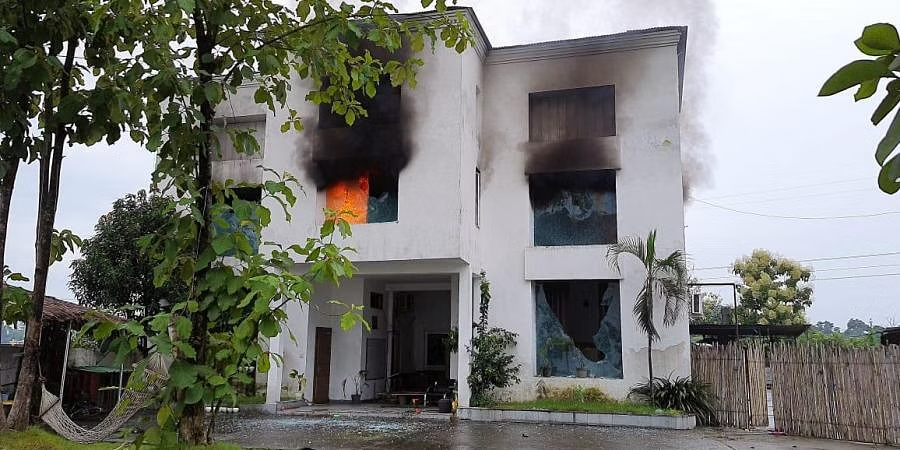
There have been allegations from various quarters about the destruction of evidence in the murder case by an overnight razing of parts of the resort at Bhogpur in Pauri district.
"It seems to me that the proper procedure of a demolition of the so-called illegal resort was not followed in this case. Usually, a show-cause notice is issued before any such exercise is undertaken," Lal told PTI in an exclusive interview on Tuesday.
"However, in this case, bulldozers razed portions of the resort in the dead of night without any prior notice. The sudden action must have destroyed crucial evidence in the case," he added.
The main purpose behind the late-night action could be seen as the administration's over zealousness to project itself as effective. The action seems to have been aimed at gaining brownie points for quick action against the accused, Lal said.
He also wondered if the demolition was carried out by the accused persons themselves. He said the investigation would establish who actually carried out the demolition and on whose orders.
On the Pauri district administration's claim that videography of the resort had been done on September 22 itself, two days before a bulldozer razed parts of it and that all evidence was intact in the video footage, the former DGP said videography cannot record such forensic evidence like strands of hair, sweat, saliva or semen drops which would have been crucial to establish relevant facts.
The doubts about possible destruction of evidence are only deepened by news reports that the mattresses of rooms put on fire allegedly by an angry mob of locals were found floating in a pool in the resort, he added.
"Mattresses in such cases may contain vital evidence like strands of hair or semen drops," the former DGP said.
He wondered where was the footage recorded on the CCTV cameras of the resort. That will have vital evidence to establish what happened before the alleged scuffle took place.
Another factor that makes things look murky is the delay in transferring the case from revenue police to regular police. People may see in it a deliberate attempt to protect the guilty, Lal said.
"Revenue police is both untrained and unequipped to handle murder cases. Why was the case allowed to lie with it for four days? Murder cases are time sensitive. Delay leads to loss of evidence and the case becomes more difficult to unravel," he said.
"During my tenure in the Police HQ in 2001-2002, I had written to the government seeking an end to the stone age revenue police system but, unfortunately, it still continues in Uttarakhand," he said.
Lal stressed that it must immediately be replaced by regular police everywhere in the state.
However, the former DGP said he hoped that the SIT headed by DIG P Renuka Devi would examine the case from all angles and bring out the truth.
Let the Truth be known. If you read VB and like VB, please be a VB Supporter and Help us deliver the Truth to one and all.
Sujit Nair raises concerns over speculation of DMK-AIADMK understanding to block TVK
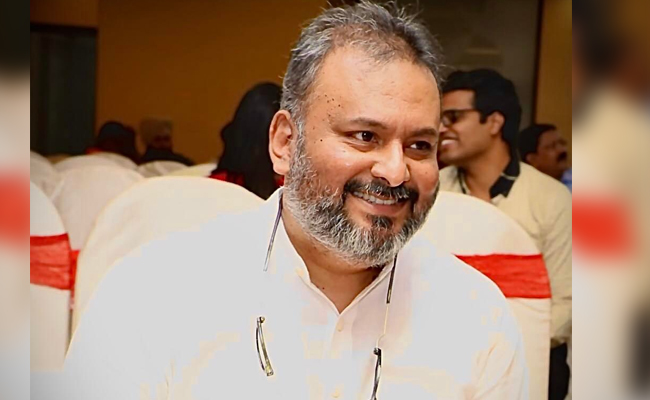
Chennai: Journalist and political commentator Sujit Nair has expressed concern over speculation that the Dravida Munnetra Kazhagam and the All India Anna Dravida Munnetra Kazhagam could explore a post-poll understanding to prevent Vijay-led Tamilaga Vettri Kazhagam from forming the government in Tamil Nadu.
In a social media post, Sujit Nair said the election verdict in Tamil Nadu reflected a clear public demand for political change and argued that the mandate should be respected irrespective of political preferences.
Referring to reports and political discussions surrounding a possible understanding between the DMK and AIADMK, he said he hoped such developments remained only speculative conversations and did not turn into reality.
Nair stated that if such an alliance were to take shape, it would raise serious questions about ideological politics in the country. He said TVK had emerged through a democratic electoral process and that the legitimacy to govern in a parliamentary democracy comes from the people’s verdict.
According to him, attempts to prevent an electoral winner from forming the government through unexpected political arrangements may be constitutionally valid, but many people could view them as politically opportunistic.
He further said that such a move could particularly affect the political image of the DMK, which has historically projected itself around ideology, social justice and opposition politics. Nair said that in ideological terms, the DMK appeared closer to TVK than to the AIADMK, and joining hands with its long-time political rival only to remain in power could weaken its broader political narrative.
He added that the same questions would apply to the AIADMK as well, as the party had spent decades positioning itself against the DMK and such an arrangement could create discomfort among its cadre and supporters.
Drawing a comparison with Maharashtra politics in 2019, Nair said he had expressed similar views when the Shiv Sena formed an alliance with the Indian National Congress and the Nationalist Congress Party after the Assembly elections.
He said post-poll alliances between long-standing political rivals often create a public perception that ideology and electoral mandates become secondary when political power equations come into play.
Nair also said such developments increase public cynicism towards politics and reinforce the belief among voters that ideology is often sidelined after elections.
He maintained that the Tamil Nadu verdict was emphatic and said respecting both the spirit and substance of the mandate was important for the credibility of democratic politics.