Another batch of 8 cheetahs from Africa to arrive in India soon; SA team visits MP habitats
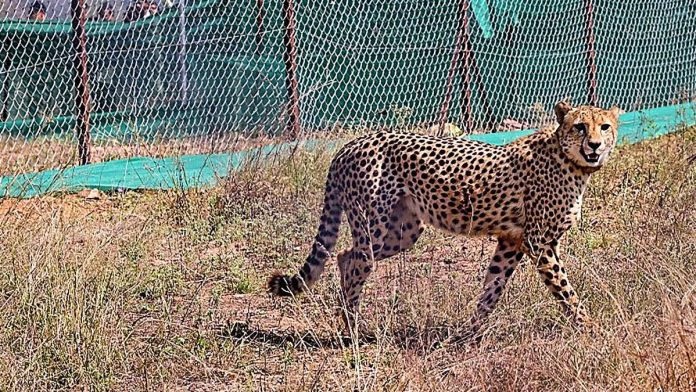
Bhopal (PTI): Eight cheetahs have been captured in Botswana in southern Africa ahead of their translocation to India under the cheetah reintroduction programme, launched in 2022 after the fastest land animal went extinct here decades ago, a senior forest official said.
The cheetahs, including two males, will be quarantined for a month and undergo a medical examination before being sent to India, the official told PTI, requesting anonymity.
"Inter-continental translocation involves several formalities. Considering these and the upcoming Christmas holidays, I can't say when the cheetahs will be flown to Kuno National Park in Sheopur district of Madhya Pradesh; most probably in January," he added.
When contacted, Cheetah Project field director Uttam Sharma stated that the matter was being handled by the two governments and he could not comment on it.
"We already have enclosures and facilities ready for the third batch of cheetahs, which were prepared when the animals were earlier brought from Namibia and South Africa," he added.
Meanwhile, a five-member South African delegation visited the Gandhi Sagar Wildlife Sanctuary (GSWS), located on the boundary of Mandsaur and Neemuch districts in Madhya Pradesh, after its field visit to Kuno National Park on Thursday.
The team remained at GSWS on Friday before returning to New Delhi to fly back to South Africa, said Mandsaur Divisional Forest Officer Sanjay Raykhere.
The team appreciated the efforts of the Central and Madhya Pradesh governments and Kuno management in cheetah conservation under Project Cheetah, said field director Sharma.
The delegation comprised Anthony Mitchell, head of office and cabinet liaison for Deputy Minister Narend Singh; Kam Chetty, retired bureaucrat; Sam Ferreira, SANParks lead biologist; Brent Coverdale, animal scientist at Ezemvelo KZN Wildlife; and Jeanetta Selier, senior scientist at the South African National Biodiversity Institute (SANBI).
They were accompanied by Indian counterparts S P Yadav, managing director of the International Big Cat Alliance (IBCA) and advisor to Project Cheetah; Subharanjan Sen, principal chief conservator of forests (wildlife) of Madhya Pradesh; and Sanjayan Kumar, inspector general, NTCA, Sharma added.
On September 17, 2022, Prime Minister Narendra Modi released eight cheetahs brought from Namibia into a special enclosure at Kuno National Park, marking the world's first intercontinental relocation of a large wild carnivore species. India later imported 12 more cheetahs from South Africa in February 2023.
Three years into the ambitious revival programme, the country now has 27 cheetahs, including 16 born on Indian soil. Of them, 24 are at Kuno and three are at GSWS.
Nineteen cheetahs- nine imported adults and 10 cubs born in India-have died from various causes since the project began, while 26 cubs have been born in Kuno so far. After importing 20 animals from Africa, India currently has a net gain of seven cheetahs over the initial number.
Let the Truth be known. If you read VB and like VB, please be a VB Supporter and Help us deliver the Truth to one and all.
Sujit Nair raises concerns over speculation of DMK-AIADMK understanding to block TVK
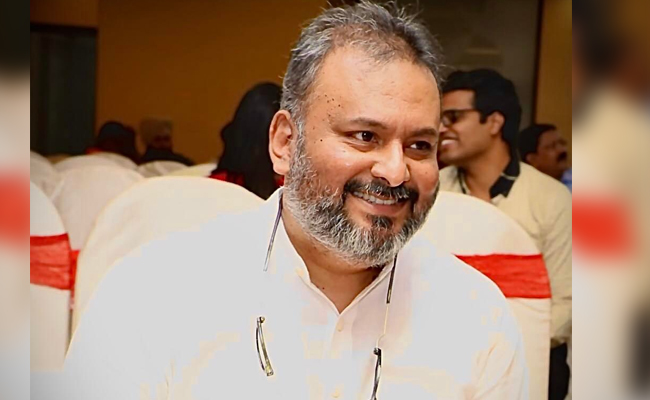
Chennai: Journalist and political commentator Sujit Nair has expressed concern over speculation that the Dravida Munnetra Kazhagam and the All India Anna Dravida Munnetra Kazhagam could explore a post-poll understanding to prevent Vijay-led Tamilaga Vettri Kazhagam from forming the government in Tamil Nadu.
In a social media post, Sujit Nair said the election verdict in Tamil Nadu reflected a clear public demand for political change and argued that the mandate should be respected irrespective of political preferences.
Referring to reports and political discussions surrounding a possible understanding between the DMK and AIADMK, he said he hoped such developments remained only speculative conversations and did not turn into reality.
Nair stated that if such an alliance were to take shape, it would raise serious questions about ideological politics in the country. He said TVK had emerged through a democratic electoral process and that the legitimacy to govern in a parliamentary democracy comes from the people’s verdict.
According to him, attempts to prevent an electoral winner from forming the government through unexpected political arrangements may be constitutionally valid, but many people could view them as politically opportunistic.
He further said that such a move could particularly affect the political image of the DMK, which has historically projected itself around ideology, social justice and opposition politics. Nair said that in ideological terms, the DMK appeared closer to TVK than to the AIADMK, and joining hands with its long-time political rival only to remain in power could weaken its broader political narrative.
He added that the same questions would apply to the AIADMK as well, as the party had spent decades positioning itself against the DMK and such an arrangement could create discomfort among its cadre and supporters.
Drawing a comparison with Maharashtra politics in 2019, Nair said he had expressed similar views when the Shiv Sena formed an alliance with the Indian National Congress and the Nationalist Congress Party after the Assembly elections.
He said post-poll alliances between long-standing political rivals often create a public perception that ideology and electoral mandates become secondary when political power equations come into play.
Nair also said such developments increase public cynicism towards politics and reinforce the belief among voters that ideology is often sidelined after elections.
He maintained that the Tamil Nadu verdict was emphatic and said respecting both the spirit and substance of the mandate was important for the credibility of democratic politics.