APCR fact-finding team reports gaps between records, public narrative in Nashik TCS case

New Delhi: A fact-finding team of the Association for Protection of Civil Rights (APCR) has pointed to a gap between official records and public narratives in the case related to alleged sexual misconduct and claims of religious coercion at the Tata Consultancy Services (TCS) unit in Nashik.
According to a report by Maktoob Media, the team visited Nashik and reviewed FIRs, court documents, media reports and conducted field interactions. It said the “veracity, consistency, and evidentiary support” of the allegations are still under investigation and subject to judicial scrutiny.
The team noted that while some complaints include references to remarks perceived as affecting religious beliefs, no conclusive material has so far established any organised or systematic activity of religious conversion. It added that each complaint is being examined separately by investigating agencies.
The report highlighted what it described as a widening gap between verified allegations and circulating claims. It said some narratives in the public domain go beyond what is recorded in FIRs and official documents. It also stated that investigators have not confirmed any organised conspiracy of the kind suggested in certain narratives.
The fact-finding team further pointed to conflicting accounts regarding internal grievance mechanisms. While some complainants have alleged a hostile work environment and failure of institutional redressal systems, the company has maintained that no formal complaints were received through its ethics or POSH channels before the FIRs were registered.
The report also addressed media portrayals of individuals named in the case, noting that certain descriptions, including claims about roles and designations, are not consistently reflected in official records. The company had earlier stated that one of the individuals mentioned did not hold a managerial or recruitment position.
Statements from families of the accused and defence lawyers have denied the allegations. They expressed concern about possible wrongful implication and suggested that the issue may have originated from personal disputes that later escalated into multiple complaints. Legal representatives also cautioned against media coverage that could influence the course of the investigation.
APCR Maharashtra general secretary Shakir Shaikh, as quoted in the report, said that if any crime is established, it should be treated as an individual act and not linked to any community. He also warned that sensational reporting could impact social harmony.
Let the Truth be known. If you read VB and like VB, please be a VB Supporter and Help us deliver the Truth to one and all.
Karnataka tanks hold strong water storage: Minister Boseraju
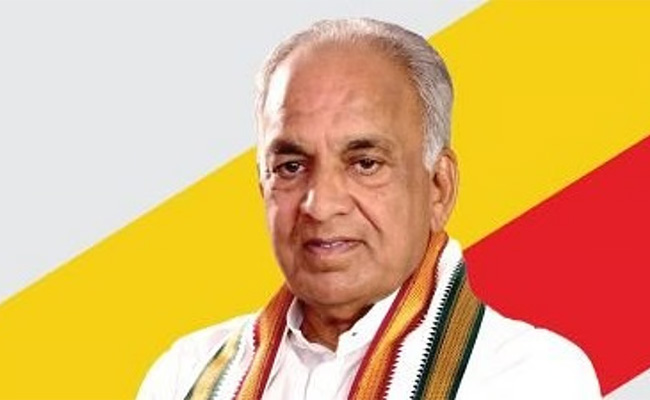
Bengaluru (PTI): Karnataka Minister N S Boseraju on Tuesday said that minor irrigation tanks across the state are holding good water storage levels, with the 3,788 tanks under the department’s jurisdiction providing life-sustaining water to a large agricultural command area of approximately 4,45,009 hectares.
In a statement, the Minister for Minor Irrigation, Boseraju, said that according to the latest data released by the department, a vast majority of the 3,788 minor irrigation tanks in the state have maintained good water levels.
Detailing the storage status, the report said that even in peak summer, 165 tanks are full.
Additionally, 1,355 tanks have retained more than 51 per cent capacity, 1,143 tanks have water levels up to 50 per cent, and 959 tanks are at roughly 30 per cent storage capacity.
District-wise, Davanagere leads the state in water storage, with 27 tanks remaining full even during summer. Chikkamagaluru follows closely with 46 full tanks, indicating strong water retention.
Other top-performing districts include Hassan, Tumakuru, and Kolar.
Boseraju, who also holds the portfolio of Science and Technology, said 1,184 tanks are being actively filled through 145 tank-filling lift irrigation projects under the Minor Irrigation Department.
He attributed the strong water retention to good monsoon rainfall and effective water management strategies of the government.
“It is encouraging to see such a substantial volume of water stored across our minor irrigation tanks by the end of March, remaining largely intact even as summer progresses. The fact that 1,355 tanks are nearly full and 165 tanks are brimming is a testament to the success of our tank-filling programmes and rejuvenation initiatives,” he said.
“By ensuring a continuous flow of water to these tanks through lift irrigation projects across departments, as well as supplying treated and surface water to the Bayaluseeme districts, we have taken proactive measures to prevent them from drying out during the summer,” the minister said.
According to him, these data points confirm that efforts to build a water-secure Karnataka are yielding strong results at the grassroots level.
“This water wealth preserved in our tanks will bring direct benefits to lakhs of farmers across the 4,45,009-hectare command area,” he added.