Army commander reviews security in Kashmir Valley
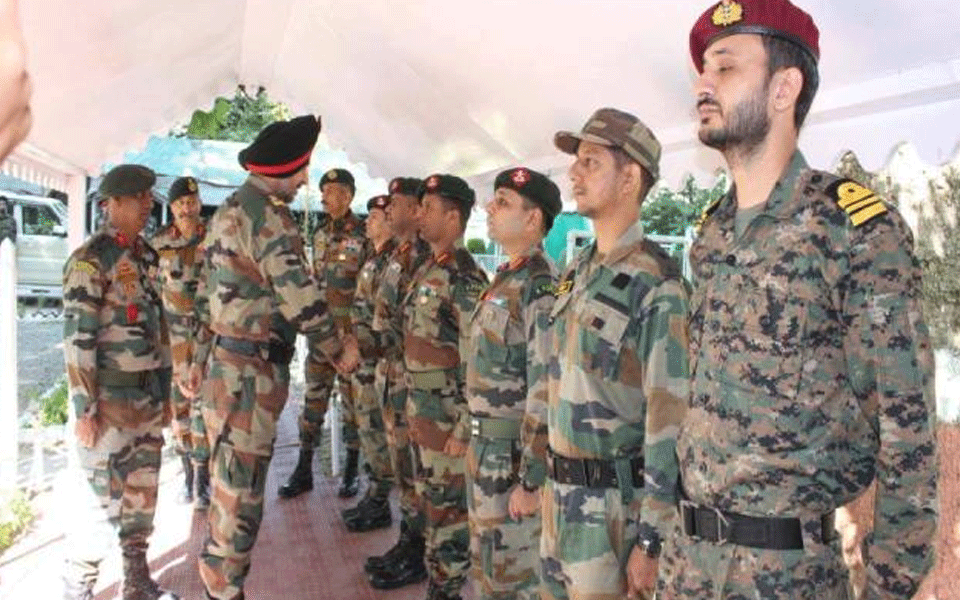
Srinagar, Sep 30 : The Northern Army Commander, Lt General Ranbir Singh, on Sunday reviewed the security situation in the Kashmir Valley in the wake of recent counter-terrorism operations.
Defence Ministry spokesman Colonel Rajesh Kalia said that accompanied by the Chinar Corps Commander Lt Gen A.K. Bhatt, Gen Ranbir Singh visited the hinterland formations in North and Central Kashmir and was briefed by the commanders about the current situation.
"The Army Commander complemented the troops for their recent successes and commended them for their dedication to duty and high standards of professionalism," he said.
"He appreciated the measures and Standard Operating Procedures (SoP) instituted by the units and formations to minimise civilian casualties.
"The need to be prepared for effectively meeting emerging security challenges was also reinforced.
"Lauding the excellent synergy amongst all the security forces, he exhorted all ranks to maintain a safe, secure and peaceful environment for the people of Jammu and Kashmir," he said.
Let the Truth be known. If you read VB and like VB, please be a VB Supporter and Help us deliver the Truth to one and all.
My party will complete 5-year term, says CM Siddaramaiah
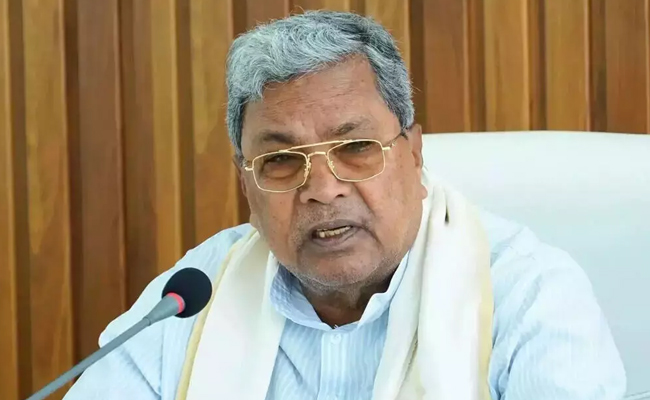
Mysuru (Karnataka) (PTI): Karnataka Chief Minister Siddaramaiah on Wednesday asserted that the Congress government would complete its five-year term, while sidestepping questions on whether he personally would remain in office for the full duration.
Addressing reporters here, he maintained that decisions on the leadership would rest with the party high command and refrained from giving a direct answer on his own tenure.
“Our party will complete five years,” Siddaramaiah said, when asked if he would complete a full term as Chief Minister.
On the issue of leadership, he reiterated that the final call would be taken by the party leadership, saying, “The high command will decide. There’s no point asking the same thing again.”
Indicating his readiness to travel to the national capital if required, he said, “If I am called to Delhi, I will go,” adding that he would seek an appointment with Rahul Gandhi if needed.
The talks on leadership change have intensified in the power corridor of the state where claims were made that Siddaramaiah would make way for his Deputy Chief Minister D K Shivakumar.
The Chief Minister also underlined that recent by-election victories in Bagalkote and Davanagere South assembly segment reflected public support for the government, stating that this clearly shows that people have appreciated the Congress government and its programmes.
The CM also dismissed the opposition’s claims, alleging they lacked strategy, and said local body elections would be conducted as per rules.