Around 1,068 hectares of railway land is under encroachment: Railway Minister
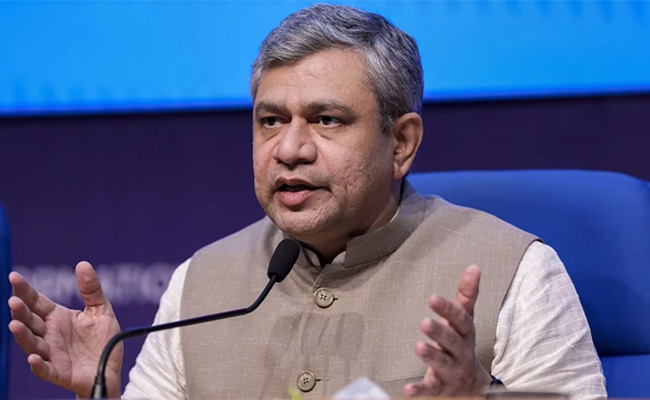
New Delhi (PTI): Around 1,068 hectares of land owned by Indian Railways is under encroachment across the country, which is only 0.21 per cent of the total 4.99 lakh hectares of land, Railway Minister Ashwini Vaishnaw informed the Rajya Sabha on Friday.
Replying to supplementary queries during Question Hour, the minister said that if one sees the utilisation of all railway land, nearly 80 per cent of the land is near the tracks, 5 per cent around it, while the remaining 15 per cent of land is used for development of stations, colonies, hospitals and other things.
"Around 0.21 per cent of Railway land is under illegal encroachment in the country," he told members in the House.
"It is correct that this illegal encroachment on land is a serious problem. Action has also been taken, but timely action has also been taken from time to time. But every time such an action is taken, a humanitarian approach is adopted, as the poorest people have set up jhuggis on railway land. Wherever possible, a practical solution has been taken together with state governments," he said.
He also informed the Upper House that several good initiatives have been taken to protect railway land. Among the technological steps taken, he said, complete digitisation of railway land has been done, and electronic land records have been put on a portal.
ALSO READ: J-K assembly adjourned as chaos erupts over Khamenei death, demand for National Law University
"Each and every plot of land has been properly mapped and electronically preserved. Surveys have also been done through drones and satellite images of the land of all railway land. Overall, further encroachment has been stopped significantly.
"There have been some good examples of getting railway land vacated. In Surat, we have worked together with the state government, which assured to provide houses under PM Awas Yojna to those who had encroached railway land. Hence, a humanitarian approach was adopted, and land was vacated, and development work was taken forward," he told the members.
He said wherever states help, they yield good results, and the issue of land comes under the state government, and hence the centre works together with state governments.
The minister said the Railways is using two basic technologies -- satellite technology and second is drone-based surveys and both produce maps, and then the same is compared with our reference maps to find out, through AI and algorithms.
"If any new encroachments have happened, we are able to take immediate steps. That is why fresh encroachment has significantly reduced and almost stopped. The problem is more of the encroachment that has been there for many decades now," he said.
For utilisation of unused land, the minister said the Railways has created a very transparent mechanism in the last few years, and the results of that are now visible.
"Railways have an authority called the Railway Land Development Authority. Though some non-transparent steps were taken during the UPA, we have now started developing land through a transparent tendering process, and there have been several examples of development of railway land through a transparent tender process, where revenues are shared.
"During the current financial year, we are expected to receive Rs 900 crore revenue out of that, and this is going to increase significantly," Vaishnaw informed the house.
In his written reply to the starred question, the minister said, "Regular inspections, demarcations and periodical verification of the railway land boundaries are carried out by the railway administration, and accordingly, land records are updated. Indian Railway works closely with state revenue authorities to ensure continuous verification and updation of land records wherever required."
"As on 01.04.2025, Indian Railway owns approximately 4.99 lakh hectares of land, out of which about 0.21 per cent (1068 ha) of Railway land is under encroachment. Regular field surveys are carried out by railways, and necessary action is taken to remove the encroachment with the assistance of state governments.
"During the last five years, about 98.02 Ha of railway land has been reclaimed from encroachments. The vacant railway land is utilized for infrastructural development viz.
"Multi-tracking, Railway Workshops, New Passenger Terminals, Cargo Terminals, etc., as per operational needs. Land, which is not immediately required by Railways, is entrusted to Rail Land Development Authority (RLDA) for commercial utilisation," the Railway minister said.
Let the Truth be known. If you read VB and like VB, please be a VB Supporter and Help us deliver the Truth to one and all.
Defeat of Constitution Amendment Bill betrayal of nation's woman power: Adityanath
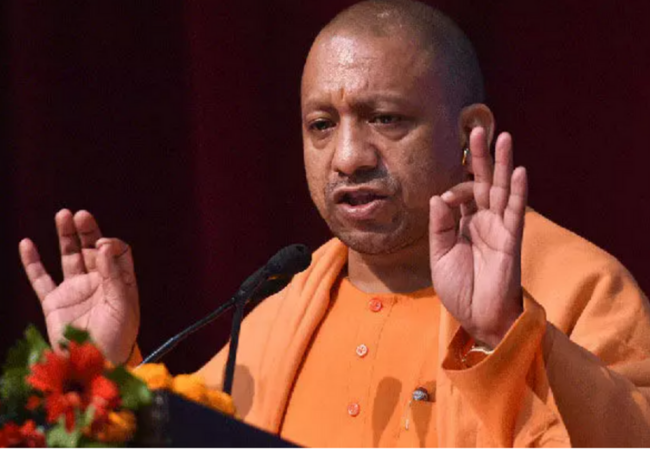
Lucknow (PTI): Uttar Pradesh Chief Minister Yogi Adityanath termed the defeat of the Constitution Amendment Bill to implement reservation for women in legislatures in 2029 and increase the number of seats of the Lok Sabha "betrayal of the woman power" of the nation.
A Constitution Amendment Bill to implement 33 per cent reservation for women in legislatures in 2029 and increase the number of Lok Sabha seats to 816 was defeated on Friday.
In a post on X in Hindi, late on Friday night, Adityanath said, "Today, a dark chapter has been added to the history of India's great democracy. The Opposition's obstruction of the passage of the Constitutional Amendment Bill essential for the 'Nari Shakti Vandan Adhiniyam' is a blow to the honour of 'Bharat Mata' (Mother India). It is a betrayal of the entire woman power of the nation; it is an infringement upon their democratic rights.
"The Congress-led 'INDI' alliance has exposed its anti-women mindset. The women of the nation are watching and understanding everything. They will remember this deceit and injustice, and when the time comes, they will surely give a reply. Under the leadership of our Prime Minister @narendramodi ji, the NDA alliance will continue its unwavering efforts to protect the honour, dignity, and rights of women, and to ensure their empowerment."
While 298 members voted in support of the Bill in the Lok Sabha, 230 MPs voted against it. The Bill required 352 votes for a two-thirds majority.
According to the Constitution (131st Amendment) Bill, Lok Sabha seats were to be increased to 816 from the current 543 to "operationalise" the women's reservation law before the 2029 parliamentary polls, following a delimitation exercise based on the 2011 Census.
Seats were also to be increased in state and Union Territory assemblies to accommodate 33 per cent reservation for women.
This was for the first time that a Bill under the Modi government was defeated in Parliament.