Around 60 pc women entering judicial services on merit, not reservation: SC
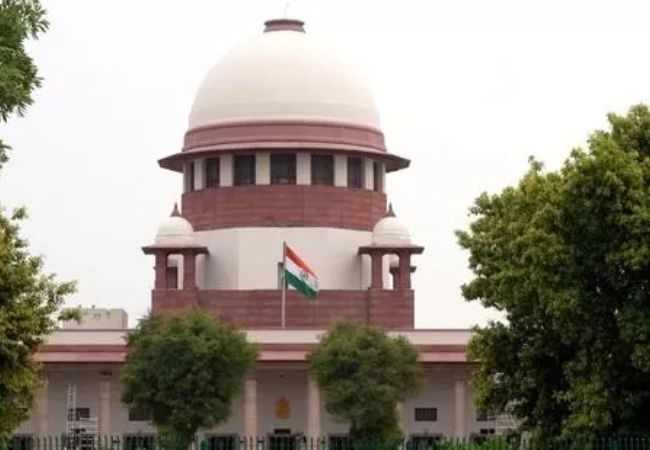
New Delhi (PTI): The Supreme Court on Monday said around 60 per cent of judicial officers are women entering the judicial services on the basis of merit and not due to reservation.
A bench of Justices Surya Kant and Joymalya Bagchi issued notices to the Centre, Bar Council of India, secretary general of the apex court and others on a plea seeking framing of a uniform and gender-sensitive policy for allotment of professional chambers/cabins to women advocates in different courts and bar associations across the country.
Justice Kant questioned the plea seeking reservation in chamber allotment to women advocates and said that he is personally against chamber system and instead there should be cubicle system and common sitting space, where lawyers can work.
"We have been speaking at various forums and highlighting how more and more women are entering judicial services. Almost 60 per cent of judicial officers entering the services are women and they are doing it on merit not reservation. I find it a little bit paradoxical as to why are women advocates seeking any privilege, when they can achieve it on the basis of merit?" Justice Kant said.
The bench said that if the court is to consider the request of women advocates for preferential allocation of chambers, then the other day it could be a case of specially abled persons.
Senior advocate Sonia Mathur, appearing for petitioners Bhakti Pasrija and others, said at present only Rohini court has 10 per cent reservation in chamber allotment for women.
Justice Kant said the space for advocates in the new building of the apex court has been constructed keeping in view the need for the next 50 years.
Justice Bagchi said the need is to safeguard young women advocates entering the profession by providing facilities like creche, separate washrooms and other facilities, as they are the ones who drop out of the profession to take care of their children.
The petitioners, who are practising women advocates, have claimed that despite practice of 15-25 years, they were not allotted any chamber or professional space and asserted that the present chamber allotment scheme of Supreme Court Bar Association (SCBA) was without any reservation for women advocates.
Let the Truth be known. If you read VB and like VB, please be a VB Supporter and Help us deliver the Truth to one and all.
Court can reject anticipatory bail but cannot direct accused to surrender: SC
New Delhi (PTI): A court can reject anticipatory bail of an accused but it has no jurisdiction to direct him to surrender before the trial court, the Supreme Court has said.
A bench of Justices J B Pardiwala and Ujjal Bhuyan made the observation while hearing a plea filed by a man accused of cheating and forgery.
"If the court wants to reject the anticipatory bail, it may do so, but the court has no jurisdiction to say that the petitioner should now surrender," the bench said.
The Jharkhand High Court had rejected anticipatory bail plea of the accused and asked him to surrender and seek regular bail.
In this case, a complaint had been filed before a magistrate alleging offences under Sections 323 (voluntarily causing hurt), 420 (cheating), 467 (forgery of valuable security), 468 (forgery for purpose of cheating), 471 (using forged document) and 120B read with 34 of the IPC, in connection with a land dispute.
The high court had dismissed the second anticipatory bail application of the accused on the ground that no new circumstances were shown.
It had relied on its earlier order rejecting his first anticipatory bail plea, in which the court directed the petitioner to surrender before the trial court and seek regular bail in terms of the decision in Satender Kumar Antil v. CBI.
The top court said such a direction was wholly without jurisdiction and said that if a court chooses to reject anticipatory bail, it may do so, but it cannot compel the accused to surrender.