Articles 370, 35-A must go, says Bhagwat
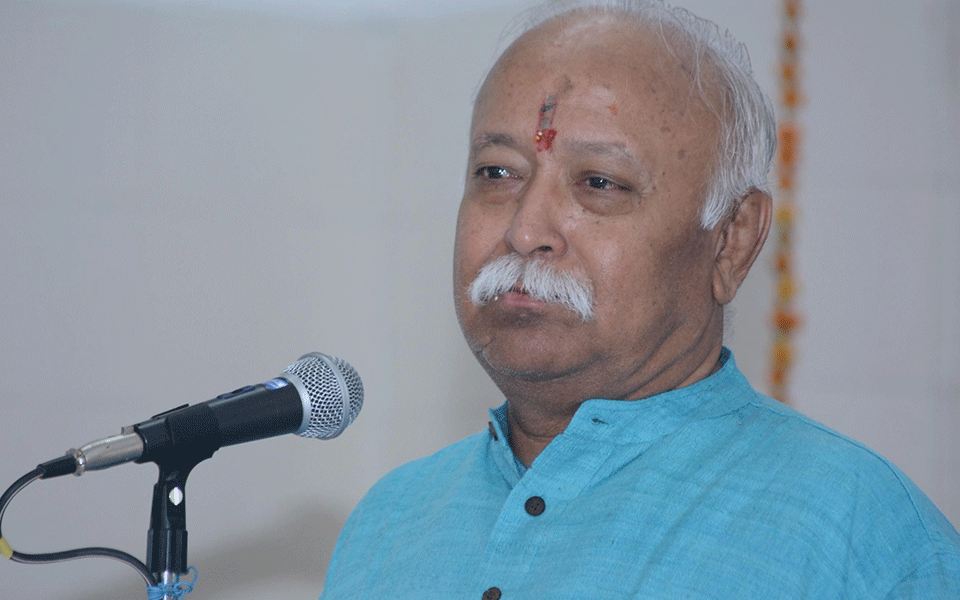
New Delhi, Sep 19: Amid the raging debate, RSS chief Mohan Bhagwat on Wednesday said that Articles 370 and 35-A of the Constitution, which give special status to Jammu and Kashmir, must go.
"Our views on Articles 370 and 35-A are well known. These Articles must go," the Sarsanghchalak of the Rashtriya Swayamsevak Sangh (RSS) said in response to a query on the concluding day of his outreach programme.
Of late, there has been a raging controversy over Article 35A that empowers the Jammu and Kashmir legislature to define "permanent residents" of the state and provide special rights and privileges to those permanent residents.
After huge opposition in Jammu and Kashmir, the new Governor had intervened in the matter when the state told the Supreme Court that a PIL on the matter be deferred for hearing later.
On the question of a demand for division of Jammu and Kashmir into three parts -- Jammu, Ladakh and Kashmir Valley, Bhagwat said it was for the government to decide.
"The idea behind the division of any state is administrative convenience and the country's integrity and security should remain intact. If on these parameters the government feels at any time that the state should be divided, then so be it. If not, the state may remain intact," he said.
"But it needs to be seen whether the state government there is working for the development of all the regions of the state without discrimination. The primary thing is that the state government must ensure there is no threat to the internal security of the country," he added.
Bhagwat disclosed that some RSS volunteers have started running schools, etc., in the troubled state to work on the youth and prevent them from going astray.
"Vande mataram and Jana Gana Mana are sung in these schools. Independence Day and Republic Day are also celebrated. We are getting good support from the students and their guardians. This will grow gradually, because no such attempt had been made earlier. The effort will take time to bear fruit," Bhagwat said.
On the question of need for tougher laws to maintain the internal security of the country, Bhagwat said that both government and society should ensure through reaching out to every section of the society that people do not get attracted towards elements which create a threat to the internal security.
He added that those openly opposing the implementation of law and order must be dealt with strictly.
"We cannot reach anywhere through the bullet but through talks. But the talks must go in a direction that Bharat must remain united and integrated," he said.
"We should ensure that those posing threat to country's security, those speaking the language of treason do not get the support from inside the country. We must isolate such people," Bhagwat said.
Let the Truth be known. If you read VB and like VB, please be a VB Supporter and Help us deliver the Truth to one and all.
Bhojshala case: Disputed structure built from remains of pre-existing temples, claims ASI
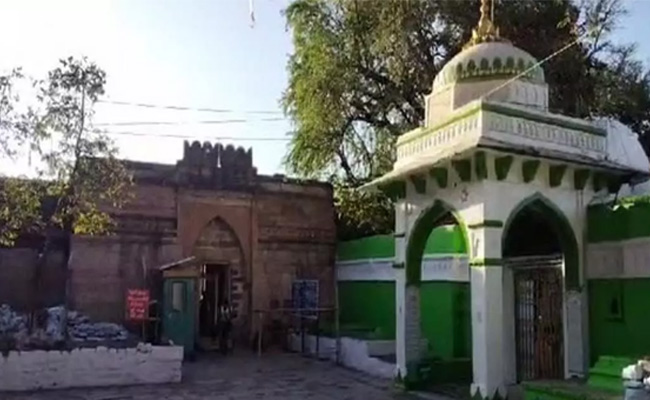
Indore (PTI): The ASI has told the Madhya Pradesh High Court that a massive structure dating back to the Paramara kings' rule existed at the disputed Bhojshala temple-Kamal Maula mosque complex, and the current structure was built from the remains of temples.
The Archaeological Survey of India (ASI) made the claim on Tuesday based on its 98-day scientific survey and over 2,000-page report.
The Hindu community considers Bhojshala a temple dedicated to Vagdevi (Goddess Saraswati), while the Muslim side claims the monument as the Kamal Maula Mosque. The disputed complex is protected by the ASI.
During the hearing before Justices Vijay Kumar Shukla and Alok Awasthi of the HC's Indore bench, Additional Solicitor General Sunil Kumar Jain, representing the ASI, presented a detailed account of the scientific survey conducted two years ago at the complex.
Referring to the ASI's survey report, he said, "Retrieved architectural remains, sculptural fragments, large slabs of inscriptions with literary texts, Nagakarnika inscriptions on pillars, etc, suggest that a large structure associated with literary and educational activities existed at the site. Based on scientific investigations and archaeological remains recovered during the investigations, this pre-existing structure can be dated to the Paramara period."
It can be said that the existing structure was made from the parts of earlier temples, based on scientific investigations, survey and archaeological excavations conducted, study and analysis of retrieved finds, study of architectural remains, sculptures, and inscriptions, art and sculptures, Jain said quoting the report.
Summarising the report, he also drew the court's attention to the fact that the archaeological study identifies that many architectural components, such as pillars and beams, were originally part of temple structures before being repurposed for a mosque.
"The evidence of this transition includes Sanskrit and Prakrit inscriptions that were damaged or hidden, alongside sculptures of deities and animals that were often mutilated or defaced," Jain contended.
The report also states that "all Sanskrit and Prakrit inscriptions are older than the Arabic and Persian inscriptions, indicating that users or engravers of the Sanskrit and Prakrit inscriptions occupied the place earlier".
In light of the Muslim side's earlier objections, the bench wanted to know why there were some discrepancies in the ASI's responses regarding the status of the disputed complex in the cases filed over the years.
The Additional Solicitor General argued that earlier studies of the complex involved only officials, while the current survey involved scientists and the use of advanced technologies such as Ground Penetrating Radar (GPR).
The hearing in the Bhojshala case will continue on Wednesday.
The high court has been regularly hearing four petitions and one writ appeal regarding the religious nature of the Bhojshala temple-Kamal Maula mosque complex since April 6.