‘As an Indian, I am not proud’: Amartya Sen criticises Centre’s decisions on Jammu and Kashmir
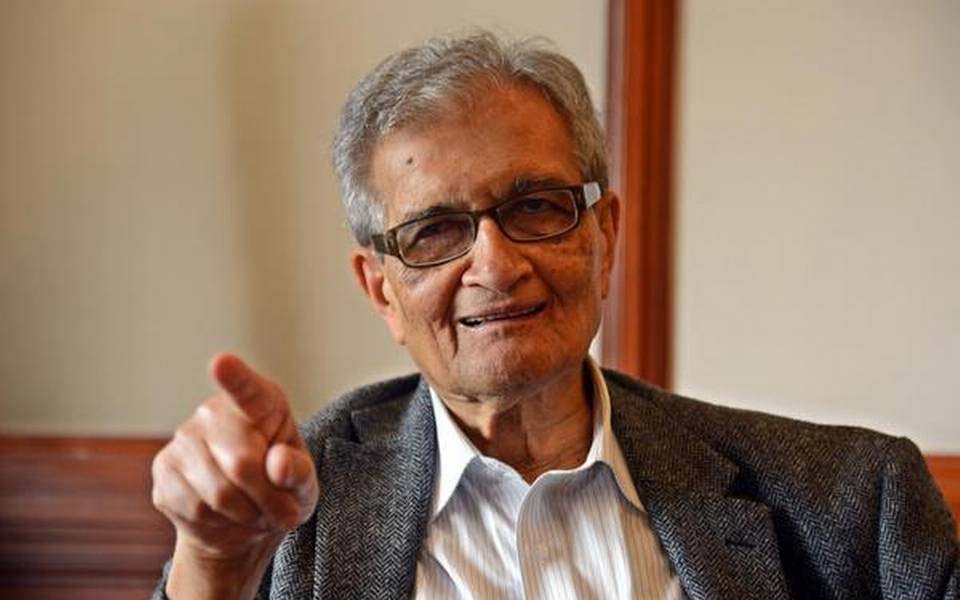
New Delhi: Nobel laureate economist Amartya Sen on Monday criticised the Narendra Modi-led administration’s decision to revoke Jammu and Kashmir’s special status and split the region into two Union Territories, NDTV reported.
“I don’t think ultimately you will have any resolution in Kashmir without democracy,” the 85-year-old economist said, adding that the Centre’s decision emphasised majority rule “as opposed to it sustaining the rights of all human beings”.
“As an Indian, I am not proud of the fact that India, after having done so much to achieve a democratic norm in the world – where India was the first non-Western country to go for democracy – that we lose that reputation on the grounds of action that have been taken,” Sen said. He added that it should have been up to Kashmiris to decide on the rights of land use in the state as it was their land and they have a legitimate point of view.
He also criticised the government’s decision to arrest and detain the political leaders of Jammu and Kashmir. “I don’t think you will ever have fairness and justice without hearing the voices of the leaders of the people and if you keep thousands of leaders under restraint and many of them in jail, including big leaders, who have led the country and formed governments in the past, you are stifling the channel of democracy that makes democracy a success,” Sen said.
Several political leaders – including former chief ministers Omar Abdullah, Farooq Abdullah and Mehbooba Mufti, Peoples Conference leader Sajad Lone, Jammu Kashmir Peoples Movement leader Shah Faesal, and state Congress chief Ghulam Ahmad Mir – are under detention.
The economist called the decision to put the state under a huge security blanket to prevent any backlash that might lead to loss of life and property a “colonial excuse”. He said: “That’s how the British ran the country for 200 years. The last thing that I expected when we got our independence... is that we would go back to our colonial heritage of preventive detentions.”
India ended Jammu and Kashmir’s special status on August 5 and also imposed a security lockdown and a communications blackout in the state. Eight parties had opposed the government’s move in Parliament. However, Congress leaders such as Jyotiraditya Scindia, Janardan Dwivedi, Karan Singh, Jaiveer Shergill, Milind Deora, Aditi Singh and Bhubaneswar Kalita backed the government.
Courtesy: scroll.in
Let the Truth be known. If you read VB and like VB, please be a VB Supporter and Help us deliver the Truth to one and all.
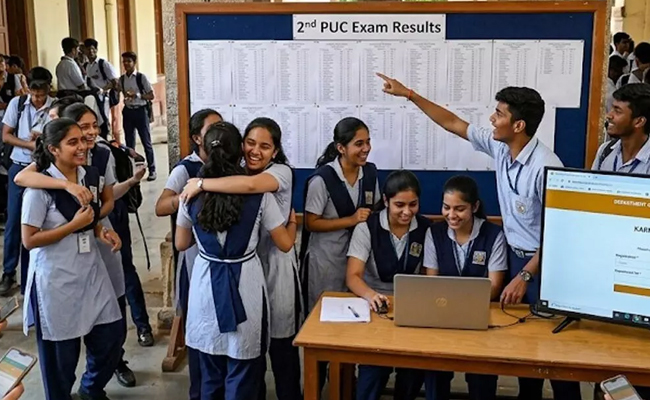
Second PUC results: Life convict clears exam with distinction, DGP lauds effort
_vb_63.jpeg)
Bengaluru: A life convict lodged in Ballari Central Prison has successfully cleared the second PUC examination.
Ashok Kumar S, who appeared for the examination under prison escort, secured 481 marks out of 600, registering 80.1 percent.
Director General of Police (Prisons and Correctional Services), Alok Kumar (IPS), shared the development on his official ‘X’ handle, commending the inmate’s achievement.
In his post, he stated that it was heartening to see a life convict score over 80 percent in the examination, adding that the inmate had appeared from Ballari Central Prison under escort.
It’s heartening to see that one of our life convict prisoners Ashok has obtained 80.1% marks in PUC exam. He appeared under Prison escort from Ballari Central Prison for his exams.
— alok kumar (@alokkumar6994) April 9, 2026
Glad to see that Walls of the prison has not subdued his hopes for a better future. pic.twitter.com/Nzlcy076SR
He further noted that the achievement reflected that the “walls of the prison have not subdued his hopes for a better future.”
Alok Kumar in his post also shared the result sheet of Ashok.
The Karnataka School Examination and Assessment Board (KSEAB) declared the second PUC results for 2026 on April 9.
A total of 6,32,200 students appeared for the examination across all streams, of whom 5,46,698 passed, recording an overall pass percentage of 86.48 per cent.