As Supreme Court puts on hold sedition law, Union Law Minister Kiren Rijiju invokes 'Lakshman Rekha'

New Delhi, May 11: As the Supreme Court on Wednesday put on hold the application of sedition law, Union Law Minister Kiren Rijiju invoked "Lakshman Rekha" guiding different institutions, including the Executive and the Judiciary, and said no one should cross their "boundary".
Responding to queries by reporters soon after the top court gave its directions, Rijiju said, "We respect each other. The court should respect the government, the legislature, so as the government also should respect the court. We have a clear demarcation of boundary and that 'Lakshman Rekha' should not be crossed by anybody."
In its significant order on the sedition law that has been under intense public scrutiny, a bench headed by Chief Justice N V Ramana said there was a need to balance the interest of civil liberties and the interests of citizens with that of the State.
Taking note of the concerns of the Centre, the apex court said the rigours of Section 124A (sedition) of the IPC is not in tune with the current social milieu and permitted reconsideration of the provision.
The bench, also comprising justices Surya Kant and Hima Kohli, stayed all proceedings in sedition cases while directing the Centre and states to not register any fresh FIR invoking sedition charges until the sedition law is "under reconsideration".
The court listed the matter in the third week of July and said its directions shall continue till further orders.
Addressing the joint conference of chief justices of the high courts and the chief ministers here on April 30, CJI Ramana had also highlighted the significance of 'Lakshman Rekha'.
Reminding the State's three organs - the Executive, the Legislature and the Judiciary - to be "mindful of the 'Lakshman Rekha' while discharging their duties", he had assured governments that "the judiciary would never come in the way of governance if it is in accordance with law".
"We share your anxiety and concern regarding the welfare of the people," Justice Ramana had said.
Delving further, he said all constitutional functionaries abide by the constitutional mandate as the Constitution provides for separation of powers between the three organs, clearly outlining their sphere of functioning, and delineating their powers and responsibilities.
Talking to reporters on Monday, Rijiju had said that Prime Minister Narendra Modi had directed that the provision of the sedition law be re-examined and reconsidered and the government will "suitably" take into account the views of stakeholders and ensure the sovereignty and integrity of the country is preserved while looking into Section 124A of the IPC.
Rijiju had said he feels that it is a "bold" step taken by the government and that making laws is the government's responsibility.
Let the Truth be known. If you read VB and like VB, please be a VB Supporter and Help us deliver the Truth to one and all.
Congress using hijab issue to pacify minority anger, alleges Karnataka LoP R Ashoka
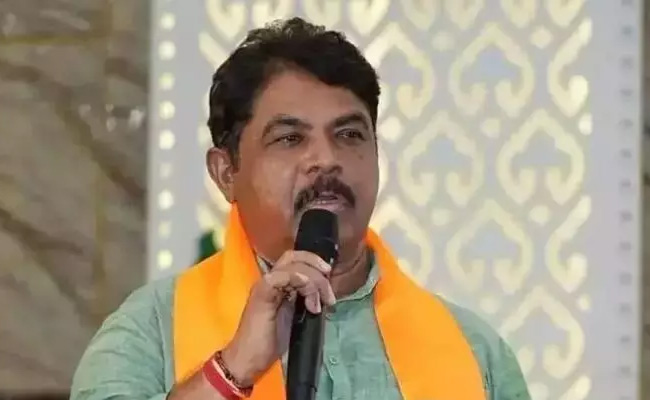
Bengaluru: Leader of Opposition in the Assembly R. Ashoka has accused the Congress government of using the hijab issue to placate what he described as discontent among minority voters after the Davanagere by-election.
In a post on X on Wednesday, Ashoka alleged that the state government, instead of addressing issues such as price rise, corruption, farmers’ distress and law and order, was attempting to retain its minority vote base by reviving the hijab issue.
Referring to the 2022 dress code introduced by the BJP government, which prohibited hijab in schools and colleges, Ashoka said the Karnataka High Court had upheld the policy and emphasised the importance of discipline in educational institutions.
He questioned the Congress government’s move to revisit the issue and asked whether setting aside the court-backed policy to benefit one community could be described as secularism.
Ashoka further alleged that while the government was willing to permit hijab, it continued to prohibit saffron shawls.
He accused the government of dividing students on religious lines rather than treating schools and colleges as spaces of equality.
Drawing a comparison with Mamata Banerjee’s government in West Bengal, Ashoka claimed that excessive appeasement politics had harmed the state and warned that the Congress in Karnataka could face a similar political response.
He said voters in Karnataka would teach the Congress a lesson for what he termed “vote-bank politics” and for compromising constitutional and judicial principles.