Ashish Khetan quits AAP

New Delhi, Aug 22: Aam Aadmi Party (AAP) leader Ashish Khetan on Wednesday announced his resignation from the party, a step that comes a week after another leader, Ashutosh, took a similar decision.
"Early this year I made my decision to quit active politics after much deliberation and in consultation with family and close friends. However, since both the party and the government were beset with a series of crises, I waited for an opportune time to formalize my decision. I had also informed the party leadership about my decision, on more than one occasion," he said in a Facebook post.
He said that his "personal decision" to move away from the party and electoral politics should not be viewed as a reflection on the AAP.
"I have only received love and respect from the party and its members and volunteers. And I will be forever grateful for that," he said.
His Facebook came after a lot of speculation over his move and reports that he had quit the party. Initially, he gave vague replies on Twitter without confirming his decision.
There was no official comment from the AAP on Khetan's decision. In the case of Ashutosh, Chief Minister Arvind Kejriwal did not accept his resignation.
In April, Khetan had resigned as the Vice Chairman of the Delhi Dialogue and Development Commission (DDC) to join the Bar and practice commercial law.
"I've also taken up legal causes in the larger public interest and will continue to do so. Besides practising law, I'm also keen to return to writing," he said.
He sought to quell rumours that his decision was in any way linked to his desire for getting a ticket in the upcoming Lok Sabha elections. He was a candidate in the 2014 election.
"The party had graciously asked me to contest the upcoming Lok Sabha elections, but I had politely turned it down. Contesting one more election would have further entrenched me in the world of politics, something I don't want at this point in time.
"I continue to hold all my ex-party colleagues in high regard and wish them good luck in their future endeavours," he said.
Let the Truth be known. If you read VB and like VB, please be a VB Supporter and Help us deliver the Truth to one and all.
Suvendu defeats Mamata in Bhabanipur by over 15,000 votes
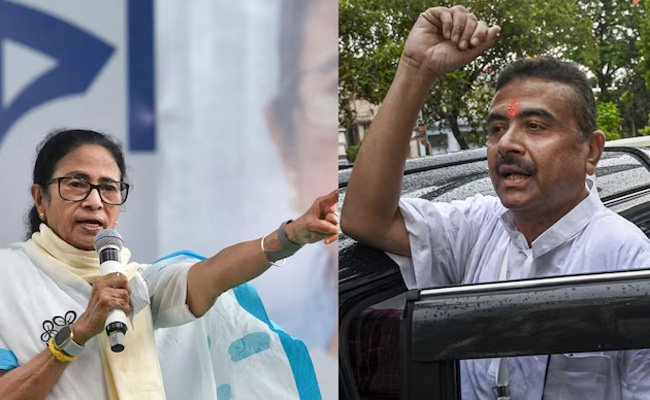
Kolkata (PTI): BJP’s Suvendu Adhikari defeated West Bengal Chief Minister Mamata Banerjee in the prestigious Bhabanipur seat by a margin of 15,105 votes on Monday, the EC said.
While Adhikari bagged 73,917 votes, Banerjee secured 58,812 votes.
The result marks a virtual “action replay” of the 2021 Nandigram battle, where Adhikari had unseated Banerjee in a fiercely fought contest that redefined Bengal’s political narrative.