Ashok Gehlot orders reprobe into Pehlu Khan lynching case, to appeal against acquittals also
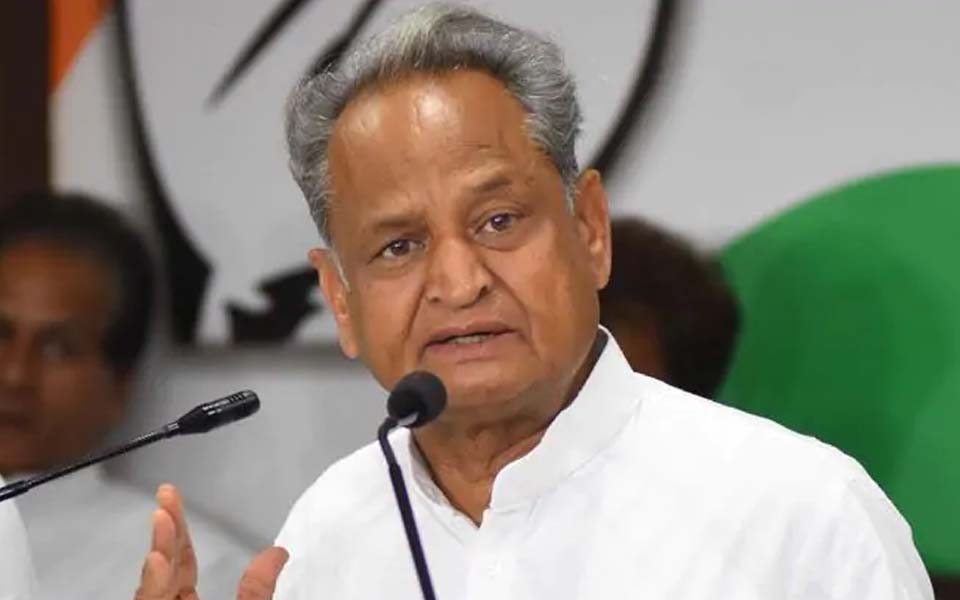
Jaipur, Aug 16: Rajasthan Chief Minister Ashok Gehlot on Friday ordered a fresh investigation into the 2017 Pehlu Khan lynching case and decided to follow it up with an appeal against the acquittal of all six accused in the case by an Alwar court two days ago.
The chief minister also set up a Special Investigation Team under the supervision of state's additional director general of police (Crime) and decided to hire the services of a senior lawyer to guide the probe, besides preparing grounds for appeal in the case.
The chief minister took the decision in a high-level review meeting held for examining the shortcomings in the probe and the findings of the court, said an official statement.
The review meeting, chaired by the chief minister, was attended by Additional Chief Secretary (Home) Rajeeva Swarup, Director General of Police Bhupendra Singh, Principal Secretary (Law) Mahavir Prasad Sharma and Additional Director General of Police (Crime) B L Soni.
The SIT, set up on the chief minister's order, will submit its report within 15 days, the statement added.
The chief minister's decision followed two days after an Alwar court acquitted all six persons, accused of leading a mob of suspected cow vigilantes to attack and lynch 55-year-old Pehlu Khan, a dairy farmer from Nuh district of Haryana. Khan was lynched near Alwar while returning to his home town in Haryana after buying cattle from Rajasthan.
The Alwar court on Wednesday acquitted all six adults accused in the case, giving them the benefit of the doubt. Three other juveniles allegedly involved in the case are still facing enquiry by a Juvenile Justice Board.
The government statement said the SIT will also identify errors and irregularities in the investigation and fix the responsibility for botched up investigation on individual officers.
The SIT will also gather important oral and documentary evidence, left out or ignored in earlier probe, it added.
DIG (Special Operation Group) Nitin Deep Ballagan will head the special probe team, which will also include SP (CID-CB) Sameer Kumar Singh and ASP (Vigilance) Sameer Dubey.
Let the Truth be known. If you read VB and like VB, please be a VB Supporter and Help us deliver the Truth to one and all.
MP: Woman, lover conspire to get husband killed; police looking for contract killer

Dhar (MP) (PTI): A 25-year-old woman and her lover have been arrested in the district for allegedly conspiring to kill her husband by hiring a contract killer, police said on Thursday.
The case was solved within 36 hours of the murder though the woman initially tried to mislead the police by claiming that robbers killed her husband, an official said.
Dev Krishna Purohit (28) was stabbed to death on the intervening night of Monday and Tuesday at his house in Gondikheda Charan village, about 60 km from here.
Superintendent of Police Mayank Awasthi told reporters that accused Priyanka Purohit (25) was married to Dev Krishna when she was around 15 years old. Priyanka moved to her matrimonial home after attaining adulthood but was unwilling to live with her husband, leading to frequent disputes between them.
During investigation, it emerged that she was in a relationship with Kamlesh (32), the SP said.
The duo allegedly hatched a plan to kill Dev Krishna and hired a man identified as Surendra for Rs 1 lakh do the job, he said
After Dev Krishna was killed, Priyanka told police that unidentified persons broke into the house, attacked her husband with a sharp weapon while holding her captive in another room, and fled with valuables.
But the inconsistencies in her statements raised suspicion, and eventually she confessed to hatching the murder conspiracy, the SP said.
While she and Kamlesh were arrested, police are looking for the contract killer, the official added.