Ask husbands to consume liquor at home to get rid of their habit: MP minister's advice to women
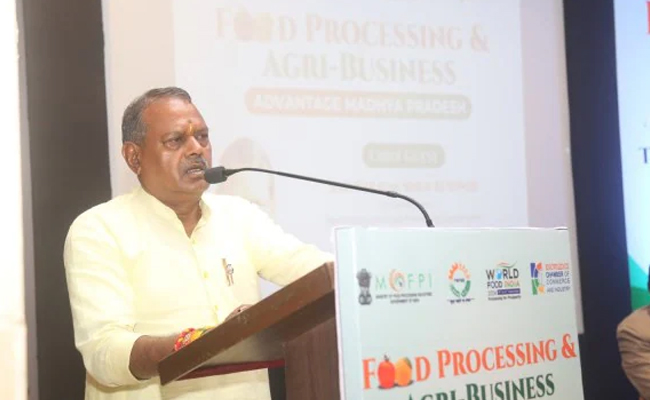
Bhopal (PTI): Madhya Pradesh minister Narayan Singh Kushwaha has advised women to ask their husbands to drink liquor in front of their family members at home instead of going outside so that they feel ashamed and slowly give up the habit of drinking.
He made the remarks while addressing a function on "de-addiction campaign" in Bhopal on Friday, a video of which also went viral on social media.
The opposition Congress, however, sought an apology from him saying his suggestion would lead to incidents of domestic violence.
Addressing the gathering, state Social Justice Minister said, "The biggest contribution in this (de-addiction efforts) is of mothers and sisters of the house. First of all, tell them (husbands) not to drink outside in the market. Tell them, if you want to drink, eat food and stay in front of me. If they drink in front of me (their wives), their limit will keep decreasing. They will gradually come on the verge of quitting. They will feel ashamed to be drinking alcohol in front of wife and children."
The wives should also tell their husbands that their children will also start drinking alcohol in the future, he said.
He said the women should form a local group and show "belan" (rolling pin) to the people with drinking habits.
Talking to reporters later, the minister said that drinking liquor in front of their children at home will make the men feel ashamed and discourage to quit their habit.
The children will also tell their father not to drink, which will have a positive impact on him, he said.
Reacting to Kushwaha's statement, Congress leader Sangeeta Sharma said that by giving such advice, the minister was encouraging domestic violence.
The main reason for domestic violence is addiction and alcohol, she told reporters and claimed that more than 17,000 cases related to domestic violence caused by liquor are pending before the Madhya Pradesh Women's Commission.
The minister is encouraging women to use rolling pin against their husbands, which will lead to domestic violence, Sharma said.
The minister should seek apology for his remarks, the Congress leader added.
Let the Truth be known. If you read VB and like VB, please be a VB Supporter and Help us deliver the Truth to one and all.
NIA court to complete framing of charges against 2010 hand-chopping case accused on May 15

Kochi (PTI): A special court here will complete proceedings for framing charges against the prime accused in the 2010 hand-chopping case involving professor T J Joseph, in which PFI activists were accused of attacking him at Muvattupuzha.
Ernakulam Special Court for NIA cases judge P K Mohandas, on April 30, heard the arguments of counsel for accused Savad and Shafeer C and decided to proceed with framing charges against the duo.
A group chopped off Thodupuzha Newman College professor Joseph's right hand in July 2010, accusing him of religious blasphemy in a question paper he had prepared.
The case, later taken over by the National Investigation Agency (NIA), resulted in the conviction of 19 accused.
The first accused, Savad, who allegedly chopped off Joseph’s palm, was arrested in Berram in Mattannur, Kannur, in January 2024, where he had allegedly been hiding under the pseudonym Shajahan.
The NIA also arrested Shafeer, who allegedly arranged shelter and provided logistical support to Savad at Chakkad and Mattannur in Kannur since 2020.
On April 30, the court heard the counsel for the accused and the NIA prosecutor on framing charges against the duo.
"On going through the documents and evidence in the case and on hearing the counsel for the accused and the prosecutor, I am of the opinion that there are grounds for presuming that the first accused has committed offences punishable under provisions of the IPC, the Explosive Substances Act and the Unlawful Activities (Prevention) Act, and that the second accused has committed offences punishable under the IPC and the UAPA, and there are materials for framing charges under these provisions against the accused," the court said.
The court directed that Savad be produced and Shafeer, who is on bail, appear before it on May 15 for recording their pleas as part of the charge-framing process.
After framing the charges, the court will schedule the trial in the case.