Assam: Army deployed in sensitive areas of violence-hit Kokrajhar
Guwahati (PTI): The Army has been deployed in sensitive areas of Assam’s Kokrajhar district, where two persons were killed in mob violence, leading to arson and clashes allegedly between the Bodos and Adivasis, officials said on Wednesday.
The army personnel conducted patrolling with the district administration in the affected areas of Karigaon and its nearby locations on Tuesday night, a defence spokesperson told PTI.
A flag march will also be conducted by the Army in the area on Wednesday, as part of confidence-building measures, he said.
A total of four Army columns are currently in the district, the spokesperson said.
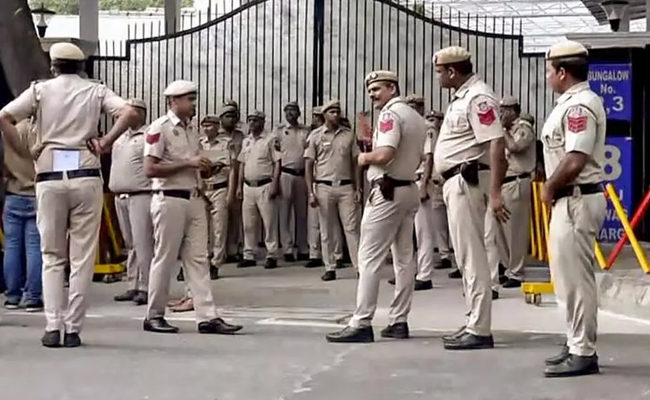
The overall situation is under control, and tight security measures have been put in place in Kokrajhar and neighbouring Chirang district, officials said.
Chief Minister Himanta Biswa Sarma had earlier said arrangements were in place to deploy the Army, while the Rapid Action Force (RAF) was already on the ground, following the mob violence and clashes.
On Monday night, a vehicle with three Bodos on board had hit two Adivasi persons at Mansingh Road under Karigaon outpost, a home department official said.
The three Bodos were reportedly beaten up by neighbouring Adivasi villagers, and the vehicle was torched. One person died then, while another succumbed to injuries on Tuesday, he said, adding, three other injured were undergoing treatment in hospital.
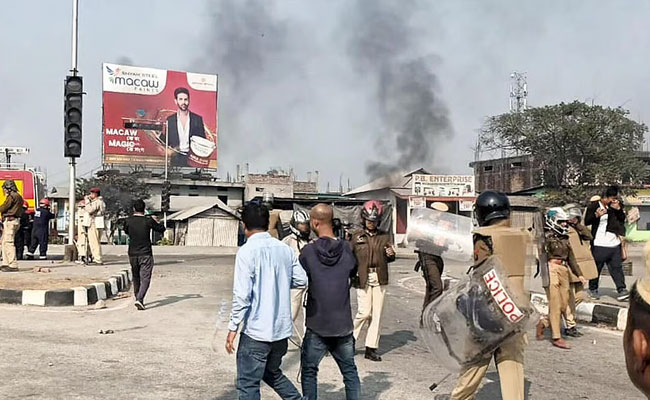
On Tuesday, the situation flared up with Bodo and Adivasi communities blocking the National Highway adjacent to the Karigaon outpost, burning tyres, setting ablaze a government office and attacking the Karigaon police outpost, the official said.
The police baton-charged the protesters and fired tear gas shells to disperse the crowd, in which several people, including a few police personnel, were injured, he said.
The Kokrajhar district administration has set up two relief camps at Karigaon High School and Gwajanpuri Amanpara High School, after several villagers from Karigaon fled fearing attacks.
Prohibitory orders have been imposed across Kokrajhar district under Section 163 of the Bhartiya Nagarik Suraksha Sanhita, 2023, the official said.
The home department has also suspended internet/mobile data services in Kokrajhar and Chirang districts as a precautionary measure.
Let the Truth be known. If you read VB and like VB, please be a VB Supporter and Help us deliver the Truth to one and all.
RR beat RCB by six wickets in IPL

Guwahati (PTI): Blistering fifties by Vaibhav Sooryavanshi and Dhruv Jurel powered Rajasthan Royals to a six-wicket win over Royal Challengers Bengaluru in their IPL match here on Friday.
Sent in to bat, RCB rode on a fighting half-century by skipper Rajat Patidar (63) to post 201 for 8.
Virat Kohli (32), Romario Shepherd (22) and Venkatesh Iyer (29) also chipped in with useful contributions.
In reply, Sooryavanshi (78 off 26 balls) and Dhruv Jurel (81 not out off 43 balls) shared a 37-ball 108-run partnership for the second wicket to set the platform. Krunal Pandya (2/30) tried to bring them back with back-to-back wickets.
But Jurel, in the company of Ravindra Jadeja (24), completed the task with another 68-run stand, with two overs to spare.
For RR, Jofra Archer (2/33), Ravi Bishnoi (2/32) and Brijesh Sharma (2/37) took two wickets.
Brief scores:
Royal Challengers Bengaluru: 201 for 8 in 20 overs (Rajat Patidar 63; Jofra Archer 2/33, Ravi Bishnoi 2/32, Brijesh Sharma 2/37).
Rajasthan Royals: 202 for 4 in 18 overs (Vaibhav Sooryavanshi 78, Dhruv Jurel 80 not out; Krunal Pandya 2/30, Josh Hazlewood 2/44).