Assam bypolls: 13pc voting in 5 assembly seats till 9 AM
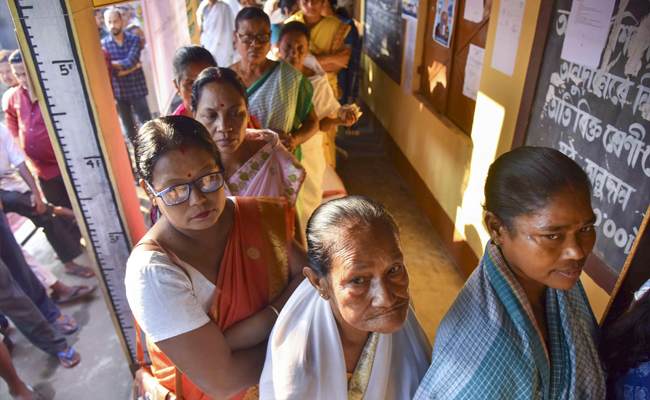
Guwahati (PTI): Nearly 13 per cent of 9.1 lakh electors cast their votes in the first two hours of polling on Wednesday during by-elections to five assembly constituencies in Assam, according to official data.
According to the Election Commission, approximately 12.55 per cent of 9,09,057 electors, including 4,54,963 women and 19 third gender, exercised their franchise in the first two hours till 9 AM to decide the fate of 34 candidates.
There are also 2,617 service voters in these five constituencies, where polling is taking place as per pre-delimitation data, an official said.
Bypolls are taking place in Dholai (SC), Sidli (ST), Bongaigaon, Behali and Samaguri assembly constituencies as these seats fell vacant with the representatives of them winning the recent Lok Sabha elections.
Bongaigaon recorded the highest turnout of 15.34 per cent, followed by Samaguri at 14.7 per cent, Sidli at 12.51 per cent, Behali at 11 per cent and Dholai at 9.15 per cent, ECI data showed.
"Voting is going on peacefully so far and we have not received any adverse report. People started coming to their respective booths from as early as 5:30 am. Long queues of voters were seen outside polling booths in most of the places," Assam Chief Electoral Officer Anurag Goel told PTI.
He said that there were reports of malfunctioning of EVMs in some booths during the mock polling, and those machines were replaced.
Most of the contesting candidates have voted in their respective booths during the first two hours of polling.
Assam Chief Minister Himanta Biswa Sarma appealed to the people of Behali, Samaguri, Dholai, Bongaigaon and Sidli to come out and actively take part in the bypolls.
"Your voice matters and the choice you make will determine the course of your constituency's development in the coming days," he said in a post on X.
Voting began at 7 AM and is scheduled to conclude at 5 PM.
Around 9,000 polling personnel have been engaged to have a smooth election across 1,078 polling stations in the five seats.
Webcasting is being done from 592 polling stations, while 11 booths have been made as model polling stations and 14 are being managed by all-women staff.
A total of 15 companies of Central Armed Police Forces (CAPF), comprising about 1,500 personnel, have been deployed in all the polling stations, supported by Assam Police.
Let the Truth be known. If you read VB and like VB, please be a VB Supporter and Help us deliver the Truth to one and all.
Questioning religious practices will break religion, civilisation: SC in Dawoodi Bohras case
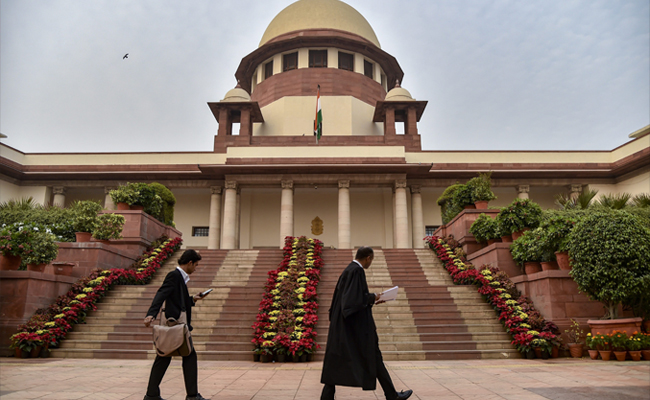
New Delhi (PTI): The Supreme Court on Thursday remarked that if individuals start questioning certain religious practices or matters of religion before a constitutional court then there will be hundreds of petitions questioning different rituals, leading to the breaking of religions and the civilisation.
The nine-judge Constitution bench is hearing petitions related to discrimination against women at religious places, including the Sabarimala temple in Kerala, and on the ambit and scope of the religious freedom practised by multiple faiths, including Dawoodi Bohras.
The bench comprises Chief Justice of India (CJI) Surya Kant and Justices B V Nagarathna, M M Sundresh, Ahsanuddin Amanullah, Aravind Kumar, Augustine George Masih, Prasanna B Varale, R Mahadevan and Joymalya Bagchi.
The Central Board of Dawoodi Bohra Community filed a PIL in 1986 seeking the setting aside of a 1962 judgment, which had struck down the Bombay Prevention of Excommunication Act, 1949 -- this law made excommunication of any community member illegal.
The 1962 Constitution bench judgment said, "It is evident from the religious faith and tenets of the Dawoodi Bohra community that the exercise of the power of excommunication by its religious head on religious grounds formed part of the management of its affairs in matters of religion and the 1949 Act in making even such excommunication invalid, infringed the right of the community under Article 26(b) of the Constitution."
Senior advocate Raju Ramachandran, representing a group of reformist Dawoodi Bohras, submitted that a practice which is conducted in response to secular and social actions of an individual cannot be the subject of Constitutional protection under Article 25 of the Constitution and consequently cannot be a ‘matter of religion’ under Article 26 of the Constitution.
Ramachandran told the court that a practice which may have a religious aspect but also significantly and adversely impacts fundamental rights is not immune to restriction under Article 25 of the Constitution or Article 26 of the Constitution.
Responding to the submission, Justice Nagarathna said that if everybody starts questioning certain religious practices or matters of religion before a constitutional court, then "what happens to this civilisation where religion is so intimately connected with the Indian society".
"There will be hundreds of petitions questioning this right that right, opening of the temple, and the closure of the temple. We are conscious of this," she said.
Adding to the response, Justice Sundresh said, "Every religion will break and every constitutional court will have to be closed.
"If the dispute between two entities are allowed then everybody will question everything. In your case there may be a civil wrong committed to you but in another case, another member will say I don't agree. It is regressive. To what extent can we go in a country like ours which is progressive and on the move is the question," he said.
Justice Nagarathna went on that what sets apart India from any other region is that "we are a civilisation" despite having so many pluralities and diversities?
Asserting that diversity is the country's strength, she added, "One of the constants in our Indian society is the relationship of human beings -- man, woman and child -- with the religion."
"Now, how a religious practice or a matter of religion is questioned, where it is questioned, whether it can be questioned, whether it has to be a question within a denomination for a reform or whether the state will have to do or you want the court to adjudicate upon all these aspects. This is troubling us.
"What we lay down, is for a civilisation that is India. India must progress despite all its economy, everything there is a constant in us. We can’t break that constant. That is what is troubling us ," she said.
Ramachandran replied that India is a civilisation under the Constitution and therefore nothing which goes against the grain of constitution can be continued in a civilised society.
He said that's where court's task come in and "it can't throw hands" and say there will be so many petitions.