Assam to give arms licences to ‘indigenous citizens’ in ‘vulnerable’ areas: CM Himanta Biswa Sarma
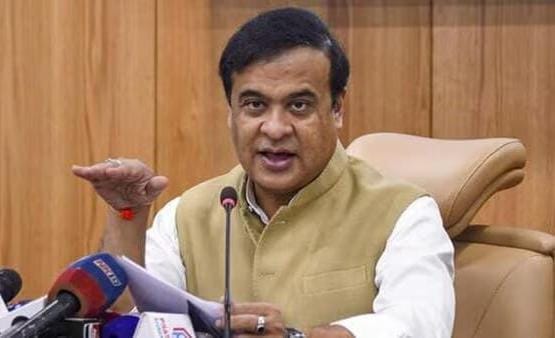
Guwahati: The Assam government announced that it has approved a scheme to issue arms licences to “indigenous people” residing in areas where their population is in the minority.
During a press conference following a cabinet meeting on Wednesday, Assam Chief Minister Himanta Biswa Sarma explained that the scheme aims to provide indigenous communities with the means to defend themselves against threats from hostile quarters. “We announce the special schemes for grant of arms licences to original inhabitants and indigenous Indian citizens in vulnerable and remote areas of Assam,” he said.
The Chief Minister emphasised that the government would encourage indigenous people to apply for these licenses to bolster their personal security.
Sarma identified several districts as particularly vulnerable, including Dhubri, Morigaon, Nagaon, Barpeta, and South Salmara. Bengali-origin Muslims account for the majority in these areas.
According to Sarma, these communities live in fear and often “have to confront the question of their security”. He added that after the incidents in Bangladesh, they “might face attacks from the Bangladesh side or in their villages”.
This move, Sarma insisted, is a significant step forward, addressing long-standing demands from the people living in Assam’s more remote and vulnerable areas.
The announcement, however, has sparked criticism from certain quarters. Harekrishna Deka, former Director General of Police of Assam, expressed concern regarding the scheme. He questioned the logic behind the decision, pointing out that the authorities should focus on maintaining law and order if there were genuine security concerns.
“I do not understand the logic. Vulnerable from what? Were they not vulnerable earlier,” Scroll quoted Deka as saying. He added that “the government is duty-bound to maintain security” and giving arms licenses to vulnerable residents was not a solution to security threats.
Let the Truth be known. If you read VB and like VB, please be a VB Supporter and Help us deliver the Truth to one and all.
Two injuries, one DNF, a DQ as India end messy World Relays campaign
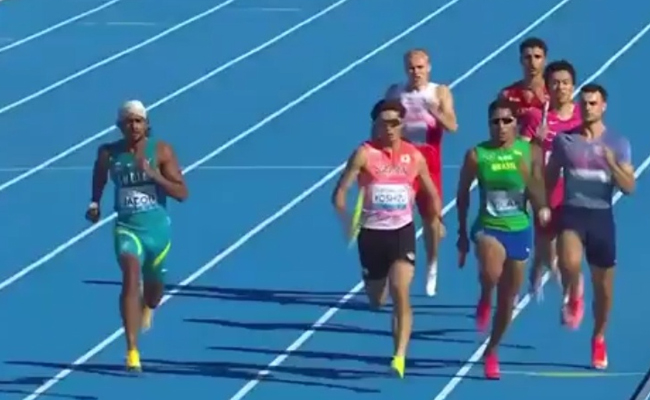
Gaborone (Botswana) (PTI): Amoj Jacob and Ragul Kumar got injured during the men's 4x400m and 4x100 races respectively as India ended their World Athletics Relays campaign in disappointment on the second day of competitions here on Sunday.
The Indian camp had high hopes of making the 2027 World Championships in the men's 4x400m relay but the team did not finish (DNF) the race as Jacob suffered cramps and pulled out of the race after taking the baton from the first leg runner Dharamveer Choudhary. Rajesh Ramesh and Vishal TK were to run in the third and fourth legs.
Those teams which could not qualify for the 2027 Beijing World Championships by reaching the final round of each of the six relay events on Saturday were given another chance in the second qualification round on Sunday.
The top two teams in each of the two heats (in all six relay events) booked the Beijing ticket on Sunday.
India will now have to try and qualify for the World Championships through the Top Lists of the World Athletics, which is a long and tedious process.
In the men's 4x100m race, third leg runner Ragul Kumar fell down the track after failing to hand over the baton inside the exchange zone to fourth leg runner Gurindervir Singh, which clearly showed the lack of coordination among the runners.
Harsh Santosh Raut and Animesh Kujur ran the first two legs.
The Indian quartet was disqualified and Kumar was seen being taken away from the Field of Play with the help of the volunteers.
It was a comedy of errors in the case of the women's 4x100m race, which saw the baton being dropped during an exchange between first leg runner Tamanna and second runner Nithya Gandhe, though the Indians finished the race in 53.09 seconds.
Gandhe started running quite a distance, but after realising that the baton was not in her hand, she turned and ran back to pick it up.
The only silver-lining for the Indian contingent was the national record time in the mixed 4x100m relay race, though the quartet of Ragul Kumar, Nithya Gandhe, Animesh Kujur and Sneha SS finished sixth in heat number two with a time of 41.35 seconds, bettering the previous national mark of 42.30 seconds set in March in Chandigarh.
The mixed 4x400m relay quartet of Theerthesh P Shetty, Kumari Saloni, Nihal William and Rashdeep Kaur ended at fifth in heat number one with a time of 3 minutes and 19.40 seconds.
On Saturday, all the five Indian relay teams had failed to make it to the respective final rounds and thus missed out on the 2027 World Championships berths.