Assam's Byrnihat tops global pollution list; Delhi most polluted capital: Report
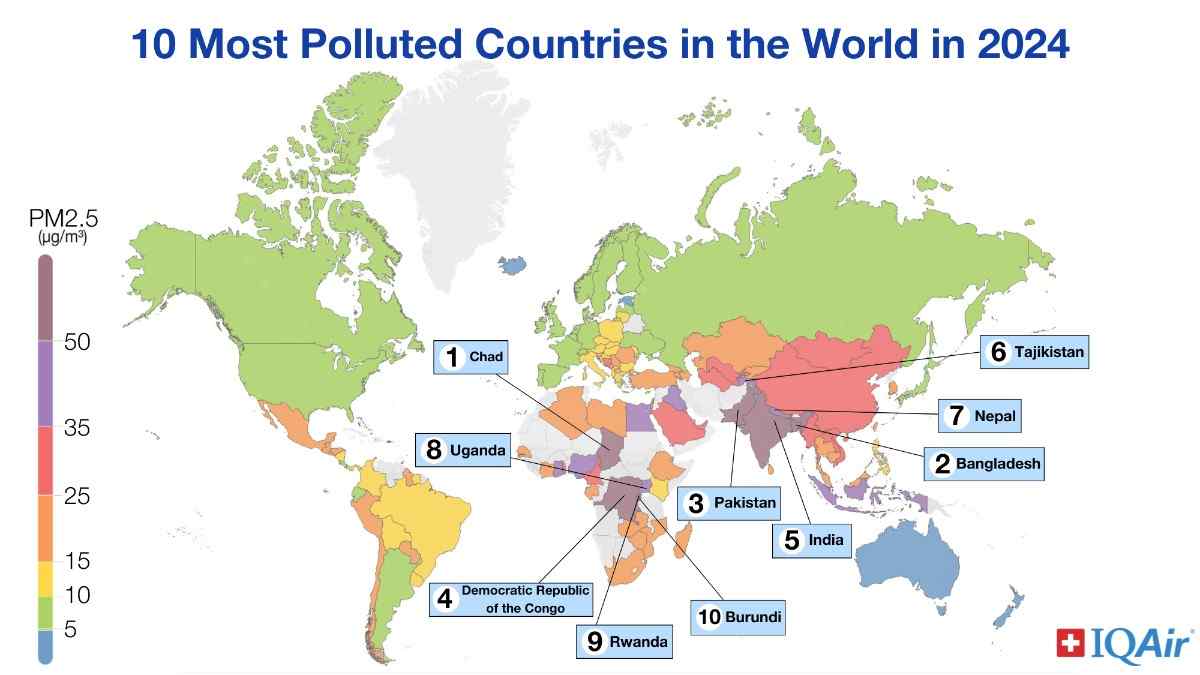
New Delhi (PTI): Thirteen of the world's top 20 most polluted cities are in India, with Byrnihat in Assam topping the list, according to a new report published on Tuesday.
The World Air Quality Report 2024 by Swiss air quality technology company IQAir said Delhi remains the most polluted capital city globally, while India ranked as the world's fifth most polluted country in 2024, down from third in 2023.
The report said India saw a 7 percent decline in PM2.5 concentrations in 2024, averaging 50.6 micrograms per cubic metre, compared to 54.4 micrograms per cubic metre in 2023. Yet, 13 of the world's 20 most polluted cities are in India.
Air pollution in Delhi worsened, with the annual average PM2.5 concentration rising from 102.4 micrograms per cubic metre in 2023 to 108.3 micrograms per cubic metre in 2024.
The Indian cities in the world's top 20 most polluted cities are Byrnihat, Delhi, Punjab's Mullanpur, Faridabad, Loni, Gurugram, Ganganagar, Greater Noida, Bhiwadi, Muzaffarnagar, Hanumangarh and Noida.
Overall, 35 percent of the Indian cities reported annual PM2.5 levels exceeding 10 times the WHO limit of 5 micrograms per cubic metre, the report said.
The high level of pollution in Byrnihat, a town on the border of Assam and Meghalaya, is due to emissions from local factories, including distilleries, iron and steel plants.
Delhi grapples with high air pollution year-round and the problem worsens in winter when unfavourable meteorological conditions, combined with vehicular emissions, paddy-straw burning, firecrackers and other local pollution sources, make the air quality hazardous.
Air pollution remains a serious health risk in India, reducing life expectancy by an estimated 5.2 years.
According to a Lancet Planetary Health study published last year, about 1.5 million deaths in India every year from 2009 to 2019 were potentially linked to long-term exposure to PM2.5 pollution.
PM2.5 refers to tiny air pollution particles smaller than 2.5 microns, which can enter the lungs and bloodstream, leading to breathing problems, heart disease and even cancer. Sources include vehicle exhaust, industrial emissions and the burning of wood or crop waste.
Former WHO chief scientist and health ministry advisor Soumya Swaminathan said India has made progress in air quality data collection but lacks sufficient action.
"We have the data; now we need action. Some solutions are easy like replacing biomass with LPG. India already has a scheme for this, but we must further subsidise additional cylinders. The first cylinder is free, but the poorest families, especially women, should receive higher subsidies. This will improve their health and reduce outdoor air pollution," she told PTI in an interview.
In cities, expanding public transport and imposing fines on certain cars could help. "A mix of incentives and penalties is necessary," she said.
"Finally, strict enforcement of emission laws is crucial. Industries and construction sites must comply with regulations and install equipment to cut emissions instead of taking shortcuts," the former director general of the Indian Council of Medical Research added.
Let the Truth be known. If you read VB and like VB, please be a VB Supporter and Help us deliver the Truth to one and all.
Sujit Nair raises concerns over speculation of DMK-AIADMK understanding to block TVK
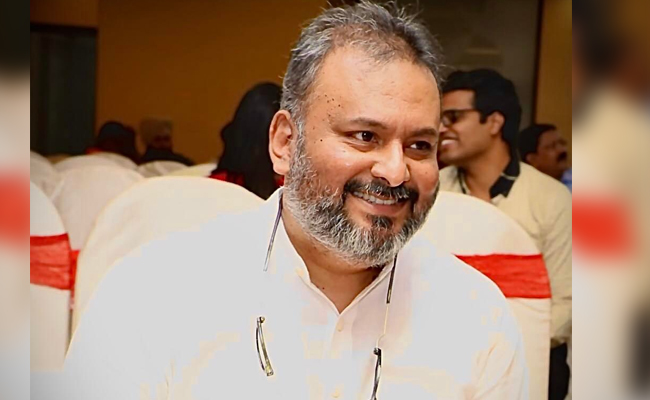
Chennai: Journalist and political commentator Sujit Nair has expressed concern over speculation that the Dravida Munnetra Kazhagam and the All India Anna Dravida Munnetra Kazhagam could explore a post-poll understanding to prevent Vijay-led Tamilaga Vettri Kazhagam from forming the government in Tamil Nadu.
In a social media post, Sujit Nair said the election verdict in Tamil Nadu reflected a clear public demand for political change and argued that the mandate should be respected irrespective of political preferences.
Referring to reports and political discussions surrounding a possible understanding between the DMK and AIADMK, he said he hoped such developments remained only speculative conversations and did not turn into reality.
Nair stated that if such an alliance were to take shape, it would raise serious questions about ideological politics in the country. He said TVK had emerged through a democratic electoral process and that the legitimacy to govern in a parliamentary democracy comes from the people’s verdict.
According to him, attempts to prevent an electoral winner from forming the government through unexpected political arrangements may be constitutionally valid, but many people could view them as politically opportunistic.
He further said that such a move could particularly affect the political image of the DMK, which has historically projected itself around ideology, social justice and opposition politics. Nair said that in ideological terms, the DMK appeared closer to TVK than to the AIADMK, and joining hands with its long-time political rival only to remain in power could weaken its broader political narrative.
He added that the same questions would apply to the AIADMK as well, as the party had spent decades positioning itself against the DMK and such an arrangement could create discomfort among its cadre and supporters.
Drawing a comparison with Maharashtra politics in 2019, Nair said he had expressed similar views when the Shiv Sena formed an alliance with the Indian National Congress and the Nationalist Congress Party after the Assembly elections.
He said post-poll alliances between long-standing political rivals often create a public perception that ideology and electoral mandates become secondary when political power equations come into play.
Nair also said such developments increase public cynicism towards politics and reinforce the belief among voters that ideology is often sidelined after elections.
He maintained that the Tamil Nadu verdict was emphatic and said respecting both the spirit and substance of the mandate was important for the credibility of democratic politics.