Assent to bills: SC agrees to examine Prez Murmu’s 14 questions on timelines for guv, president
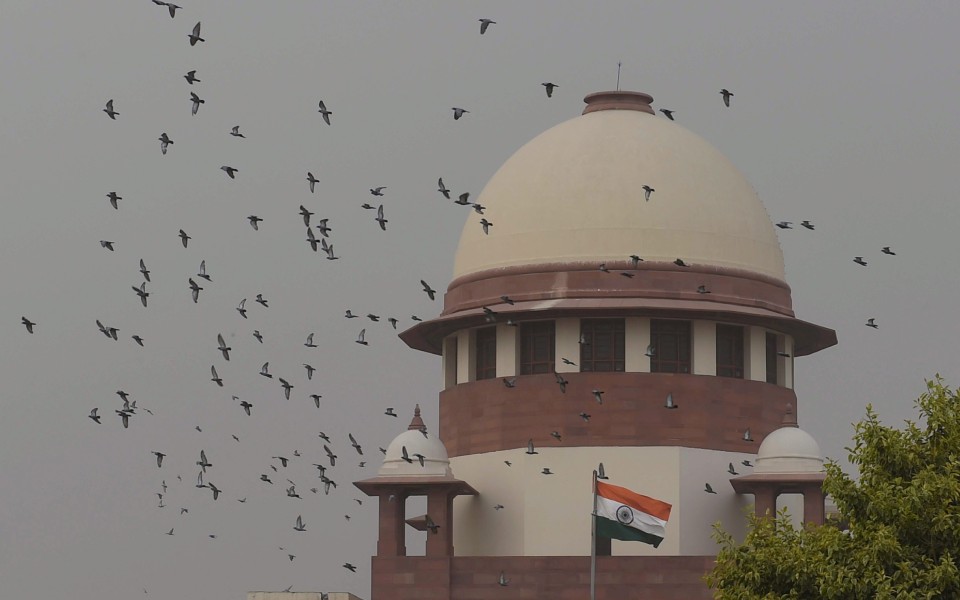
New Delhi, Jul 22 (PTI): A five-judge Supreme Court bench on Tuesday agreed to deliberate upon the 14 crucial questions raised by President Droupadi Murmu on its April 8 verdict that fixed timelines for governors and President to act on bills passed by state assemblies.
The Constitution bench comprising Chief Justice B R Gavai and Justices Surya Kant, Vikram Nath, P S Narasimha and A S Chandurkar, would fix the timelines on July 29 and commence hearing on the presidential reference in mid-August.
Exercising her power under the rarely used Article 143 (1), President Murmu said in the present circumstances, it appears the following questions of law have arisen and they are of such nature and public importance that it is expedient to obtain the opinion of the Supreme Court.
Article 143 (1) of the Constitution deals with the power of President to consult the Supreme Court.
"If at any time it appears to the President that a question of law or fact has arisen, or is likely to arise, which is of such a nature and of such public importance that it is expedient to obtain the opinion of the Supreme Court upon it, he may refer the question to that Court for consideration and the Court may, after such hearing as it thinks fit, report to the President its opinion thereon," it says.
The following are the President's questions:
-
What are the constitutional options before a governor when a bill is presented to him under Article 200 of the Constitution of India?
-
Is Governor bound by the aid and advice of the council of ministers while exercising all the options available with him when a bill is presented before him under Article 200 of the Constitution of India?
-
Is the exercise of constitutional discretion by Governor under Article 200 of the Constitution of India justiciable?
-
Is Article 361 of the Constitution of India an absolute bar to judicially review in relation to the actions of Governor under Article 200 of the Constitution of India?
-
In the absence of a constitutionally prescribed time limit and the manner of exercise of powers by Governor, can timelines be imposed and the manner of exercise be prescribed through judicial orders for the exercise of all powers under Article 200 of the Constitution of India by Governor?
-
Is the exercise of constitutional discretion by President under Article 201 of the Constitution of India justiciable?
-
In the absence of a constitutionally prescribed timeline and the manner of exercise of powers by President, can timelines be imposed and the manner of exercise be prescribed through judicial orders for the exercise of discretion by President under Article 201 of the Constitution of India?
-
In light of the constitutional scheme governing the powers of President, is President required to seek advice of the Supreme Court by way of a reference under Article 143 of the Constitution of India and take the opinion of the Supreme Court when Governor reserves a bill for President's assent or otherwise?
-
Are decisions of Governor and President under Article 200 and Article 201 of the Constitution of India, respectively, justiciable at a stage anterior into the law coming into force? Is it permissible for the courts to undertake judicial adjudication over the contents of a bill, in any manner, before it becomes law?
-
Can the exercise of constitutional powers and the orders of/by President/Governor be substituted in any manner under Article 142 of the Constitution of India?
-
Is a law made by the state legislature a law in force without the assent of Governor granted under Article 200 of the Constitution of India?
-
In view of the proviso to Article 145(3) of the Constitution of India, is it not mandatory for any bench of this court to first decide as to whether the question involved in the proceedings before it is of such a nature which involves substantial questions of law as to the interpretation of Constitution and to refer it to a bench of minimum five judges?
-
... (Are) the powers of the Supreme Court under Article 142 of the Constitution of India limited to matters of procedural law or Article 142 of the Constitution of India extends to issuing directions/passing orders which are contrary to or inconsistent with existing substantive or procedural provisions of the Constitution or law in force?
-
Does the Constitution bar any other jurisdiction of the Supreme Court to resolve disputes between the Union government and the state governments except by way of a suit under Article 131 of the Constitution of India?
The Supreme Court's April 8 verdict set a timeline for all governors to act on the bills passed by the state assemblies and ruled that Governor does not possess any discretion in exercise of functions under Article 200 of the Constitution in respect to any bill presented to them and must mandatorily abide by the advice tendered by the council of ministers.
It said the state governments could directly approach the Supreme Court if President withheld assent to a bill sent by Governor for consideration.
A bench of Justices J B Pardiwala and R Mahadevan said reserving a bill on grounds such as "personal dissatisfaction of Governor, political expediency or any other extraneous or irrelevant considerations" was strictly impermissible by the Constitution and would be liable to be set aside forthwith on that ground alone.
Let the Truth be known. If you read VB and like VB, please be a VB Supporter and Help us deliver the Truth to one and all.
AIITA welcomes Karnataka’s ban on obscene songs in school events
Bhatkal: The Karnataka unit of the All India Ideal Teachers Association (AIITA) has welcomed the Karnataka government’s decision to strictly ban school children from dancing to obscene songs during educational and cultural programmes in government, aided, and private schools across the state.
AIITA Karnataka State President M. R. Manvi congratulated the government for taking what he termed an important step to preserve the sanctity of education.
“Such decisions to safeguard the dignity of school children and uphold the values of education are the need of the hour. This rule should not be limited to government schools alone but must be strictly implemented in all private educational institutions as well,” he said.
He further urged the government to address other concerns within school programmes.
“The government should not only prohibit obscene dances in the name of school anniversaries, but also ensure that plays and dialogues that incite religious hatred are avoided. Schools should be centres of harmony, not platforms for spreading hatred,” he added.
According to a recent circular issued by the Department of School Education and Literacy, obscene dances are adversely affecting the mental health and moral values of students.
In this regard, schools have been advised to use songs that promote nationalism, positive thinking, the greatness of Kannada culture, and value-based traditions instead of inappropriate content during programmes.
The circular also emphasises that students should be dressed in decent attire.
AIITA also backed the department’s warning that disciplinary action would be taken against head teachers if such guidelines are violated. The association has further demanded that district Deputy Directors of Public Instruction strictly monitor the implementation of these rules.