Assets belong to country; PM doesn't own them: Mamata on NMP; BJP hits back
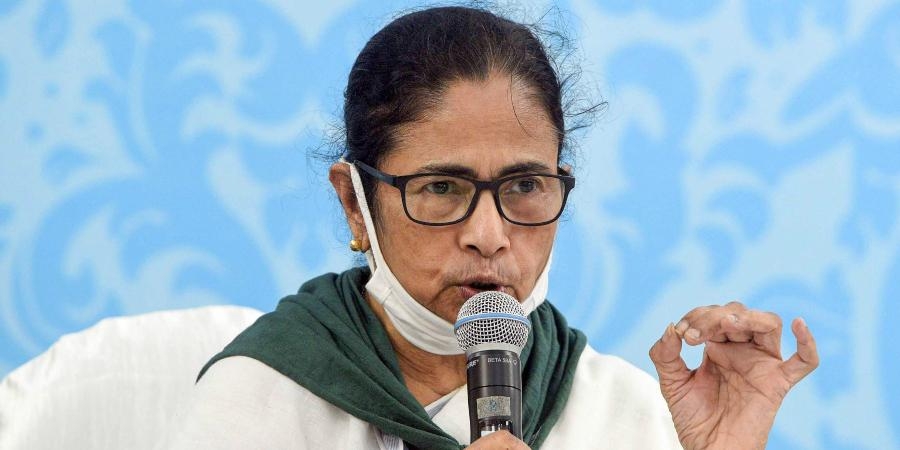
Kolkata(PTI) : Assets of the country are not properties of Prime Minister Narendra Modi or the BJP and they cannot sell them at their whims and fancies, West Bengal Chief Minister Mamata Banerjee said while criticising the Centre's National Monetisation Pipeline (NMP) policy on Wednesday.
Terming the NMP as a "shocking and unfortunate decision", the Trinamool Congress supremo alleged that the money raised by selling those assets will be used during elections against opposition parties.
"These assets belong to the country. It is the property of neither Modi nor the BJP. They (central government) can't just sell a country's assets as per their whims and fancies," Banerjee told reporters at the state secretariat Nabanna.
The entire country will stand together and oppose this "anti-people" decision, she said.
Finance Minister Nirmala Sitharaman on Monday announced Rs 6 lakh crore National Monetisation Pipeline (NMP) that will look to unlock value in infrastructure assets across sectors ranging from power to road and railways.
"The BJP should be ashamed. No one has given them the right to sell our nation's assets," Banerjee said.
Reacting to the allegations, the BJP's West Bengal unit wondered how the TMC regime could sell assets belonging to the state government if it is so concerned about those of the country.
"If it was so concerned about nation's assets, why has the TMC government sold several assets belonging to the state in the last 10 years? Who owned those assets... the TMC or the state government? The TMC should first answer this," BJP spokesperson Shamik Bhattacharya said.
Banerjee also slammed a section of the saffron party leaders over their demand for "dividing the state".
"The BJP has lost the assembly polls, but still their central leaders are travelling to Bengal like daily passengers. Now, they want to divide our state. It would be opposed tooth and nail," she said.
State BJP MP Jojn Barla, who was inducted into the Union council of ministers last month, had in June sought a separate union territory comprising all north Bengal districts, arguing that the region has barely seen any development over the past decade.
After Barla's demand, another BJP MP Saumitra Khan had sought statehood for Jangalmahal region comprising hilly forested areas of Paschim Medinipur, Bankura and Purulia districts.
Reacting to media reports of the central teams visiting various parts of the state to look into the progress of central schemes, Banerjee said the centre should not send teams without informing the state government.
"Parliamentary Committees can come, but the centre sends some people without informing us.... In several sectors, including 100 days' work, skill development and Awas Yojana (housing scheme), the state is number one," she said.
Chairing the West Bengal Scheduled Caste Advisory Council meeting, Banerjee announced plans to build 20 lakh houses for Scheduled Caste (SC) and Schedule Tribe (ST) people across the state in the coming five years.
"Our government is committed to the welfare of the ST, SC community. We have taken several steps for their development. The budget for SC/ST welfare has been increased by six times since we came to power in 2011," she said.
The chief minister said drones would be used for getting aerial pictures to know how many people live in kutcha houses that need to be renovated and how many pucca houses need to be constructed in every district.
She also said that her government is planning to organise a convention of West Bengal Dalit Sahitya Academy later this year, where representatives from all states will participate and exchange ideas on the development of the SC and ST community.
Banerjee also instructed the police to be extra vigilant and to act promptly on all the complaints about the security and safety of SC and ST people in the state.
"The police must take stern and swift action against those who will be involved in crimes against SC/ST people," she said.
Let the Truth be known. If you read VB and like VB, please be a VB Supporter and Help us deliver the Truth to one and all.
CJI's advice to aspirant: Join the bar, become a lawyer, don't hanker for judicial services post
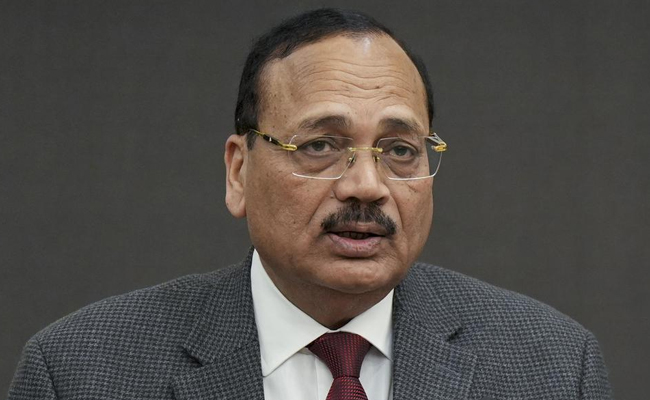
New Delhi (PTI): She came to the Supreme Court seeking a re-evaluation of her paper in the examination for joining judicial services as a magistrate. What she got instead was a rejection — and a candid confession by the Chief Justice that he too had wanted to join the judicial services in his youth but was advised by a senior judge to become a lawyer instead.
A bench comprising Chief Justice Surya Kant and Justice Joymalya Bagchi on Friday dismissed a plea filed by Prerna Gupta, the judicial services aspirant.
As Gupta pressed her case, the CJI intervened and said, "Let me share my personal story and I hope you will go happily as we cannot allow your petition."
He recounted his time as a final-year law student in 1984 when he wanted to become a judicial officer. As per requirement, he cleared the written test and was set to appear for an interview.
Judicial services is one of the two routes to become a judge after initially joining as a magistrate in lower court and thereafter rising through the ranks to become judge in a high court and possibly the Supreme Court.
The other route is to join the Bar, which means becoming a lawyer, and after building a reputation be picked from the Bar to become a judge at a senior level.
By the time the CJI's exam results came out, he had started practising at the Punjab and Haryana High Court when he was called for the interview.
The senior-most judge on the interview panel happened to be a judge before whom he had recently argued two significant matters.
"One of the matters was Sunita Rani vs Baldev Raj, where he had allowed my appeal in a matrimonial case and set aside the decree of divorce granted by the District Judge on the ground of schizophrenia," he noted.
Before the interview could take place, the judge called the young Surya Kant to his chamber and asked, 'Do you want to become a judicial officer?'
"I said 'yes.' He immediately said, 'Get out from (my) the chamber.'"
The courtroom fell silent as the CJI Justice described his initial heartbreak.
“I came out trembling. All my dreams were shattered. I thought he had snubbed me and that my career was over,” the CJI said.
However, the story took another turn the following day and the judge summoned him again, this time offering a piece of advice that would change the trajectory of his life.
“He said, ‘If you want to become (a judge), you are welcome. But my advice is, don’t become a judicial officer. The Bar is waiting for you,’” Justice Surya Kant recalled.
The CJI said he decided to skip his interview and didn't even tell his parents at first, fearing their disappointment, and instead chose to dedicate himself to his practice as an advocate.
“Now tell me did I make a bad right or bad decision,” the CJI asked and the litigant lawyer left the court with a smile on her face despite her case being dismissed.
Encouraging the petitioner to look toward the future rather than dwelling on the re-evaluation of a single paper, Justice Surya Kant said, "The Bar has much to offer."