At 47%, Hinduism biggest gainer in religious conversion in Kerala
This report was first published in newindianexpress.com and has been posted here without any alterations or editing. To read the original report, CLICK HERE
THIRUVANANTHAPURAM: While the BJP, in its election manifesto, has promised an Uttar Pradesh model law against forceful religious conversion and ‘love jihad’ in Kerala to woo Hindu and Christian voters, the data sourced by TNIE from the government gazettes paint an altogether different picture.
According to official figures for the year 2020, the biggest gainer – in terms of new converts – was Hinduism. People who embraced Hinduism constituted 47 per cent of religious conversions in Kerala during the one-year period under reference.
Of the total 506 people who registered their change of religion with the government, 241 were those who converted from Christianity or Islam to Hinduism. A total of 144 persons adopted Islam whereas Christianity received 119 new believers in the year, shows the data.
32 people left Islam for Hinduism
As per the rule, people who officially change their religion, including minors, have to advertise it in the gazette. 72% of the new converts to Hinduism were Dalit Christians, mostly Christian Cheramars, Christian Sambavas and Christian Pulayas. It was evident that lack of reservation benefits forced many Dalit Christians to re-embrace Hinduism. Also, 32 people left Islam to join Hinduism.
Christianity lost 242 believers to the other two religions and attracted only 119 persons. Islam gained 144 new believers and lost 40 during the period. Buddhism received two new believers who switched from Hinduism.
77% of the new converts to Islam were Hindus and 63% women. It attracted the highest number of persons from Ezhava, Thiyya and Nair communities. 25 persons, including 13 females, switched from Hindu Ezhava to Islam.
17 Thiyya community members including 11 females converted to Islam. 17 persons including 12 females were from the Nair community. Of the 33 persons who crossed over to Islam from Christianity, 9 were Syrian Catholics, who included two women.
Let the Truth be known. If you read VB and like VB, please be a VB Supporter and Help us deliver the Truth to one and all.
Bhojshala case: Disputed structure built from remains of pre-existing temples, claims ASI
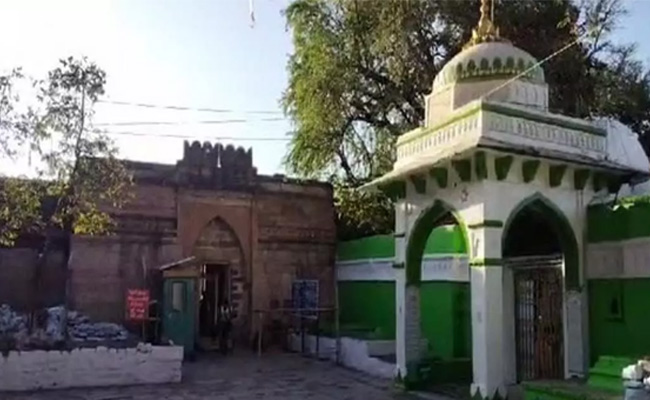
Indore (PTI): The ASI has told the Madhya Pradesh High Court that a massive structure dating back to the Paramara kings' rule existed at the disputed Bhojshala temple-Kamal Maula mosque complex, and the current structure was built from the remains of temples.
The Archaeological Survey of India (ASI) made the claim on Tuesday based on its 98-day scientific survey and over 2,000-page report.
The Hindu community considers Bhojshala a temple dedicated to Vagdevi (Goddess Saraswati), while the Muslim side claims the monument as the Kamal Maula Mosque. The disputed complex is protected by the ASI.
During the hearing before Justices Vijay Kumar Shukla and Alok Awasthi of the HC's Indore bench, Additional Solicitor General Sunil Kumar Jain, representing the ASI, presented a detailed account of the scientific survey conducted two years ago at the complex.
Referring to the ASI's survey report, he said, "Retrieved architectural remains, sculptural fragments, large slabs of inscriptions with literary texts, Nagakarnika inscriptions on pillars, etc, suggest that a large structure associated with literary and educational activities existed at the site. Based on scientific investigations and archaeological remains recovered during the investigations, this pre-existing structure can be dated to the Paramara period."
It can be said that the existing structure was made from the parts of earlier temples, based on scientific investigations, survey and archaeological excavations conducted, study and analysis of retrieved finds, study of architectural remains, sculptures, and inscriptions, art and sculptures, Jain said quoting the report.
Summarising the report, he also drew the court's attention to the fact that the archaeological study identifies that many architectural components, such as pillars and beams, were originally part of temple structures before being repurposed for a mosque.
"The evidence of this transition includes Sanskrit and Prakrit inscriptions that were damaged or hidden, alongside sculptures of deities and animals that were often mutilated or defaced," Jain contended.
The report also states that "all Sanskrit and Prakrit inscriptions are older than the Arabic and Persian inscriptions, indicating that users or engravers of the Sanskrit and Prakrit inscriptions occupied the place earlier".
In light of the Muslim side's earlier objections, the bench wanted to know why there were some discrepancies in the ASI's responses regarding the status of the disputed complex in the cases filed over the years.
The Additional Solicitor General argued that earlier studies of the complex involved only officials, while the current survey involved scientists and the use of advanced technologies such as Ground Penetrating Radar (GPR).
The hearing in the Bhojshala case will continue on Wednesday.
The high court has been regularly hearing four petitions and one writ appeal regarding the religious nature of the Bhojshala temple-Kamal Maula mosque complex since April 6.