Attack on foreign students: Gambian delegation visits Gujarat University
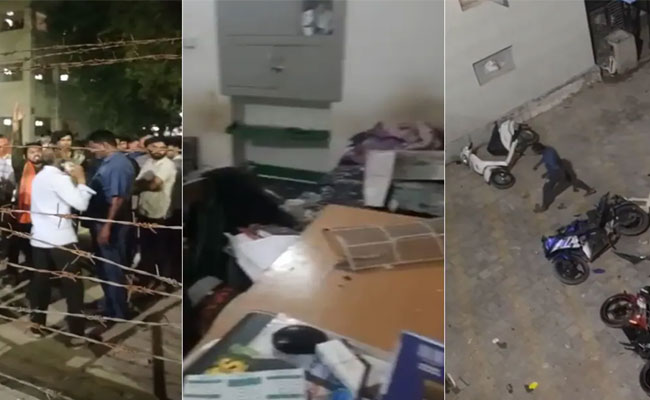
Ahmedabad (PTI): A Gambian delegation has visited the Gujarat University campus here and held a meeting with its vice chancellor over safety measures in the backdrop of an attack on foreign students allegedly for offering namaz in the varsity's hostel premises.
Nearly 30 students from the West African country study at the state-run university in Ahmedabad.
After the visit on Tuesday, Vice Chancellor Neerja Gupta told reporters that the delegation, comprising officials from the High Commission of Gambia in New Delhi, expressed satisfaction over the steps taken by university authorities for the safety of students after the incident, which took place on the night of March 16 at one of the hostel blocks.
"It was a follow-up meeting by the Gambian delegation following the incident. They wanted to meet us because nearly 30 students from Gambia study in this university. The delegation wanted to know if their students are safe," said Gupta.
The delegation comprised a deputy high commissioner, a first secretary and a student representative, she said.
"The Gambian officials were made aware of the steps we have taken to ensure safety and security of students after the incident. During the meeting, they expressed satisfaction with our measures. They were also satisfied with the assurance we gave them about students' safety," Gupta said.
On March 16, around two dozen people barged into the university's hostel and objected to students from foreign countries offering namaz at one of the blocks during the ongoing month of Ramzan, according to the police.
Students hailing from different foreign countries were assaulted by the group and two of them -- one each from Sri Lanka and Tajikistan - were hospitalised after the incident, they said.
Following the incident, an FIR was registered against 20 to 25 unidentified persons under the Indian Penal Code sections for rioting, unlawful assembly, voluntarily causing hurt, damage to property and criminal trespass, among others.
Five persons have so far been arrested in connection with the incident, police said on Monday.
The attack prompted the university to relocate foreign students to a new wing and engage ex-servicemen to bolster security.
The varsity authorities decided to shift international students to a separate hostel designated for Non-Resident Indians (NRIs) within three days.
Additionally, a foreign student advisory committee has been established, along with the deployment of ex-Army personnel to fortify the hostel premises' security.
Let the Truth be known. If you read VB and like VB, please be a VB Supporter and Help us deliver the Truth to one and all.
Court can reject anticipatory bail but cannot direct accused to surrender: SC

New Delhi (PTI): A court can reject anticipatory bail of an accused but it has no jurisdiction to direct him to surrender before the trial court, the Supreme Court has said.
A bench of Justices J B Pardiwala and Ujjal Bhuyan made the observation while hearing a plea filed by a man accused of cheating and forgery.
"If the court wants to reject the anticipatory bail, it may do so, but the court has no jurisdiction to say that the petitioner should now surrender," the bench said.
The Jharkhand High Court had rejected anticipatory bail plea of the accused and asked him to surrender and seek regular bail.
In this case, a complaint had been filed before a magistrate alleging offences under Sections 323 (voluntarily causing hurt), 420 (cheating), 467 (forgery of valuable security), 468 (forgery for purpose of cheating), 471 (using forged document) and 120B read with 34 of the IPC, in connection with a land dispute.
The high court had dismissed the second anticipatory bail application of the accused on the ground that no new circumstances were shown.
It had relied on its earlier order rejecting his first anticipatory bail plea, in which the court directed the petitioner to surrender before the trial court and seek regular bail in terms of the decision in Satender Kumar Antil v. CBI.
The top court said such a direction was wholly without jurisdiction and said that if a court chooses to reject anticipatory bail, it may do so, but it cannot compel the accused to surrender.