Attempts made to delete nearly 80,000 Muslim voters in Bihar’s Dhaka constituency
reveals investigative report
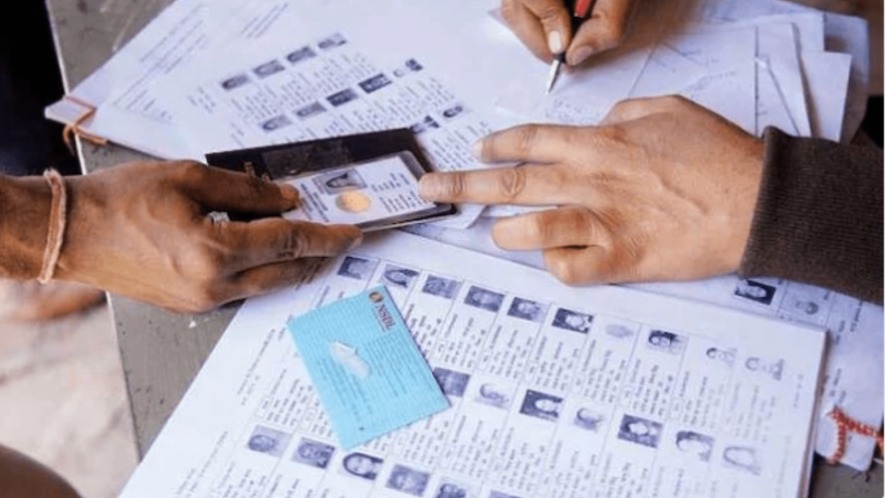
Patna: Nearly 80,000 Muslim voters in Bihar’s Dhaka constituency were targeted for deletion from the electoral roll through formal submissions made in the name of Bharatiya Janata Party (BJP) functionaries, according to an exclusive investigation by The Reporters’ Collective.
The investigation found that written requests for mass deletions were submitted to the Election Commission of India’s (ECI) Electoral Registration Officer (ERO) in East Champaran district and to the Chief Electoral Officer (CEO) of Bihar. One such petition was filed in the name of the personal assistant of Dhaka’s BJP MLA Pawan Kumar Jaiswal, while another was submitted on the BJP’s state headquarters letterhead in Patna.
The petitions alleged that over 78,000 Muslim voters were “not Indian citizens” and sought their removal from the voter list. However, the ERO acknowledged receiving the submissions and said bulk deletion requests would not be entertained, though the names were marked for verification during the ongoing Special Intensive Revision (SIR) process.
Local residents expressed deep anxiety after learning that their names appeared in the BJP-backed complaints. Among those listed was Firoz Alam, sarpanch of Fulwaria Gram Panchayat, who said his entire family had been wrongly accused of being non-citizens. Teachers, booth-level officers, and even newly registered young voters were also among those named.
The sitting BJP MLA, Pawan Jaiswal, did not respond directly to the revelations. Instead, he accused the opposition Rashtriya Janata Dal (RJD) of attempting to delete 40,000 Hindu voters, though he declined to provide proof.
Dhaka constituency, bordering Nepal, has a history of close contests. In 2020, Jaiswal defeated RJD’s Faisal Rahman by just over 10,000 votes out of more than two lakh polled. Given this margin, even a few thousand deletions could significantly alter the electoral outcome.
The Reporters’ Collective noted that such mass targeting of one community is unprecedented, though smaller-scale voter list manipulations have long been alleged in Bihar. Critics say the controversial SIR process, conducted in haste and confusion, has created opportunities for political interference and disenfranchisement of minorities.
The final electoral roll for Dhaka will be released on October 1, which will determine the fate of the nearly 80,000 Muslim voters whose citizenship has been questioned.
Let the Truth be known. If you read VB and like VB, please be a VB Supporter and Help us deliver the Truth to one and all.
Advocate found dead in car on Nainital court premises

Nainital (PTI): A 55-year-old advocate allegedly died by suicide after shooting himself inside his car at the Nainital district court parking lot here on Monday, police said.
According to the police, Puran Singh Bhakuni, a resident of Mallital, was found in the rear seat of his vehicle with a gunshot wound to his temple.
Police recovered a licensed pistol from his hand and a suicide note from the car’s dashboard. The note stated that Bhakuni was unwell and suffering from depression.
"We received information through lawyers around noon. The deceased was lying in the back seat with a pistol in his hand and blood near his ear," Circle Officer Anjana Negi said.
Forensic teams and ballistic experts reached the spot to collect evidence, as no witness reported hearing the gunshot.
Government counsel Sushil Sharma stated that Bhakuni left home at 9 am and was found dead at 9.30 am.
Sharma raised concerns over the circumstances, noting that the body was in the rear seat, and demanded a thorough probe to rule out foul play. Bhakuni, who worked as a notary, had married six months ago, he said.
Police took the body into custody and sent it for a postmortem to confirm the cause of death.
The forensic laboratory will examine the suicide note and the ballistics of the weapon, the police said, adding that the investigation is ongoing.