Atul Subhash suicide case: SC grants custody of Bengaluru techie’s son to estranged wife
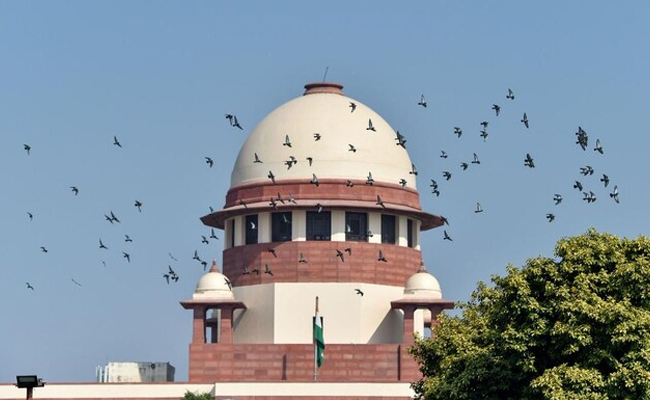
New Delhi: The Supreme Court on Monday ruled that the custody of the minor son of Bengaluru techie Atul Subhash, who died by suicide, will remain with his estranged wife Nikita Singhania, who is facing charges of abetting his suicide along with her family members.
The ruling was delivered by a bench comprising Justices B.V. Nagarathna and S.C. Sharma, who denied the plea of Subhash’s mother, Anju Devi, to take custody of the child, Indian Express reported. The decision came after the bench spoke with the four-year-old boy via a video link.
The court had previously stated that Anju Devi was "virtually a stranger to the child," implying she lacked the necessary familiarity with her grandchild to assume guardianship.
Anju Devi requested the court to grant her custody of her grandson, emphasising that young children should not be sent to a boarding school. She also referenced allegations suggesting that Singhania may have been involved in Subhash’s death. However, the court noted that Singhania has not been proven guilty and cautioned against drawing conclusions based solely on media reports, IE mentioned.
During the hearing, the bench requested affidavits from the Haryana government and Singhania about the child’s condition, the report added.
Atul Subhash was found dead at his Bengaluru residence on December 9, 2024. The 36-year-old left behind a 24-page suicide note and a 90-minute video detailing alleged extortion and harassment by his spouse and her family, as well as corruption within the judicial system.
Let the Truth be known. If you read VB and like VB, please be a VB Supporter and Help us deliver the Truth to one and all.
Surveillance intensified in Bengal border districts as killers of Suvendu's PA may flee out of state

Kolkata (PTI): Police stations in border districts of West Bengal intensified surveillance and searches as investigators suspect the involvement of professional shooters from neighbouring states in the killing of BJP leader Suvendu Adhikari's close aide, a senior officer said on Friday.
The police are also investigating the role of local criminals who might have provided logistical support to the assailants, he said.
More than 36 hours after Adhikari's personal assistant Chandranath Rath was assassinated by motorcycle-borne gunmen at Madhyamgram in North 24 Parganas district, the police are yet to make any arrest.
“A detailed investigation is underway. The manner in which the attack was carried out suggests extensive reconnaissance and the possible involvement of hired sharpshooters from outside the state,” a senior police officer told PTI.
He also said all police stations in border districts have been alerted.
"Checks are being carried out at multiple points, and CCTV footage from areas along Jessore Road is being thoroughly scanned,” another senior officer said.
According to probe findings, the gunmen allegedly followed Rath’s vehicle before launching the attack.
“The escape route of the gunmen indicates that they were familiar with the locality, or local criminals might have assisted them. Without local support, fleeing through the lanes so quickly would have been difficult,” the officer added.
The police, however, are yet to ascertain the motive behind the murder.
The police and detective department officers have launched extensive searches in and around Madhyamgram near Kolkata.
Heavy deployment of police and central forces has also been made in the area since the murder occurred on Wednesday night.
"A motorcycle used in the crime was registered in 2012 in the name of a resident of Burnpur in Asansol. However, the police found that no person by that name currently resides at the address given during the vehicle registration process," another officer said.